REVIEW · KUSADASI
Ephesus Tour From Kusadasi Port
Book on Viator →Operated by Turkey Tours - Tours4Turkey Travel · Bookable on Viator
Ephesus looks even better with a guide. This trip works because it links three big stops—Ephesus ruins, the House of the Virgin Mary (Meryemana), and the Temple of Artemis—with the kind of pacing that helps you actually see the highlights without getting lost. I like that there’s also time for local streets and viewpoints, so the day feels more like exploring than just collecting monuments.
I also like the small group feel (up to 10) and the smooth, shared-ride setup. In one recent group, guide Haluk and driver Qadir got people picked up and moving quickly, which you’ll really appreciate when you’re on a cruise timetable. One caution: pickup can sometimes be delayed if something goes wrong with the vehicle, so build in a little buffer if your ship has a strict schedule.
In This Review
- Key Things That Make This Ephesus Tour Work
- Kusadasi Port to Ephesus: How the Ride Sets the Tone
- Inside the Ancient City of Ephesus: More Than a Ruins Checklist
- A practical note on how you should walk this section
- Meryemana (Virgin Mary’s House): A Quiet Stop With Big Meaning
- Temple of Artemis: One Column, One Giant Story
- The Walking Tour and Aerial Views: Why They Matter
- Lunch Buffet and Time Management: Make the Most of 5–6 Hours
- My tip for comfort
- Price and Value: Is $82.80 a Good Deal?
- Group Size, Guides, and What You Can Learn From This Route
- Who Should Book This Ephesus Tour From Kusadasi Port?
- Should You Book This Ephesus Day Trip?
- FAQ
- FAQ
- How long is the Ephesus Tour from Kusadasi Port?
- Is pickup offered for this tour?
- What time does the tour start?
- What language is the guide?
- What stops are included?
- Are entrance fees included in the price?
- Is lunch included?
- Is the Terrace Houses entry included?
- How big is the group?
- What is the cancellation policy?
Key Things That Make This Ephesus Tour Work
- Small group (max 10) keeps the day from turning into a fast assembly line
- English-speaking licensed guide helps you connect what you see to what it meant
- Ephesus timing gives you about 2 hours in the ruins for real wandering, not just photos
- Meryemana stop lasts about 1 hour, a calmer break from crowds
- Temple of Artemis visit is short but designed to help you picture the scale from what remains
Kusadasi Port to Ephesus: How the Ride Sets the Tone
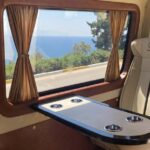
This is a 5 to 6 hour day trip from Kusadasi Port with multiple departure options during the day, so you can match it to your cruise or your shore time. The core advantage is that round-trip transportation is handled for you by a shared, air-conditioned minivan—no hunting for buses, no figuring out routes with limited time.
The meeting point is Ege PortsCamikebir (Liman Cd. No:10, 09400 Kuşadası). If you’re arriving with your cruise, your guide will wait for you holding a sign with your name as you exit the customs building. That sign detail sounds small, but it’s a big deal when you’re disembarking with bags and thousands of moving parts.
You’ll also have a mobile ticket, which keeps the day simple at entrances. And because the group maxes out at 10 people, you can usually ask questions and get answers without feeling like you’re talking to the guide while they’re trying to herd everyone.
You can also read our reviews of more tours and experiences in Kusadasi.


Inside the Ancient City of Ephesus: More Than a Ruins Checklist
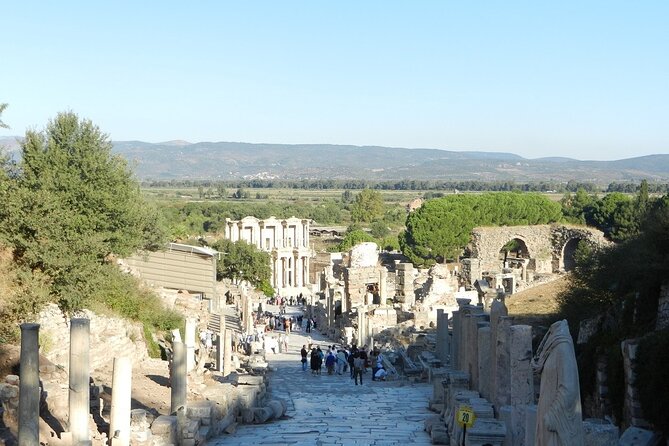
Ephesus is the headline stop, and the day is built around letting you experience the site, not just read about it. You’ll be driven about 20 minutes from Kusadasi to the ruins near present-day Selcuk, then settle in with your licensed English-speaking guide for around 2 hours.
What makes Ephesus special is how many recognizable structures are still there—and how quickly you can grasp how the city worked. As you walk, you can expect to see major public spaces and buildings such as:
- gymnasiums
- agoras
- Domitian Square
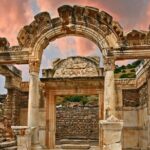
- the Hadrian Temple
- the Roman Bath
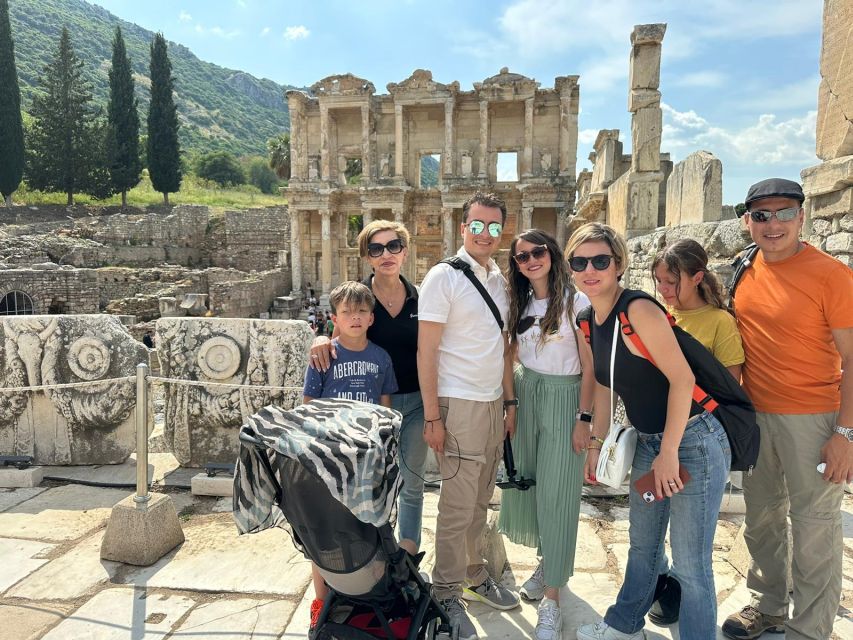
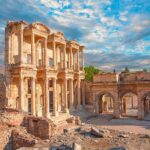
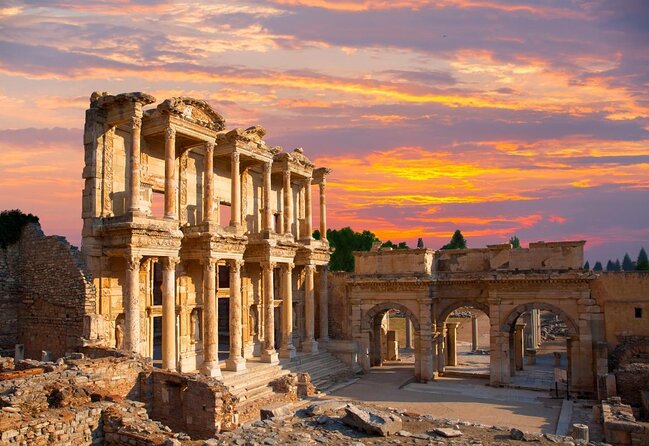
- the Celsus Library
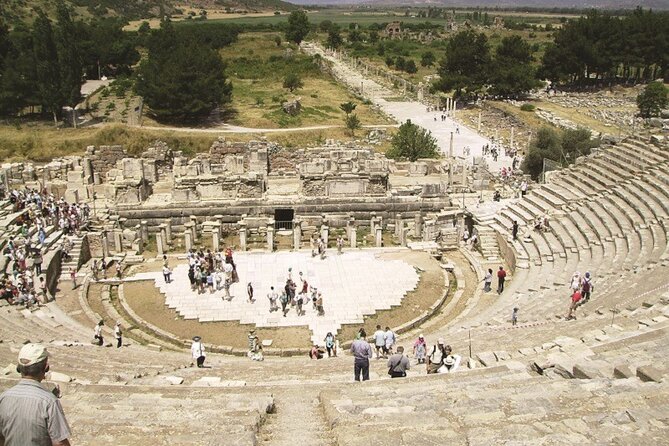
- and the biggest theatre in Anatolia, with 25,000 seats
Those names matter because they help you connect the dots. The theatre size alone gives you a sense of how big events were. The Celsus Library is a standout for its presence and its symbolism—education and power lived side by side. And the mix of squares, baths, and marketplaces shows how everyday life played out in stone.
One added layer you’ll get from a good guide is how Ephesus fits into the broader religious and historical story. Ephesus is also known as one of the Seven Churches of Asia, referenced in the Book of Revelation, so the site can feel more personal than you might expect—especially if you’re interested in how places gained meaning over time.
A practical note on how you should walk this section
Plan to move at a comfortable pace. You’re at Ephesus for long enough that you can stop for photos, look up at details, and still make it through the major areas without feeling rushed. If you tend to be a slow walker, this is one spot where that style works well because the ruins are spread out.
Meryemana (Virgin Mary’s House): A Quiet Stop With Big Meaning
After Ephesus, you’ll head to Meryemana, the House of the Virgin Mary, with about 1 hour set aside for the visit. This stop is based on the belief that Mary was taken there by St John to spend her last days.
What I like about including Meryemana in this kind of day trip is the contrast. Ephesus is impressive but loud—stone, scale, and crowds can blur together. Meryemana shifts the mood. It’s the kind of place where you can slow down and focus on reflection rather than just architecture.
Even if you’re not coming with a religious background, you’ll likely appreciate how the stop breaks the day into two different experiences: big public ancient spaces first, then a more contemplative setting. That makes the overall route feel balanced.
The admission ticket is included, so you’re not spending extra time at booths or sorting paperwork. And with a full hour, you have enough time to walk through at an unhurried pace and still have time to meet back up.
Temple of Artemis: One Column, One Giant Story
The final major cultural stop is the Temple of Artemis, which you’ll visit for about 45 minutes. This is tied to the Seven Wonders of the ancient world, and it’s a great example of how you can still “read” a site even when only a portion remains.
Here’s the key reality: today, you’re looking at what’s left—just one column remains. That can sound like a letdown if you only expect a full temple standing tall. But with the right guidance, it becomes an effective lesson in scale: you can use what’s left to imagine what once stood here, and you can better understand why Artemis was so revered by the Ephesians.
For your planning, treat this as a short but focused stop. Don’t expect to spend a long session exploring like you do at Ephesus. Instead, use your time to learn what the temple meant, where it fit into the city’s identity, and how the worship of Artemis shaped daily life in the region.
If you like photo breaks, this is usually a good place for one more round of images before heading back. The guide’s role here is about helping you look, not just see.




The Walking Tour and Aerial Views: Why They Matter
The highlights mention more than just ticketed sites: you’ll get a walking tour of local streets and some fantastic aerial views, plus inside tips from a local.
That might sound like “extra stuff,” but it’s actually smart for first-timers. Ephesus can feel like a maze of stone when you’re there without context. A quick city-walk and viewpoint time helps you get your bearings. You start to recognize the terrain and how the ruins sit in the modern area. Then, when you’re inside the big archaeological zone, the layout feels less confusing.
The inside tips piece is also practical. Even without specific guarantees, a local guide can often point out the best angles for photos, the order that reduces backtracking, and small ways to avoid wasting time in the most crowded spots. With a schedule that totals about half a day, those tiny decisions matter.
Lunch Buffet and Time Management: Make the Most of 5–6 Hours
A lunch buffet is included, and that’s a big part of the value of this trip. It means you’re not scrambling for a meal in the middle of your ruins time, which can easily ruin a day on the coast. The catch is that food and drinks outside of what’s specified aren’t included—so if you want drinks beyond what’s part of lunch, plan accordingly.
From a time standpoint, the site durations are tight but realistic:
- Ephesus: about 2 hours
- Meryemana: about 1 hour
- Temple of Artemis: about 45 minutes
That leaves some breathing room for the walking tour, transfers, and the small gaps you’ll need to go from entrance to entrance. In one experience, the day felt like it might be getting rushed after an early strong start, so keep your expectations flexible: the most important sites will get prioritized, and the guide may shift pace to keep the group on schedule.
My tip for comfort
Wear shoes you’re okay with getting dusty and standing in for stretches of time. Also, bring sun protection. Even when you’re spending time inside or in shaded areas, the ruins and walking components mean you’ll be exposed at points.
Price and Value: Is $82.80 a Good Deal?
At $82.80 per person, you’re paying for a full package: round-trip shared transfer, an air-conditioned minivan, an English-speaking driver/guide, lunch buffet, and entrance tickets for Ephesus, Meryemana, and the Temple of Artemis. Taxes and fees are also included.
That matters because entrance fees can add up fast when you’re doing multiple sites in a single day. Here, you’re not just buying a ticket to one attraction—you’re covering several major stops plus the transport between them. For a cruise shore day or a limited-stay visit, that bundled cost can be the difference between a smooth day and a stressful scramble.
The main additional cost you might face is the optional upgrade: entry to the Ephesus Terrace Houses is not included, and you’d pay on site if you want to add it. If you’re the kind of person who likes extra layers and doesn’t mind spending more, this optional stop can be worth considering. If you just want the big hits and don’t want surprises, you can skip it without losing the core value.
Group Size, Guides, and What You Can Learn From This Route
The tour runs with a maximum of 10 travelers, which is one of the strongest signals that this will feel more human than mass-market. Smaller groups usually mean faster coordination, easier question time, and less jostling at viewpoints.
Guide quality matters here because the route depends on interpretation. Ephesus is full of names and structures, but the meaning only clicks when someone connects the dots. In one experience, Haluk impressed people with strong knowledge early in the day, and the day kept moving with courtesy from driver Qadir. That kind of start is what you want on a timed shore excursion.
Still, one downside showed up in another experience: pickup took about an hour longer than expected when a vehicle broke down. The people on the tour still described the excursion as worthwhile, but there was a sense the day wanted to finish quickly. The practical takeaway is simple: if your cruise schedule is tight, choose a departure time that gives you cushion, and keep an eye on the meeting point instructions so there’s no extra delay on your side.
Who Should Book This Ephesus Tour From Kusadasi Port?
This is a strong fit if you want:
- a guided Ephesus visit with major sites covered
- a balanced day that includes a calmer stop at Meryemana
- an efficient, scheduled route that works well for cruise shore time
- a small group setting rather than a huge bus crowd
It may be less ideal if you want lots of free time wandering at your own pace. The day is built around set durations for each stop, so you’ll likely follow the group schedule for the best results.
If you’re traveling with mobility limits, the tour says most travelers can participate, but ancient sites always come with uneven ground and walking. If that’s a concern for you, it’s worth thinking through how much walking you can comfortably do for the full Ephesus segment.
Should You Book This Ephesus Day Trip?
If you’re choosing between doing Ephesus on your own versus booking a guided half-day, I’d lean toward booking this one—mostly because it covers transport, entrance fees, and lunch in a single price. That kind of packaging is exactly what you want when your time in Turkey is measured in hours, not days.
Book it if you value a plan you can trust, a small group feel, and a guide who helps you connect what you’re seeing at Ephesus, Meryemana, and Artemis. Skip it if you’re determined to build your own route with lots of flexible downtime, or if you know you’ll hate any chance of timing hiccups.
FAQ
FAQ
How long is the Ephesus Tour from Kusadasi Port?
It runs about 5 to 6 hours in total, depending on the day’s schedule.
Is pickup offered for this tour?
Yes. Pickup is offered, and for cruise ship passengers the guide waits with a name sign as you exit the customs building.
What time does the tour start?
The start time shown is 8:30 am.
What language is the guide?
The tour is offered in English.
What stops are included?
You’ll visit the Ancient City of Ephesus, Meryemana (the Virgin Mary’s House), and the Temple of Artemis.
Are entrance fees included in the price?
Yes. Entrance fees are included for Ephesus, the House of Virgin Mary, and the Temple of Artemis.
Is lunch included?
Yes. A lunch buffet is included.
Is the Terrace Houses entry included?
No. Entrance to the Ephesus Terrace Houses is optional and you pay on site if you choose to add it.
How big is the group?
The tour has a maximum of 10 travelers.
What is the cancellation policy?
You can cancel for a full refund up to 24 hours in advance of the experience start time.