REVIEW · KUSADASI
Ephesus Small Group Tour From Kusadasi – Selcuk
Book on Viator →Operated by Ephesus and Pamukkale Daily Tours from Kusadasi and Izmir · Bookable on Viator
Ephesus is a workout for the imagination. I like that this small-group day keeps things moving, yet doesn’t feel rushed: you cover the big ruin sights in Ephesus, then add the spiritual stop at Meryemana (Virgin Mary’s House) up on Mount Koressos, plus a few very Selçuk-flavored breaks. It’s also designed for English speakers, with a professional guide and pickup/round-trip transport so you’re not spending half your day figuring out buses.
What I really liked is the mix of architecture and human stories. The Ephesus walking route is built around the main showpieces—Fountain of Trajan, Temple of Hadrian, the Celsus Library, and the Grand Theater—so you get your bearings fast and come away with a clear mental map. I also appreciate the practical lunch stop included in the day, which helps a lot when your schedule runs about 8 hours. One thing to consider: drinks are not included, so plan to grab water or something non-alcoholic on your own.
In This Review
- Why This Ephesus Small-Group Tour Works for Most Days in Kuşadası
- Price and Logistics: What You’re Paying For (and What You’re Not)
- Meeting Point at Kuşadası Port: How Your Day Starts and Ends
- Stop 1: Meryemana (Virgin Mary’s House) on Mount Koressos
- Stop 2: Ancient City of Ephesus Walk-through (with the Big Names)
- Stop 3: Temple of Artemis Ruins (and Why It Still Matters)
- Stop 4: Isa Bey Mosque in Selçuk (A Quick Architecture Break)
- Stop 5: Cave of the Seven Sleepers (Byzantine Necropolis)
- The Pace: How an 8-Hour Day Feels on Your Legs
- Lunch and the Small Details That Make or Break the Day
- Group Size and English Guide: What That Means in Real Life
- Best Fit: Who Should Book This Ephesus Tour
- Should You Book This Ephesus Tour from Kuşadası?
- FAQ
- How long is the Ephesus Small Group Tour from Kuşadası to Selçuk?
- Is pickup and drop-off included?
- What is included in the price?
- Are entrance tickets included for all stops?
- Does the tour include drinks?
- How big are the groups?
- What is the cancellation policy?
Why This Ephesus Small-Group Tour Works for Most Days in Kuşadası
- Cap to 14 people: small enough for a real guide conversation, big enough to feel social.
- Pickup and drop-off: you start from the port meeting point area in Kuşadası and return there.
- A tight, high-impact route: Meryemana, Ephesus highlights, Artemis, Isa Bey Mosque, and Seven Sleepers all make sense as one loop.
- Admission included where it counts: Ephesus, Meryemana, and the Cave of the Seven Sleepers are covered.
- Straightforward shore-day style: no extra distraction stops like carpet-sales pitches.
Price and Logistics: What You’re Paying For (and What You’re Not)
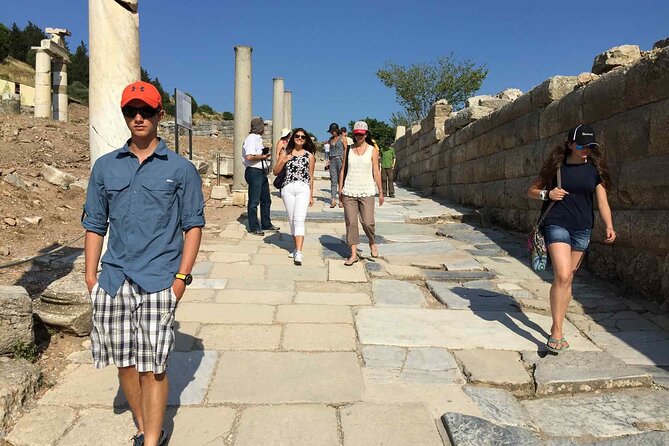
At $150.20 per person for about 8 hours, this isn’t the cheapest way to see Ephesus. That said, it’s not priced like a “grab anyone off the street” tour either. You’re paying for a professional English-speaking guide, hotel/port pickup and drop-off, parking, and entrance fees for the main paid sights.
What stands out in the value equation is the structure. You get a guided experience that’s built around key locations rather than a long list of detours. Ephesus can chew up time fast if you wander without context, so an organized route helps. Also, the group size caps at 14, which usually makes it easier to keep track of explanations and meeting points.
A couple costs to keep in mind: drinks are not included, and tips to the guide and driver aren’t included. And while you’ll see the major parts of Ephesus, the Terrace Houses inside Ephesus are not included—so if you’re specifically dreaming about that museum-like neighborhood, you’ll need a separate add-on or a different tour.
You can also read our reviews of more tours and experiences in Kusadasi.

Meeting Point at Kuşadası Port: How Your Day Starts and Ends
The tour starts and ends back at the same place: Kuşadası Port Hacıfeyzullah (M. Esat Bozkurt Cd. no:21/3, 09400 Kuşadası/Aydın, Türkiye). That matters more than people think. In port towns, the biggest stress isn’t the ruins—it’s missing the return window. Here, you know the day loops back to the same hub.
Pickup is offered, and the tour notes it can pick you up from your chosen location. Since this is a small-group format and you’ll be walking through uneven ancient areas, arriving on time is key. If you’re doing this from the port, build in extra buffer for disembarking and walking to the meeting point.
Stop 1: Meryemana (Virgin Mary’s House) on Mount Koressos
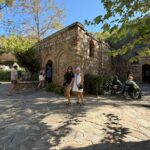
Your day begins with Meryemana, the site known as the House of the Virgin Mary. This is a pilgrimage destination where Christians from around the world pray and make offerings. It’s also treated as sacred in ways that draw visitors from different faith backgrounds, which gives the stop a noticeably different feel than the ancient-city ruins.
You’ll have about 30 minutes here, and admission is included. The grounds are part garden, part prayer space. If you like details that make places feel lived-in, this one delivers:
- Olive trees line the path leading to the house, planted by Lazarist monks in 1898.
- The Mary statue at the end of the olive-lined approach is dated 1867 and is described as a gift from a religious community in Izmir.
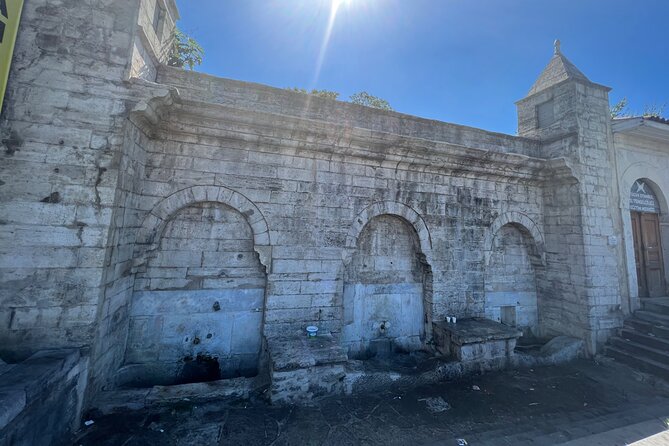
- After leaving the church, you descend stairs on the right to reach three fountains. Water flows from these fountains and wells nearby, and visitors often taste or take some away with them with the belief it’s healing.
Practical tip: this isn’t a “run through and snap photos” stop. Even if you’re not big on pilgrimage sites, I think it’s worth slowing down. The peaceful pace balances the later intensity of Ephesus—your legs will thank you.
Stop 2: Ancient City of Ephesus Walk-through (with the Big Names)
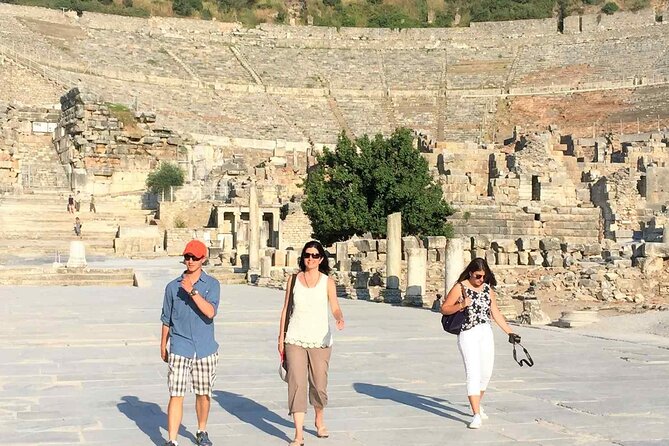
Then comes the main event: the Ancient City of Ephesus. You’ll spend about 2 hours here with admission included, and it’s the kind of time that works well if you want the highlights without trying to conquer every single corner.
Ephesus is described as a marble-built city with major examples from Hellenistic and Roman periods. What you’ll notice on the ground is how planned it feels. Streets, plazas, and building placements make more sense when you see several major sites back-to-back, which is exactly how this tour structures it.
Here are the standout Ephesus stops you’ll see on this route:
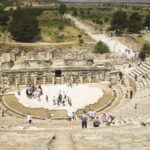
- Grand Theater: the largest theater in antiquity, with capacity stated at 24,000 seats, and it’s linked to Saint Paul’s preaching.
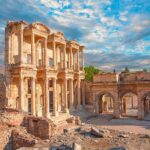
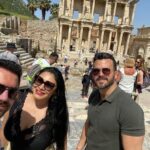
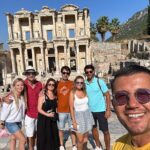
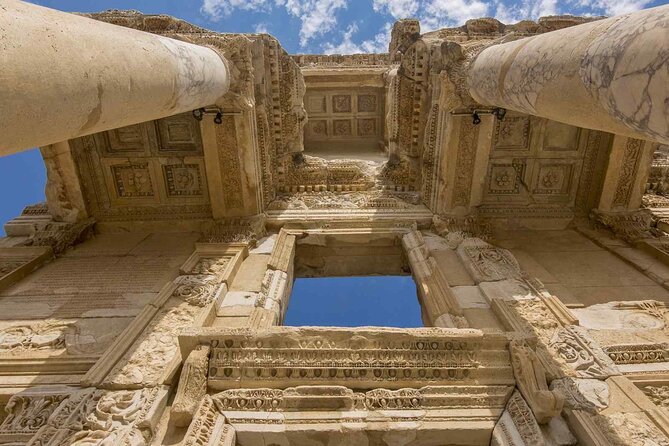
- Celsus Library: the famous facade with columns and statues, one of the classic Ephesus photo targets.
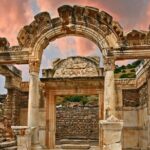
- Temple of Hadrian: a stop that helps you connect Roman power and civic identity to the city layout.
- Fountain of Trajan: a key visual anchor that signals public grandeur.
- Odeon: another reminder that entertainment and public life were baked into the city’s daily rhythm.
- Terraces of apartment houses and the stream baths of Scholastika: these give you a sense of how people actually lived and moved through space.
Two hours can sound long until you’re standing in front of something famous and realizing you want to look properly. This tour’s route gives you a meaningful progression: big public spaces first, then structures that show religion, governance, and daily life.
One practical note: parts of Ephesus are uneven and spread out. If you’re bringing a stroller, the tour notes that surfaces are covered with marble and stones, which can make stroller use difficult (though it is possible). Comfortable walking shoes are your best friend.
Stop 3: Temple of Artemis Ruins (and Why It Still Matters)
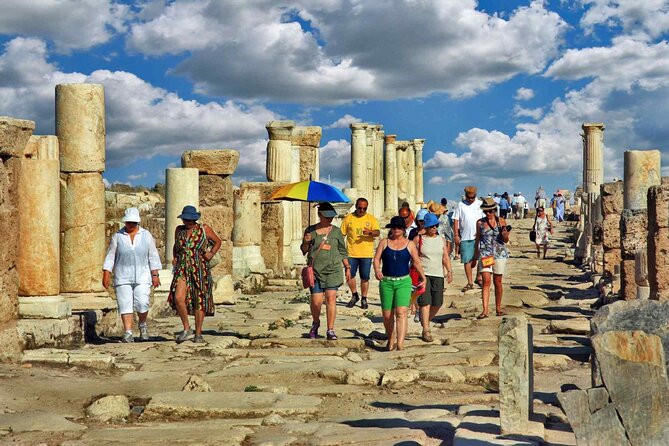
After Ephesus, you’ll head to the Temple of Artemis in Selçuk. You’ll have about 10 minutes here, and admission is listed as free.
This is one of those sites that people either love instantly or feel slightly underwhelmed by at first—because much of what you see are ruins. But the point here isn’t a full restored complex. The point is the scale of what used to be here and the role it played in Ephesus life.
The temple complex included religious spaces (the religious section is described as the Temenos area), plus public buildings and residences. The text also notes it was far from the sea, surrounded by fertile land, and used for commercial activity—so it wasn’t only spiritual. It also functioned as a safe place, with descriptions of it working like a bank.
I like that the tour keeps this stop short. In 10 minutes, you get the story, you see what remains, and you move on before the day gets too heavy.



Stop 4: Isa Bey Mosque in Selçuk (A Quick Architecture Break)
Next is İsa Bey Mosque, with about 20 minutes on the stop. Admission is free.
Built in 1374–75, it’s noted as one of the oldest and impressive works remaining from the Anatolian beyliks. It’s located on the outskirts of the Ayasluğ Hills at Selçuk, so this feels like a change of pace from the ancient-city marble—more human-scale, more skyline, more present-day architecture.
This stop works well if you like contrast. You go from Roman and Hellenistic grandeur to a medieval structure you can still read with your eyes rather than just imagining what’s gone.
Stop 5: Cave of the Seven Sleepers (Byzantine Necropolis)
The final major site is the Cave of the Seven Sleepers, also known as Yedi Uyuyanlar. You’ll have about 20 minutes, and admission is included.
This stop is described as a Byzantine necropolis with dozens of rock-cut tombs. That means you’re not just looking at a cave—you’re looking at a place of burial where the carvings and rock work hint at long-term use.
You’ll also hear the legend of youths who hid in the cave and woke years later to a changed world. Even if you’re not a legend person, I think the key value is atmosphere. The site gives you a sense of how later cultures layered meaning onto earlier places.
And yes, it’s short on purpose. In a full 8-hour day, you want the final stop to feel like a closing chapter, not another marathon.
The Pace: How an 8-Hour Day Feels on Your Legs
This tour is built for momentum. It’s roughly 8 hours, with time-sliced visits:
- Meryemana: about 30 minutes
- Ephesus: about 2 hours
- Temple of Artemis: about 10 minutes
- İsa Bey Mosque: about 20 minutes
- Seven Sleepers: about 20 minutes
Plus transportation and a lunch stop.
That timing choice is smart for most people. It lets you see the major Ephesus architecture without spending the entire day on one site. It also helps you avoid the slow-boat feeling that can happen on big-group tours where the whole day is spent waiting for stragglers.
Also worth mentioning: the day is designed to feel comfortable. The experience is described as having a comfortable ride, and it avoids typical tourist distractions like carpet-sales pitches. So you’re spending time on sights, not on sales scripts.
Lunch and the Small Details That Make or Break the Day
Lunch is included. That might sound basic, but it’s a big deal in places where the “nearby” food can end up being overpriced or time-consuming. With lunch built into the schedule, you get a predictable break rather than playing restaurant roulette.
Drinks aren’t included, so plan for water. Ephesus walking plus a hill approach to Meryemana can add up, even if you’re not a hardcore walker. I’d treat water like part of your ticket.
If you’re the type who likes to photograph everything, keep in mind that you’ll be moving through sites with enough structure to hold you on track. You’ll still have chances to stop and look, but you won’t have time for a long detour mission.
Group Size and English Guide: What That Means in Real Life
With a maximum of 14 travelers and an English-speaking professional guide, you get the best of both worlds: you have enough people for atmosphere, but not so many that questions disappear into the crowd.
That format matters especially at Ephesus, where the city’s layout can be confusing if you don’t have a guide explaining how the pieces connect. The route here focuses on major monuments in an order that makes your mental map click.
If you’ve ever visited a big site and felt like you’re just walking between photo spots, this tour’s structure is meant to prevent that. You get landmarks, context, and a reason to care about what you’re seeing.
Best Fit: Who Should Book This Ephesus Tour
This tour is a strong match if:
- You want Ephesus highlights without trying to do everything yourself
- You’re visiting from Kuşadası port and need a day plan that returns you back on schedule
- You prefer a small group and clear guidance over a free-for-all
- You care about seeing a mix of ancient monuments and a pilgrimage site
It may be less ideal if:
- You’re specifically focused on advanced add-ons like Terrace Houses inside Ephesus (not included here)
- You dislike walking over marble-and-stone surfaces
If you’re doing this as a cruise shore day, the route is built to show you more than the super-short “one-spot-and-photos” style. You’ll feel like you had a real day, not just a quick taste.
Should You Book This Ephesus Tour from Kuşadası?
I’d book it if you want a guided, efficient, no-nonsense day that hits the monuments you came for and adds meaningful context at Meryemana. For $150.20, you’re paying for organization, the English guide, included admissions for the biggest paid stops, pickup/drop-off, and lunch. That combination is usually what turns Ephesus from confusing ruins into a place you understand.
If you’re the type who likes to wander, you might still love Ephesus—but you’ll likely get more value from the structure. And if you want a day that stays focused on sights rather than distractions, this one fits the bill.
FAQ
How long is the Ephesus Small Group Tour from Kuşadası to Selçuk?
It’s listed as approximately 8 hours.
Is pickup and drop-off included?
Yes. Hotel or port pickup and drop-off are included, and the tour ends back at the meeting point.
What is included in the price?
The price includes a professional English-speaking guide, lunch, parking, and all fees and taxes. Admission tickets are included for key stops.
Are entrance tickets included for all stops?
Admission is included for Meryemana and the Ancient City of Ephesus, and also for the Cave of the Seven Sleepers. The Temple of Artemis and İsa Bey Mosque are listed as free.
Does the tour include drinks?
No. Drinks are not included.
How big are the groups?
The tour has a maximum of 14 travelers per group, and a minimum of 2 people per booking is required.
What is the cancellation policy?
Free cancellation is available. You can cancel up to 24 hours in advance for a full refund.