REVIEW · KUSADASI
Ephesus, Priene, Miletos and Didyma Tour
Book on GetYourGuide →Operated by OKEANOS TRAVEL · Bookable on GetYourGuide
Four cities in one Aegean day.
I like that it feels all-in—guide, transport, and site entry fees for Ephesus, Priene, Miletos, and Didyma are included—and you also get an expert guide who ties the places together instead of treating them like separate stops. One thing to consider: this is a packed 8-hour run, so you’ll be doing plenty of walking and moving from site to site (not a great match if you want a slow day).
The day starts with pickup from Kusadasi port (or your hotel in Aydin and Izmir, depending on where you’re staying), then you ride in an air-conditioned vehicle with a professional driver. You’re not just getting a checklist of ruins either—you’re getting a story-driven route across Ionian, Roman, and prophetic worlds.
By the time you reach Didyma’s Temple of Apollo, you’ll understand why this corner of Turkey mattered. And yes, you’ll spend time in the places people name-drop for a reason: Cleopatra’s Ephesus, St. Paul in the city, pre-Socratic thinkers in Miletos, and an oracle that long rivaled Delphi.
In This Review
- Key highlights worth planning around
- Ephesus, Priene, Miletos and Didyma: why this 8-hour route works
- Getting from Kusadasi: port pickup and staying comfortable all day
- Ephesus: Cleopatra’s marble street, the 24,000-seat theatre, and the terrace houses add-on
- The Terrace Houses option
- A practical note on crowds and time
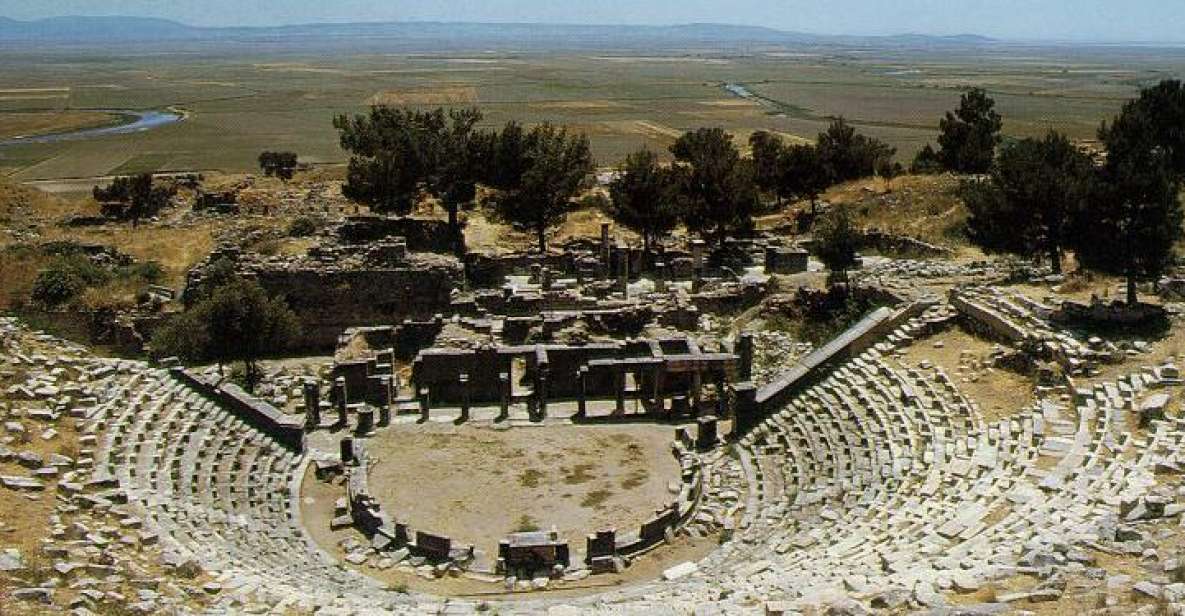
- Priene: climbing into the grid plan and seeing the Meander delta from the theatre
- What to expect on the ground
- Miletos: where philosophers taught and baths still impress
- The “story glue” factor
- Didyma: the Temple of Apollo and the sanctuary that rivaled Delphi
- How to enjoy Didyma
- Price and value: what $210 includes and why it can be a smart buy
- What to bring and how to plan for the walking
- Who this tour fits best (and who should choose differently)
- Should you book? My take on the call
- FAQ
- Which ancient sites are included in the tour?
- How long is the experience?
- Where does the tour start and where do I get dropped off?
- Is the entrance fee included for all four sites?
- Do I need to pay extra for a terrace houses visit?
- What language options are available for the guide?
- Is the tour wheelchair accessible?
- What should I bring for the day?
- Is there cancellation flexibility and a reserve-pay-later option?
Key highlights worth planning around
- Skip-the-line entry and all entrance fees included so you lose less time to ticket lines
- A four-city route in one day: Ephesus, Priene, Miletos, and Didyma without swapping tours
- Priene’s grid-plan city layout with a real “why they built it here” viewpoint
- Miletos links to philosophy and seafaring through names like Thales and Anaximander
- Didyma’s oracle at Apollo’s temple with the dramatic three surviving columns
Ephesus, Priene, Miletos and Didyma: why this 8-hour route works
This tour is built around one simple idea: the Aegean coast makes a lot more sense when you see multiple cities in a single day. Ephesus alone could fill a trip. But when you add Priene’s hillside planning, Miletos’s harbor-and-ideas vibe, and Didyma’s prophetic power, the region stops feeling like random archaeology and starts feeling like an interconnected world.
At $210 per person for an 8-hour private outing, you’re paying for structure. You get a licensed guide and a driver, and the stops are arranged so you can keep moving without constantly re-checking schedules or figuring out how to connect four major sites on your own. It’s especially handy if you’re traveling solo and want the “big hits” without the logistics headache.
The main trade-off is pace. You’ll have highlights, not a slow drift through every corner. If you like lingering—taking your time, stopping whenever you feel like it—this tour can still work, but you should come with comfortable shoes and a flexible mindset.
You can also read our reviews of more tours and experiences in Kusadasi.

Getting from Kusadasi: port pickup and staying comfortable all day
Pickup is simple: the tour departs from the Kusadasi port. If you’re staying in Aydin or Izmir, pickup is available from local hotels. That matters because Ephesus is far enough from most places that the “getting there” part can eat your energy.
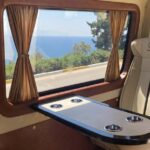
The ride is in an air-conditioned vehicle with a professional driver. For an 8-hour itinerary on the Aegean coast, that comfort isn’t a luxury detail—it’s how you stay sharp for the ruins. You also avoid the stress of finding a taxi, matching up departure times, and trying to return to the right spot at the right hour.
And this tour isn’t just about transporting you—it’s guided. A good guide makes the difference between seeing old stones and understanding what you’re looking at. In the feedback I saw, guides like Volkan and Olkan (Guife) got praised for being helpful and for staying flexible when questions or timing came up. That sort of responsiveness can help you get a smoother day, especially when you’re moving quickly between sites.
Ephesus: Cleopatra’s marble street, the 24,000-seat theatre, and the terrace houses add-on
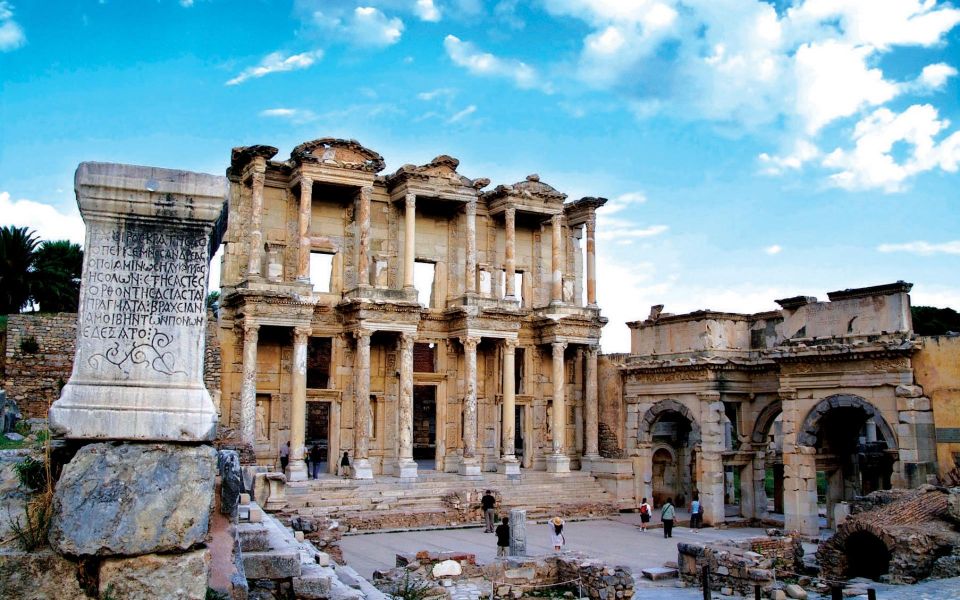
Ephesus is your first major stop, and it sets the tone. You’re walking through what still feels like a living city plan—marble streets, monumental buildings, and the scale of Roman urban design. A key detail here: you’re not just hearing about famous ruins. You’re getting oriented in the layout, so the city starts to click.
Start with the Marble Street, described as 2,000 years old, and see how it once connected important places in everyday life. This is also where the tour brings in the big names: Cleopatra is tied to the city’s fame, and St. Paul’s presence connects the site to early Christian history. Even if you don’t care about those specific stories, they give you a timeline for why Ephesus stayed important.
Two other highlights tend to land with most people:
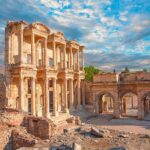
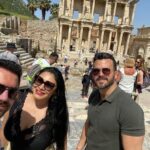
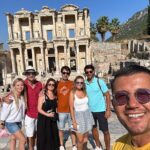
- The Library of Celsus area—often photographed, but worth your time because it helps you grasp Roman-era craftsmanship and public prestige.
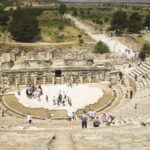
- The Great Theatre, built for a crowd of 24,000. This wasn’t only a performance space. It also hosted political assemblies and gladiatorial games, so you get a sense that “entertainment” and “civic life” blended together.
Then there’s the fun oddball detail: the tour points out what’s considered the world’s oldest advertisement—an etched footprint and heart leading to the ancient brothel. I like this kind of stop because it breaks the museum mood. It’s a reminder that people in antiquity had private lives, desires, and humor, just like we do.
The Terrace Houses option
There’s an optional premium upgrade for the Terrace Houses. If you’re the type who likes mosaic floors, frescoes, and the feel of elite domestic life, it can be a worthwhile add-on. If you’d rather keep your day streamlined, you can still get plenty from the main archaeological highlights without needing the upgrade.
A practical note on crowds and time
Ephesus can be busy. This tour includes skip-the-line access, which helps you spend more time walking and listening. Still, plan for heat and uneven ground. If you show up early with water, a hat, and shoes you trust, the site feels more enjoyable instead of just exhausting.




Priene: climbing into the grid plan and seeing the Meander delta from the theatre
Priene is the “different energy” stop. You go from the sprawling grandeur of Ephesus to a hillside city designed with almost obsessive planning. This place is famous for its grid plan, and the tour explains how that layout influenced later city planning ideas. Standing in a ruined city that was planned so carefully makes you appreciate how much thought went into daily life—streets weren’t random.
The main architectural focus is the Temple of Athena Polias. The guide can point out why Ionian architecture gets praised: the design feels balanced and intentional, not just monumental for show.
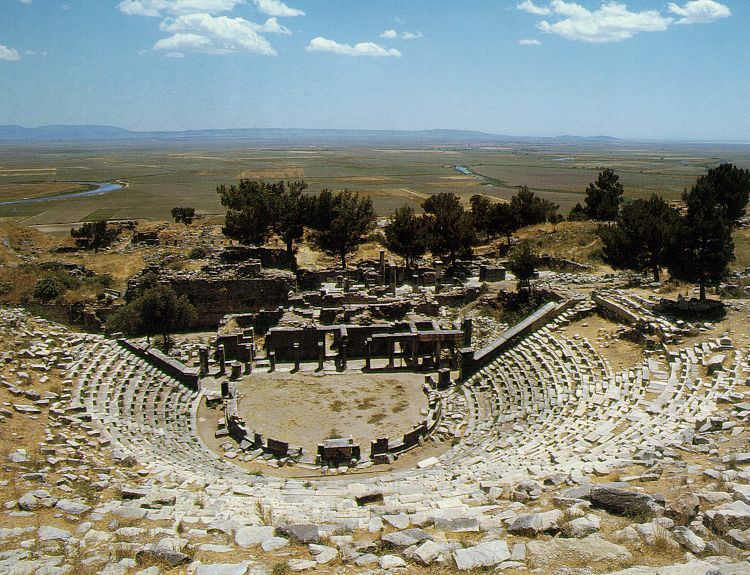
Then you get one of the most satisfying moments of the day: the panoramic view from the theatre overlooking the Meander River delta. Even if you don’t memorize the geography, you come away understanding the logic. Why a city would be placed where it is becomes obvious when you can see the terrain and the strategic setting.
What to expect on the ground
Priene involves climbing and steady walking across uneven ruins. It’s not a “sit and watch” stop. But because the site is perched and planned, your effort feels rewarded when the view opens up.
If you’re traveling with people who prefer less walking, you might need to manage expectations. This isn’t a wheelchair-friendly itinerary, and Priene’s terrain makes that clear.
Miletos: where philosophers taught and baths still impress
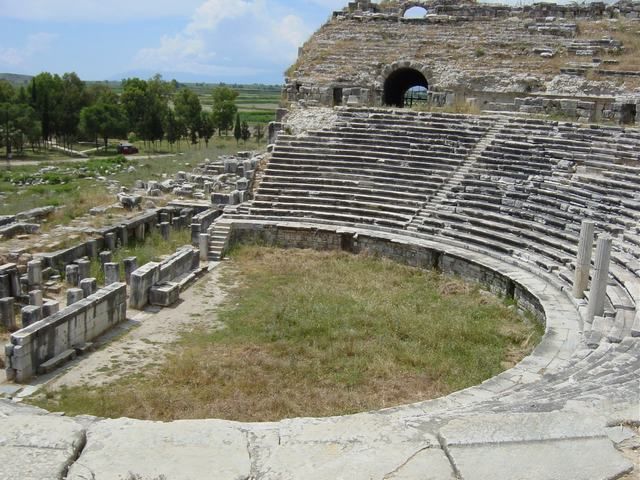
Miletos is where the tour shifts from buildings to ideas. It was once a major maritime hub, and it connects to pre-Socratic philosophy through thinkers like Thales and Anaximander. If you enjoy the human side of history—the way trade routes and ports spread ideas—this stop delivers.
You’ll spend time at the theatre, with an audience capacity of 15,000. Like Ephesus, it’s not only a “theatre” in the modern sense. The architecture shows how important public gathering was in a prosperous city.
One of my favorite kinds of site moments is when a building still looks impressive enough to feel real. Here, that includes the Baths of Faustina, built by the wife of Emperor Marcus Aurelius. Even without modern water, the structure helps you picture daily routine—how people relaxed, socialized, and discussed the day.
The tour also includes the Agora, one of the largest marketplaces of the ancient world. It’s especially powerful because you can imagine the flow: ships coming in from across the Mediterranean, goods moving through busy trade, and talk mixing with commerce. Today it’s quiet, but the scale gives you the “how big was this” reality check.
The “story glue” factor
What makes Miletos work in this tour isn’t only the individual ruins. It’s how the guide connects them: the sea brings people and wealth; wealth supports civic buildings; civic spaces shape public debate; and public debate links to philosophy. If that kind of connection is your thing, you’ll enjoy the stop more than if you’re only chasing photos.
Didyma: the Temple of Apollo and the sanctuary that rivaled Delphi
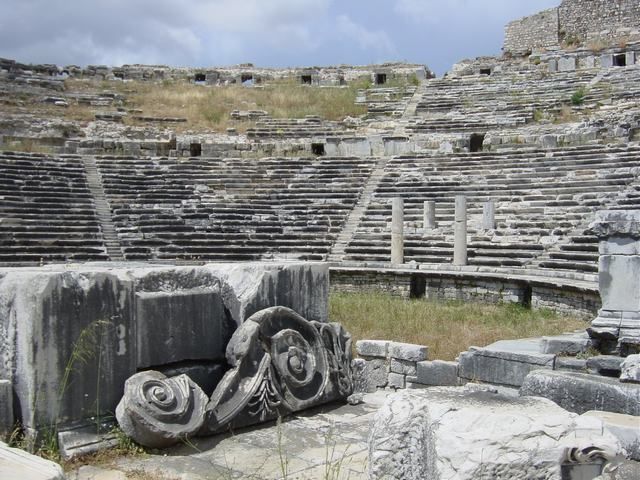
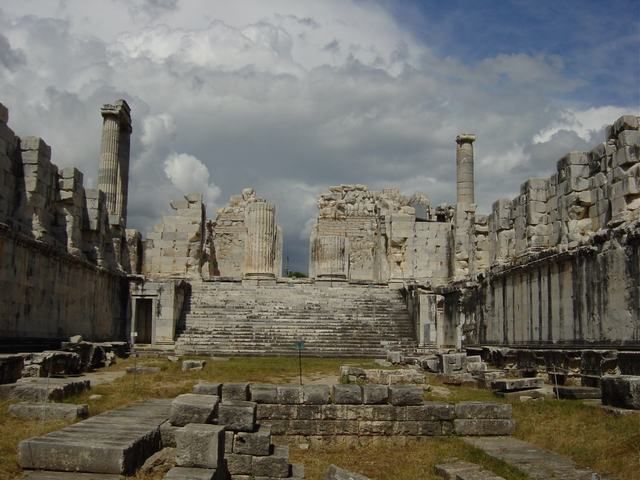
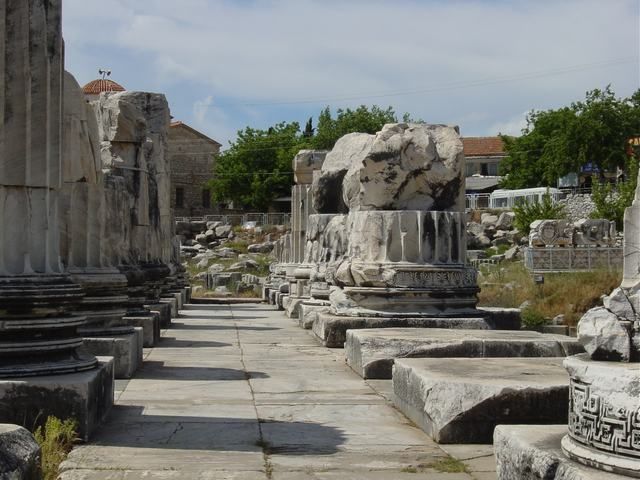
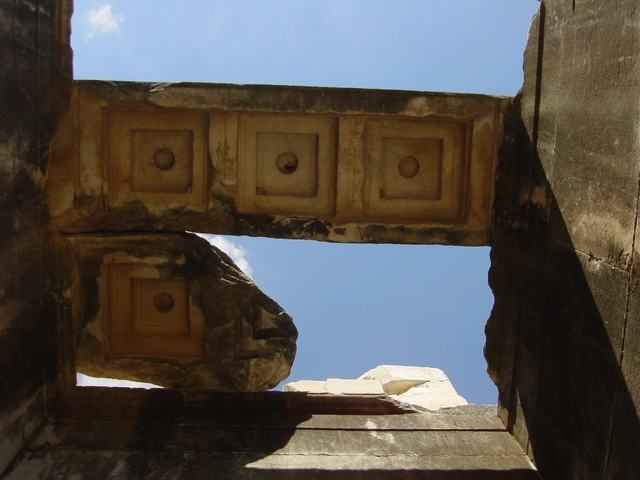
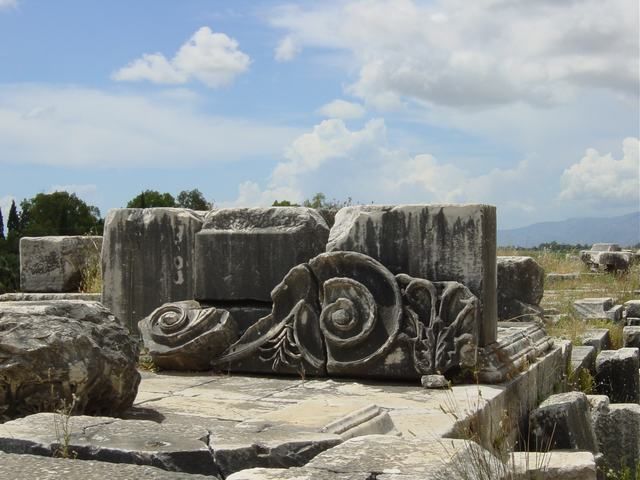
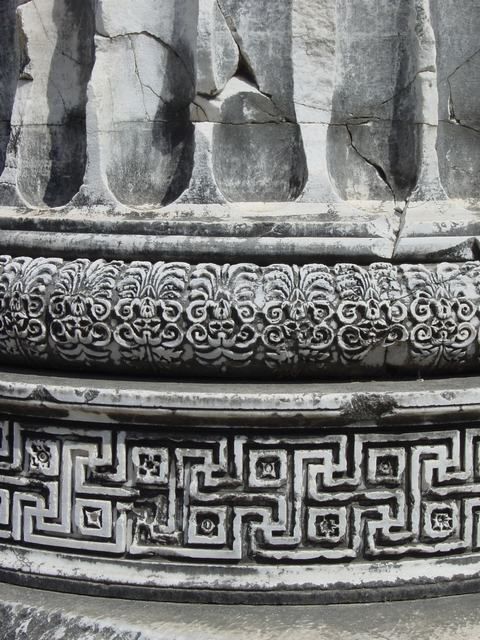
Didyma is a sanctuary, not a city, and it feels grand in a different way. The centerpiece is the Temple of Apollo, described as one of the largest and most enigmatic temples in the Hellenic world. The tour highlights the dramatic detail that three towering fluted columns still stand. Seeing them in person changes the scale you imagine from pictures.
This is also where the oracle story becomes more than a legend. Didyma was the seat of a prophetic system that rivaled Delphi. The guide walks you along the Sacred Way, the route pilgrims followed to seek prophecies that could affect kings and empires. It’s one of those “you can feel why people walked here” experiences, because the site is designed for a processional flow.
How to enjoy Didyma
Don’t rush this stop just to check it off. Even if your attention span is already tired from earlier ruins, give yourself a few minutes to look at the columns and the surrounding sanctuary space. It’s the kind of setting where the guide’s myth and history explanations make sense, instead of feeling pasted on.
Also, keep in mind that Didyma can be more exposed to sun and wind than cities with more built-up structure nearby. Hat and water matter here.
Price and value: what $210 includes and why it can be a smart buy
At $210 per person for an 8-hour tour, you’re not only paying for transportation. You’re buying:
- A licensed guide for multiple major sites
- Air-conditioned transport with a professional driver
- Pickup and drop-off service
- Entrance fees for all four sites
That last part is what really changes the math. Four famous archaeological sites typically come with multiple ticket types and entry rules. When those are handled for you, it reduces friction. You also keep the day moving, which is the real value—time is expensive on a tight schedule.
Is it the cheapest option? Maybe not. But this price can be better value than piecing together a DIY day if you factor in the cost of tickets, the need for a guide to connect the dots, and the time spent figuring out routes and meeting points.
For solo travelers, it can also be a confidence booster: you’re not navigating public transport between scattered ruins. In the feedback I saw, people noted it felt safe and convenient for independent travelers, and that the guide and driver were genuinely pleasant and accommodating.
What to bring and how to plan for the walking
You’ll want to come prepared because this day is built on walking through archaeological sites and moving across uneven terrain.
Bring:
- Passport or ID card
- Comfortable shoes
- Sunglasses
- Sun hat
And plan for:
- Plenty of sun exposure. You’ll be outdoors for long stretches.
- A full schedule. This is not a slow museum pace.
The tour is listed as not suitable for wheelchair users, which likely reflects the terrain and the amount of steps and uneven ground at multiple sites.
If you tend to get foot sore easily, consider bringing blister care or wearing shoes you’ve already broken in. You’ll enjoy the stories more when you’re not counting minutes waiting for your feet to recover.
Who this tour fits best (and who should choose differently)
This tour suits you if:
- You want a structured day that covers Ephesus, Priene, Miletos, and Didyma without hunting down tickets and transit
- You like guides who explain the “why,” including myth and historical context
- You want a single trip that connects Roman city life, Ionian planning, philosophy, and prophecy
It may not fit as well if:
- You need a slow pace with lots of free time at each stop
- You struggle with significant walking, climbing, and uneven ruin surfaces
- You prefer deep museum-style time at only one site rather than a broad overview
Also, if you’re picky about language support, check the tour’s guide options. The live guide availability can include Spanish, English, Italian, Dutch, Greek, German, French, Russian. That variety can matter when you want explanations at a comfort level.
Should you book? My take on the call
I’d book this tour if you’re short on time and you want the Aegean coast’s big themes in one day: Roman Ephesus, the planned hillside city of Priene, Miletos with its thinkers and trade, and Didyma’s oracle scale.
I wouldn’t book it if your ideal day is quiet, long, and flexible. This tour is designed to keep you moving, and the reward is breadth, not slow wandering.
One last practical tip: if you can, take a moment at the start to ask your guide what they’ll prioritize and where you can best personalize. The guides in the feedback I saw were praised for being helpful, answering questions, and staying flexible about timing and site emphasis. That’s how you turn a good itinerary into a personal one.
FAQ
Which ancient sites are included in the tour?
The tour visits Ephesus, Priene, Miletos, and Didyma in a single full day.
How long is the experience?
It runs for about 8 hours.
Where does the tour start and where do I get dropped off?
It departs from Kusadasi port. Pickup and drop-off are also available at hotels in Aydin and Izmir.
Is the entrance fee included for all four sites?
Yes. Entrance fees for Ephesus, Priene, Miletos, and Didyma are included as part of the tour.
Do I need to pay extra for a terrace houses visit?
Terrace Houses are listed as an optional premium upgrade, so you may have the chance to add that if you want.
What language options are available for the guide?
The live guide languages can include Spanish, English, Italian, Dutch, Greek, German, French, Russian.
Is the tour wheelchair accessible?
No. The tour is listed as not suitable for wheelchair users.
What should I bring for the day?
Bring your passport or ID card, comfortable walking shoes, sunglasses, and a sun hat. A camera can also be useful.
Is there cancellation flexibility and a reserve-pay-later option?
Yes. The tour offers free cancellation up to 24 hours in advance for a full refund, and you can reserve now and pay later to keep plans flexible.