REVIEW · KUSADASI
Ephesus: Half-Day Tour from Kusadasi
Book on GetYourGuide →Operated by OKEANOS TRAVEL · Bookable on GetYourGuide
Ephesus in half a day feels like speed-reading history. You’ll ride in an air-conditioned vehicle, step onto 2,000-year-old marble streets, and get to the big-ticket sights without losing hours to logistics. The payoff is seeing how real city life worked here—then hearing the stories that explain it.
I especially love two things about this tour: the Library of Celsus stop (that dramatic façade is genuinely jaw-dropping), and the fact you’re not just looking at stones—you’re getting guided context at every turn. For a short visit, that makes the ruins feel like places, not postcards.
One thing to think about first: while the tour is built around the monuments, some past guests reported extra shop stops and varying language strength depending on the guide. If you prefer zero pressure to buy, set your expectations early and keep your budget rules firm.
In This Review
- Key highlights worth planning for
- Ephesus in a half-day: what that actually means
- The marble streets and the odd-but-amazing advertisement carving
- How to make that moment better
- Library of Celsus: the façade you’ll remember longest
- Temple of Hadrian, Artemis, and Scholastica Baths details
- The Great Theatre and imagining 24,000 voices
- Getting from Kusadasi or Izmir without losing your whole day
- Small group size changes the feeling
- The guide matters: what you should watch for
- Price and value: is $135 reasonable for what you get?
- What to bring (and what to avoid) for an easy Ephesus walk
- Who this tour suits best
- Should you book this Ephesus half-day tour?
- FAQ
- How long is the Ephesus half-day tour?
- Where does pickup happen?
- Can I start from Kusadasi or Izmir?
- What sights will I visit?
- Is the ticket line skipped?
- What’s included in the price?
- What languages are available for the guide?
- Is it suitable for wheelchair users or mobility impairments?
- What should I bring?
- Is video recording allowed?
Key highlights worth planning for
- Skip-the-ticket-line entry so you spend more time inside Ephesus
- Small group (up to 10) for a more personal pace on crowded ruins
- Library of Celsus façade plus guided stories that connect the sites
- Great Theatre capacity (24,000) to help you imagine performances and crowds
- World’s oldest advertisement carving with footprint-heart-head detail
- Cruise timing promise to get you back on time
Ephesus in a half-day: what that actually means
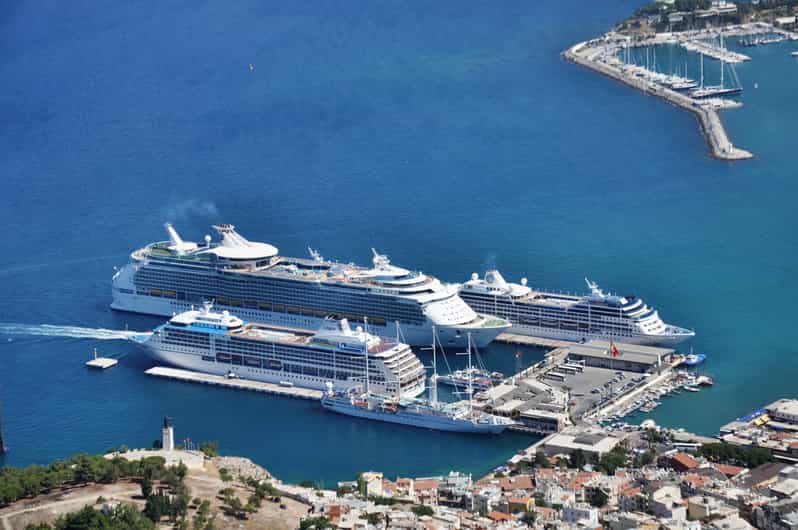
This is the kind of Ephesus outing that suits real schedules. You’re in the ruins for only about 3.5 to 4.5 hours, so you’ll hit the most famous monuments—then you’ll be back in Kusadasi or Izmir with time for lunch (or your cruise check-in). It’s designed for efficiency, not lingering.
What makes it work is that you’re not wandering on your own with a map and a head full of dates. You’ve got a licensed English guide (plus many other languages are offered) who points out the details that help you understand what you’re seeing. You’ll also get hotel/port/airport pickup and drop-off, which is a big deal on the Aegean when traffic and walking times can mess up tight itineraries.
The pace can feel “steady and focused.” If you like slow museum-time with lots of independent browsing, you might want to pair this with a bit of self-guided time later. But if you want the Ephesus highlights done correctly in one morning or afternoon, this format is strong value.
A few more Kusadasi tours and experiences worth a look
The marble streets and the odd-but-amazing advertisement carving
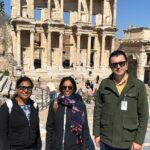
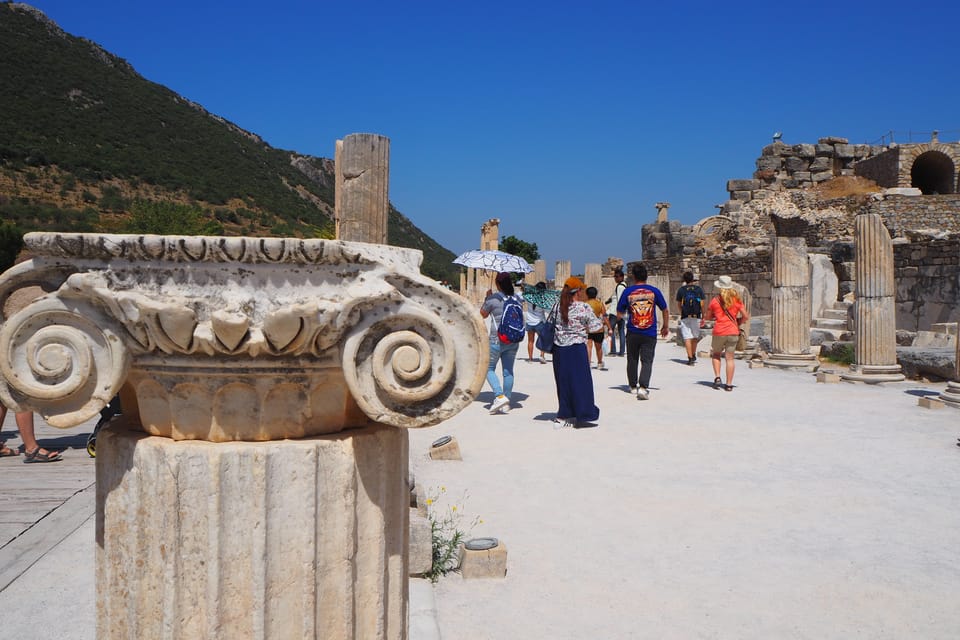
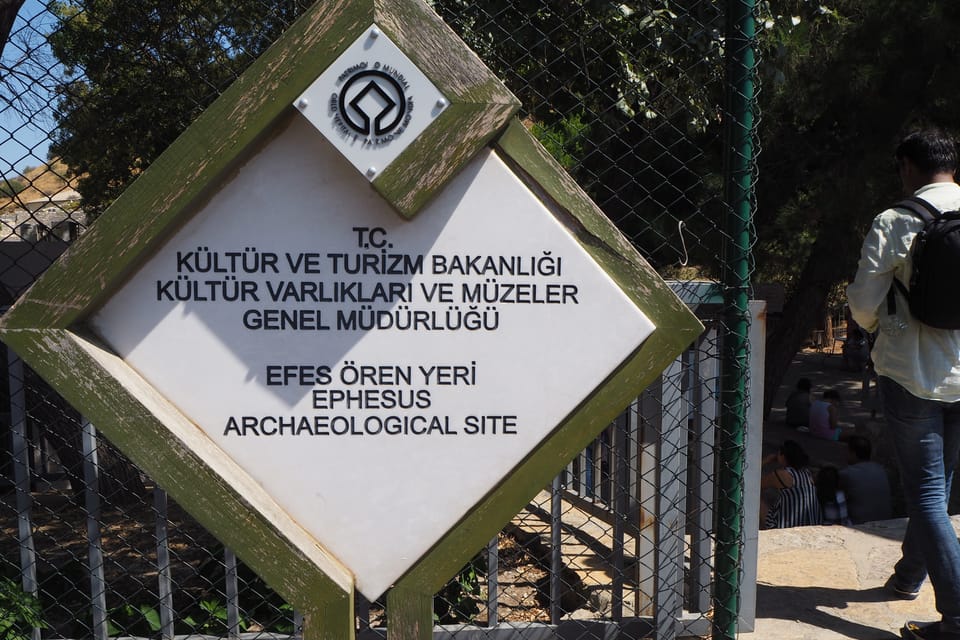
The first “wow” moment is the walk. Ephesus is famous for its marble streets, and you’ll get the feel of a city built for foot traffic—wide lanes, polished surfaces, and a scale that makes you understand how people moved daily. The tour highlights that these were the paths where major names from antiquity (including Cleopatra and Mark Antony, plus apostles in the Christian tradition) once walked—whether in reality or in the way guides connect the threads of the story.
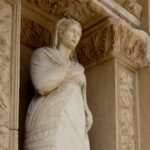
Then comes a detail that’s fun in a very practical way: you’ll search for the world’s first advertisement carved into the marble. The key is a set of recognizable shapes—a footprint, a heart, and a woman’s head—that point to an ancient brothel and its promise of a good time.
This is the kind of thing that makes a half-day tour memorable. When a guide points out a carving like this, you start noticing other “tiny clues” everywhere. Suddenly those ruins aren’t mute; they’re speaking.
How to make that moment better
Wear shoes you’re happy walking in for a few hours. Ephesus marble can be bright and slick when the sun hits, and you’ll be outside most of the time. Bring a camera too—there are plenty of angles where the street textures and carved details show up best.
Library of Celsus: the façade you’ll remember longest
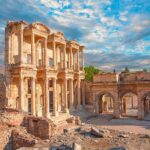
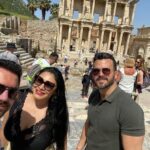
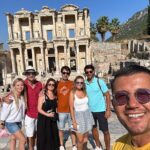
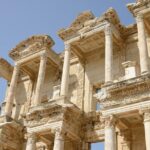
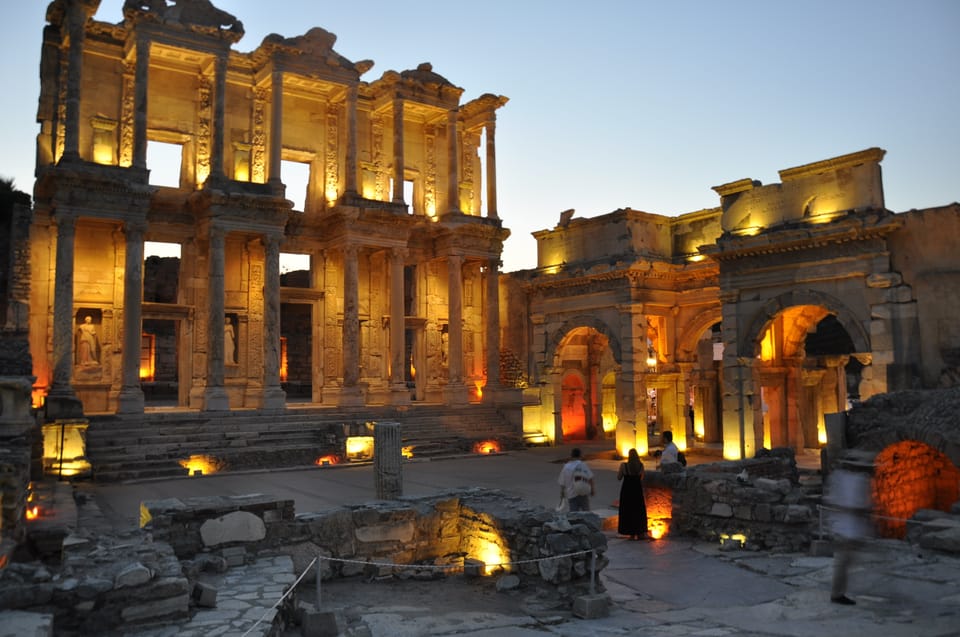
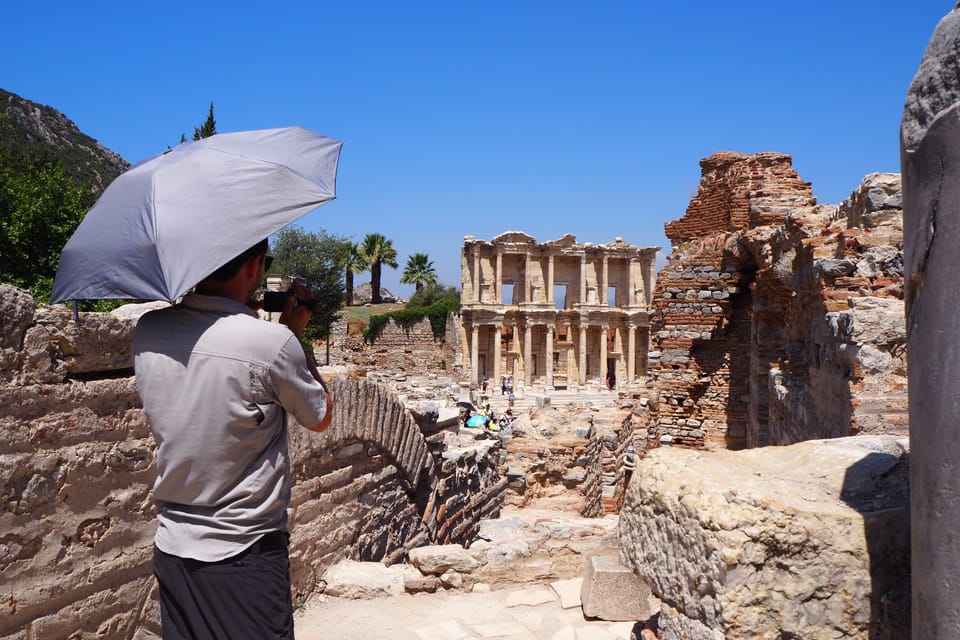
If you only remember one structure from Ephesus, make it the Library of Celsus. This tour treats it like the centerpiece, and for good reason. You’ll see the famous two-story façade, the one that practically defines Ephesus on postcards—but up close, it hits differently.
What I like here is that you’re not just admiring the stonework. The tour explains that the library wasn’t simply a reading room. It also functioned as a tomb for a Roman senator. That matters because it changes how you look: you stop thinking of it as a place for quiet study and start noticing it as a public monument tied to power, memory, and prestige.
This stop is also a strong “timing anchor.” It’s the kind of place where photos are worth it, but the real value is the guide’s framing. If you’ve got limited time, this is where guided storytelling pays off the most.
Temple of Hadrian, Artemis, and Scholastica Baths details
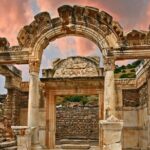
You’ll visit the Temple of Hadrian and the Temple of Artemis as part of the core Ephesus sights. The point isn’t only the name recognition; it’s the sense that Ephesus was religious and civic at the same time, not just an ancient tourist attraction.
For Hadrian, the tour calls out a specific carving detail: a Medusa head associated with the temple. When a guide points to one element like that, it’s easier to connect what you see to what you’re told. Otherwise, many ruins blur together as “stone shapes.”
Another stop that’s unexpectedly useful is the Scholastica Baths area, where you’ll hear about the ancient public toilets. It’s not glamorous, but it’s incredibly grounding. It reminds you that these places were built for daily routines—status, hygiene, and crowds included.
The balance here is good: you’ll get monumental temples and theatrical-scale sites, but you’ll also get at least one “human-scale” detail that makes the city feel lived-in.




The Great Theatre and imagining 24,000 voices
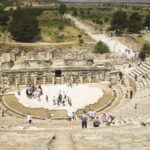
The Great Theatre is one of those sights where your brain does automatic math. The tour highlights its scale—around 24,000 spectators—so when you look up at the stone seating, you can picture the volume of a real crowd. That’s the difference between seeing ruins and understanding atmosphere.
You’ll also get a meaningful connection to early Christianity: it’s where St. Paul is said to have preached to the Ephesians. Whether you approach this from faith, history, or both, the point is the same—you’re standing in a venue built for public speech and mass attention.
This stop can also be one of your best photo moments, depending on the light. Look for angles that show how the theatre hugs the hillside and how the space channels sound. Even if you don’t test that theory, the layout makes the idea feel real.
Getting from Kusadasi or Izmir without losing your whole day
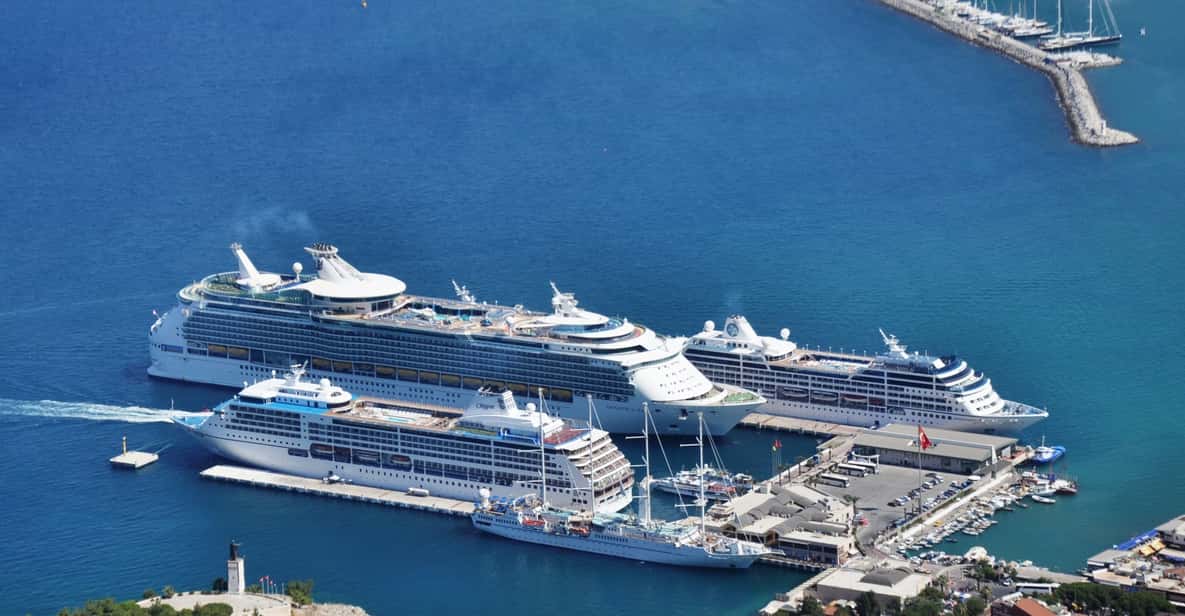
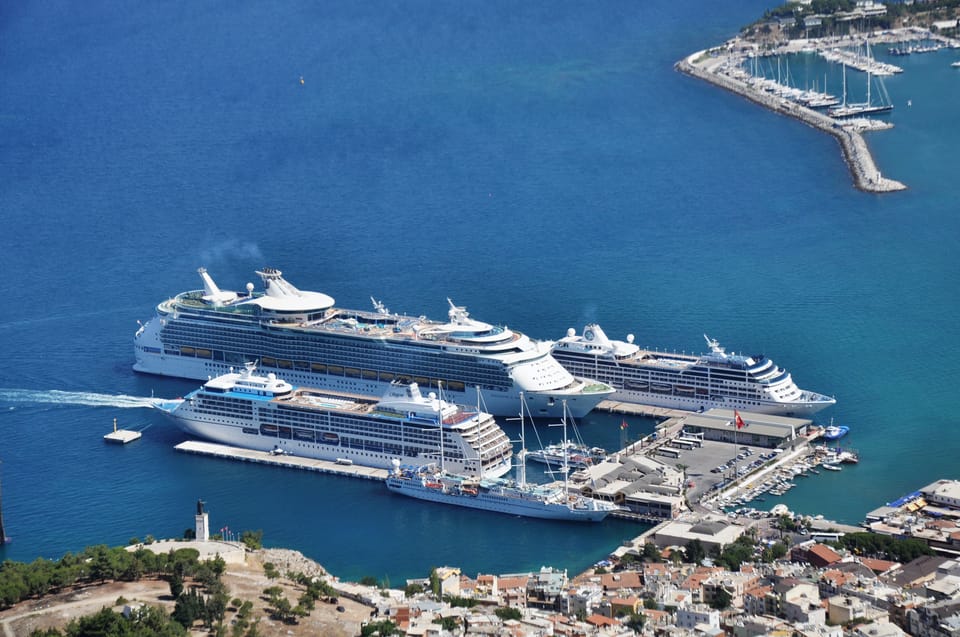
This tour is built around convenience. You’re picked up in an air-conditioned vehicle with a professional driver, then returned to your starting point. If you’re coming from a cruise stop, the transfer part matters because timing pressure is real.
The tour specifically emphasizes cruise reliability: a guaranteed on-time return so you don’t miss your ship. That’s not a small promise. A half-day excursion lives or dies by timing, and Ephesus can be busier than expected.
Past bookings also describe modern vehicles like Mercedes V-Class/Vito style transfers. You shouldn’t assume every ride will match that exactly, but it lines up with the idea that comfort is part of the value here.
Small group size changes the feeling
Group size is limited to 10 participants. In practice, that means more room to hear your guide, more chance to ask questions, and less time standing around while everyone regroups. It’s especially helpful when you’re walking through major sights with lots of other tour groups.
The guide matters: what you should watch for
A half-day guide has a job: pick the most important facts, explain them clearly, and point out the details you’d otherwise miss. This tour uses a licensed professional guide in many languages, including English, German, French, Dutch, Italian, Spanish, Japanese, Russian, Portuguese, Turkish, and Greek.
In real-world execution, guide language quality can vary. Some bookings praised guides by name for strong performance in Italian and clear explanations, while at least one booking flagged weaker Italian. If language is a big deal for you, it’s worth confirming the guide language before you go and remembering that shared translation can sometimes affect pacing.
Also, here’s the one curveball: one booking described the tour including multiple shop visits and feeling like the shopping felt pressured or commission-driven. Your best move is to treat any retail stop as optional mentally—set a max budget, and don’t let a “convenient stop” turn into an unplanned purchase.
Price and value: is $135 reasonable for what you get?
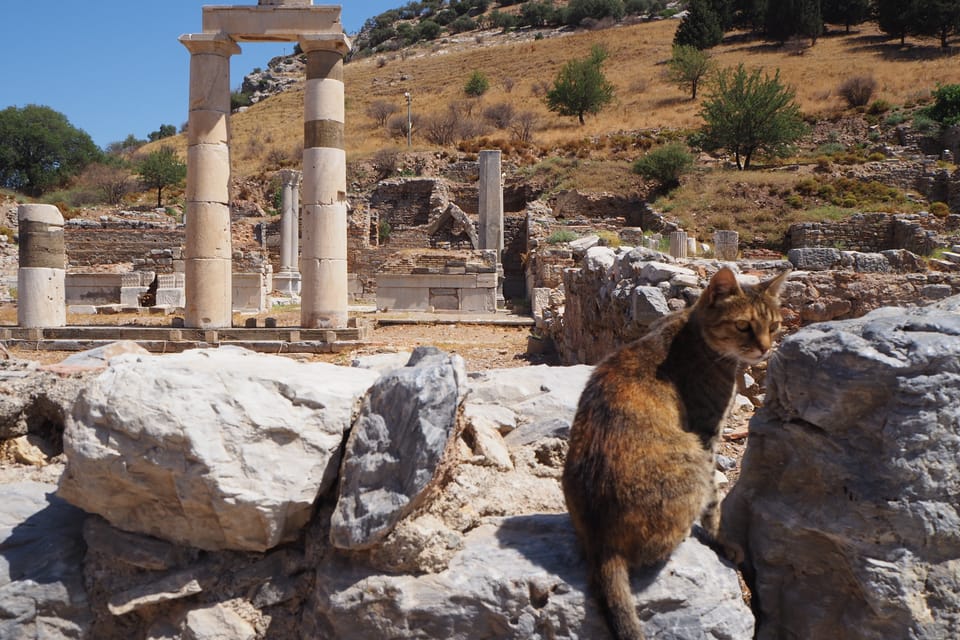
At $135 per person for about 3.5 to 4.5 hours, this tour isn’t the cheapest way to reach Ephesus. But it includes the parts that usually cost time and stress: pickup/drop-off, a professional guide, entrance fees, and a skip-the-ticket-line approach.
If you try to DIY it, you’ll still pay for entry, and you’ll spend more energy on transport coordination and queue management. Paying for a guide is what converts ruins into a coherent story—especially in a half-day window.
The best value angle here is “all-in for the highlights.” You’re not buying time to wander; you’re buying a structured route that prioritizes major monuments like the Library of Celsus and the Great Theatre.
What to bring (and what to avoid) for an easy Ephesus walk
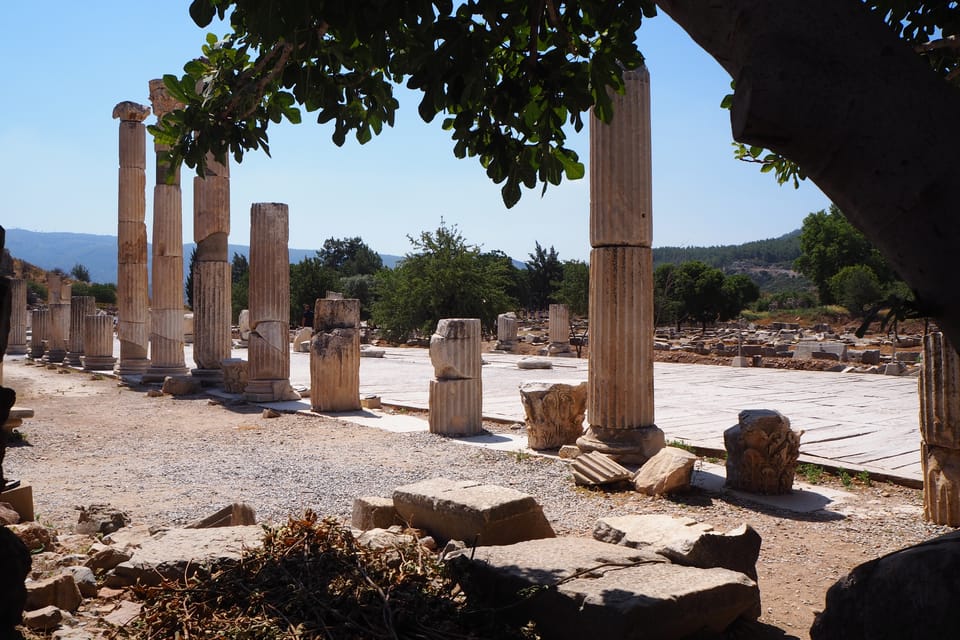
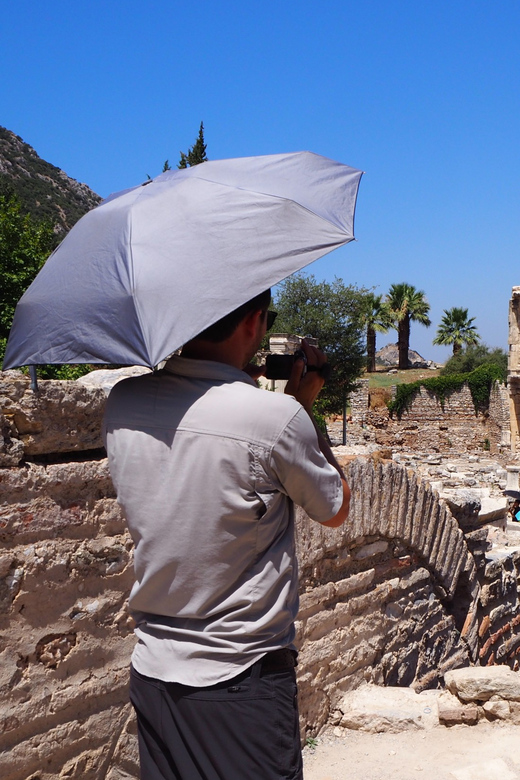
You’ll be outside and walking, so pack for comfort more than for fashion. Bring comfortable shoes, sunglasses, a sun hat, and sunscreen. You also need a passport or ID card.
There are a couple of rules that can surprise people: luggage or large bags aren’t allowed, and video recording isn’t permitted. A small camera setup is fine, and having your camera ready makes a difference because the stops include carvings and façade angles worth photographing.
If you’re prone to heavy-bag travel, keep it light. This is a walk-first experience.
Who this tour suits best
This works especially well if:
- You have limited time and want Ephesus highlights without planning chaos
- You’re a cruise passenger who needs reliable return timing
- You prefer a guided route that focuses on stories and key monuments
- You want a small group with a calmer pace than big bus tours
It may not suit you if you:
- Rely on a wheelchair or have mobility impairments (the tour isn’t suitable for wheelchair users)
- Want a long, independent archaeological experience with lots of unscripted browsing
Should you book this Ephesus half-day tour?
I think this is a good booking when your goal is clear: see the famous Ephesus sights in one morning or afternoon with transport handled, entry included, and a guide doing the heavy lifting. The Library of Celsus and the Great Theatre are exactly the kind of stops that benefit from a storyteller, not just a guidebook.
Book it if you’re traveling with a schedule constraint—cruise days especially. The strong timing emphasis is the biggest reason.
Skip it or go in with extra care if you strongly dislike retail stops or if your comfort depends on fluent narration in your preferred language. If shopping pressure would stress you out, set expectations early and keep your decisions simple once you’re there.
If you want, tell me your travel month and whether you’re starting from Kusadasi or Izmir (and what language you want). I can suggest the best time window for light, crowds, and a smoother walk through Ephesus.
FAQ
How long is the Ephesus half-day tour?
The duration is listed as 3.5 to 4.5 hours, depending on the starting time and schedule.
Where does pickup happen?
Pickup and drop-off are available from your hotel, port, or airport. You choose your preference when booking.
Can I start from Kusadasi or Izmir?
Yes. The tour runs from Kusadasi or Izmir, depending on your location.
What sights will I visit?
You’ll see major Ephesus monuments including the Library of Celsus, the Temples of Hadrian and Artemis, and the Great Theatre, along with other highlighted details in the ancient city.
Is the ticket line skipped?
Yes. The tour includes skip-the-ticket-line entry.
What’s included in the price?
Included items are a licensed professional guide, an air-conditioned luxury vehicle, pickup and drop-off, and entrance fees to sites according to the itinerary.
What languages are available for the guide?
The tour lists guides in English, German, French, Dutch, Italian, Spanish, Japanese, and also Russian, Portuguese, Turkish, Greek, plus others depending on the booking.
Is it suitable for wheelchair users or mobility impairments?
No. The tour is listed as not suitable for people with mobility impairments and wheelchair users.
What should I bring?
Bring passport or ID card, comfortable walking shoes, sunglasses, sun hat, and sunscreen.
Is video recording allowed?
No. Video recording is not allowed.