REVIEW · KUSADASI
Ephesus: Customised Day Tour from Kusadası Port
Book on GetYourGuide →Operated by Moira Travel Agency · Bookable on GetYourGuide
Ephesus hits hard, and this tour lets you steer it. I love the custom itinerary element, where your licensed guide adjusts how much history you want at each ruin, and I also love the practical skip-the-ticket-line setup that saves time once you reach the ancient city. One thing to keep in mind: entrance fees and lunch aren’t included, so your final cost depends on what extra sights you choose, especially around the Terrace Houses.
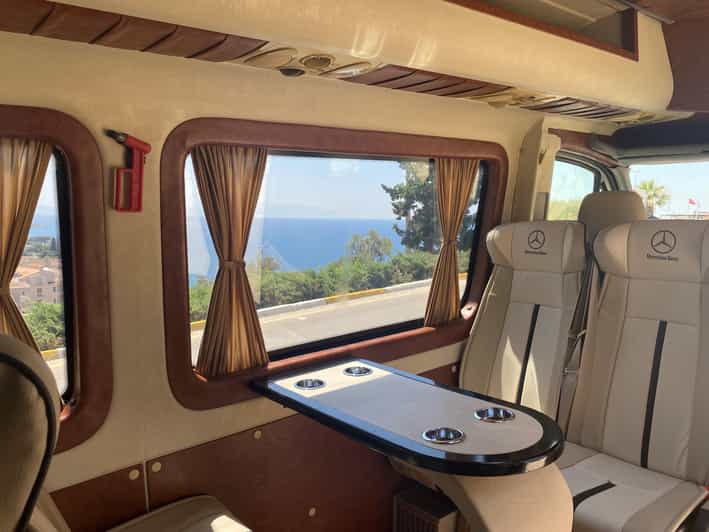
From the cruise port, you’re picked up in a comfortable, air-conditioned vehicle with a pro driver and taken through Ephesus and the nearby highlights like the House of the Virgin Mary and the Temple of Artemis. Your guide in English (and often with names like Kaya, Memo, Mehmet, Ozan, or Furkan turning up for different groups) doesn’t just recite facts; they help you time your steps to avoid crowds and focus on what you actually care about.
In This Review
- Key highlights at a glance
- Kusadası Port logistics: how you actually spend your 6.5 hours
- Ephesus Ancient City: where your guide controls the pace
- House of the Virgin Mary: meaningful, but sometimes line-heavy
- Temple of Artemis: understanding the Seven Wonders scale
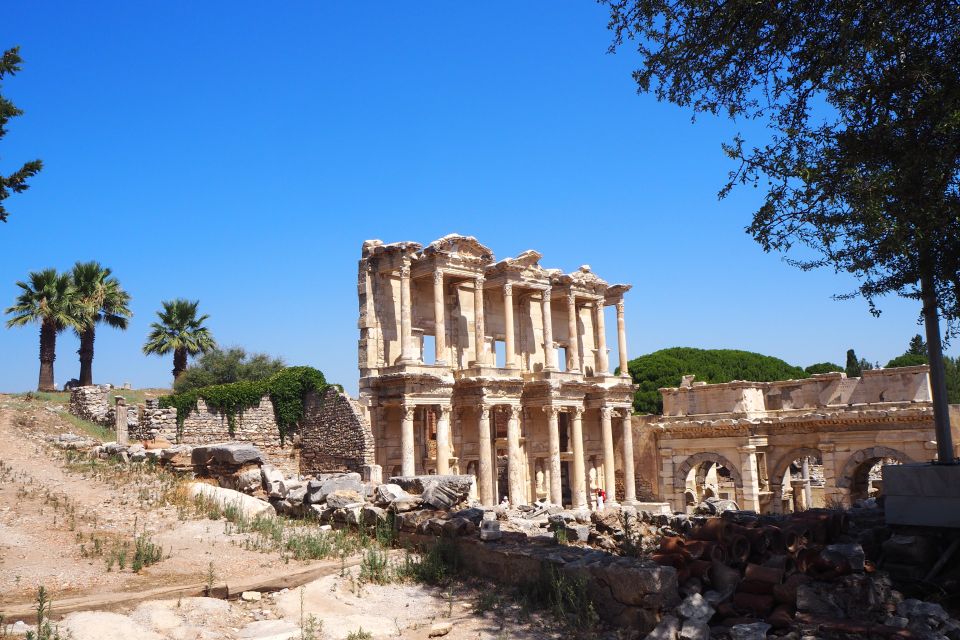
- Library of Celsus: short stop, big payoff
- Terrace Houses of Ephesus: mosaics, wall paintings, and heating
- Shopping and lunch: keep it optional and keep it light
- The guides make the difference: Kaya, Memo, Mehmet, Ozan, and Furkan
- Price and value: what $24 covers, and what changes your total
- Who this tour suits best (and who should think twice)
- Should you book this customized Ephesus day tour?
- FAQ
- What is the duration of this tour from Kusadası port?
- Are entrance fees included?
- Is lunch included?
- Does the tour include a licensed guide and transportation?
- Where are pickup and drop-off locations?
- What cancellation option is offered?
Key highlights at a glance
- Choose your history level with a licensed English guide, not a one-size script
- Skip-the-line entry helps you get into Ephesus faster from your port schedule
- A crowd-smart route means the stop order can change to reduce waiting
- Ephesus plus the nearby sacred sites gives you variety in a single 6.5-hour day
- Optional shopping and lunch decisions stay in your control, not forced stops
Kusadası Port logistics: how you actually spend your 6.5 hours
This is built for real port days. You get two pickup options at the start: Kusadası port or Feribot İskelesi. Either way, the goal is simple—get you to Selçuk/Ephesus without wasting your cruise day in transit or hunting for your group.
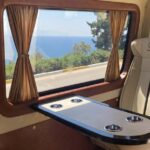
You’ll ride in a comfortable air-conditioned vehicle with a professional driver. If you choose the private option, the experience feels calmer and more tailored. If you’re in a small group, you still get a lot of flexibility, and the guide can steer the day based on how fast people walk and how deep they want to go.
Timing matters here. The tour duration is about 6.5 hours, and the guide may swap the order of stops to avoid crowds. That’s not a minor detail. Ephesus has a lot of foot traffic, and small timing changes can mean fewer bottlenecks near the most photographed areas.
You’ll end back at one of the two original drop-off points: Kusadası port or Feribot İskelesi.
You can also read our reviews of more tours and experiences in Kusadasi.

Ephesus Ancient City: where your guide controls the pace
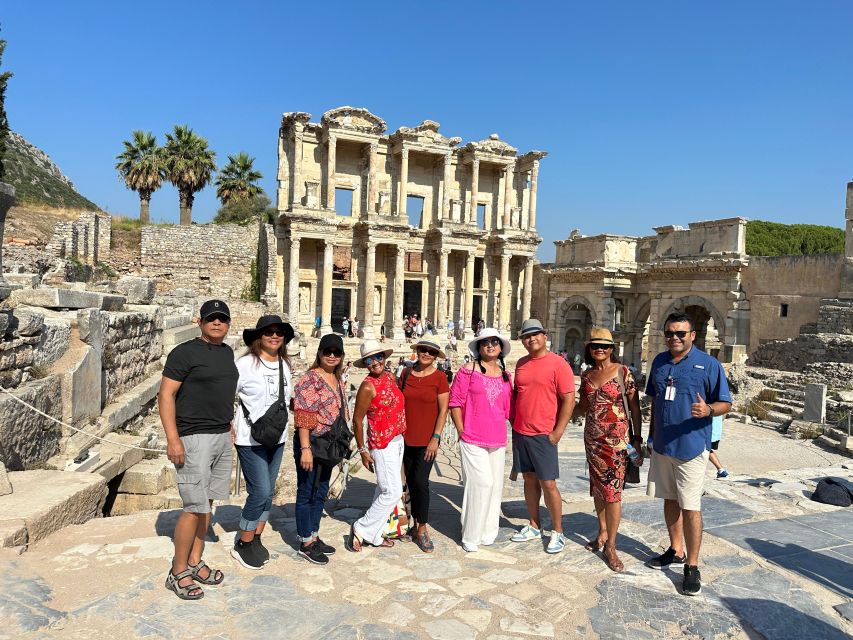
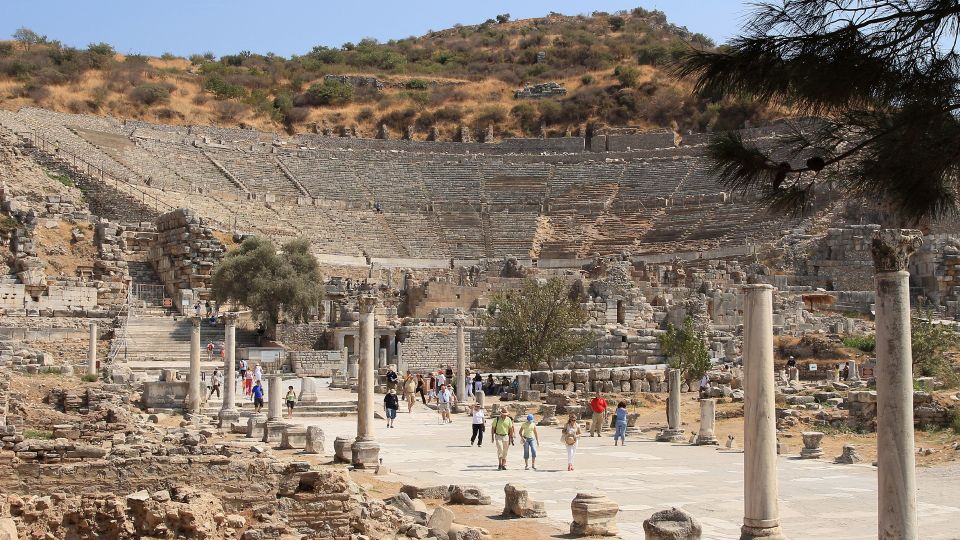
Ephesus is the main event. You spend roughly 2 hours in the ancient city, with time for photo stops, a guided walkthrough, free time, and some shopping if you want it.
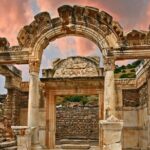
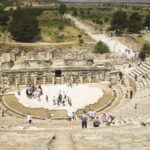
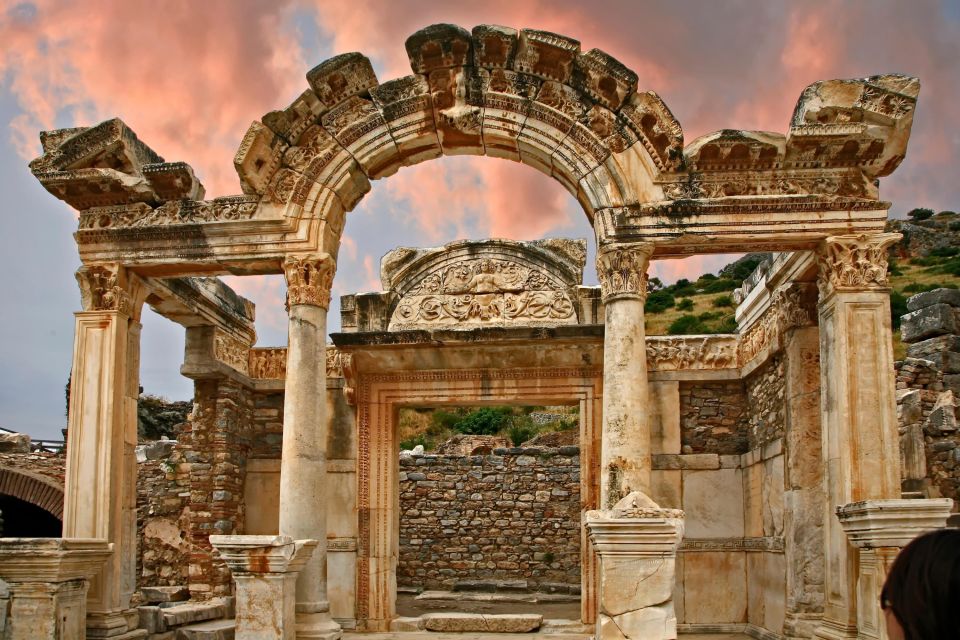
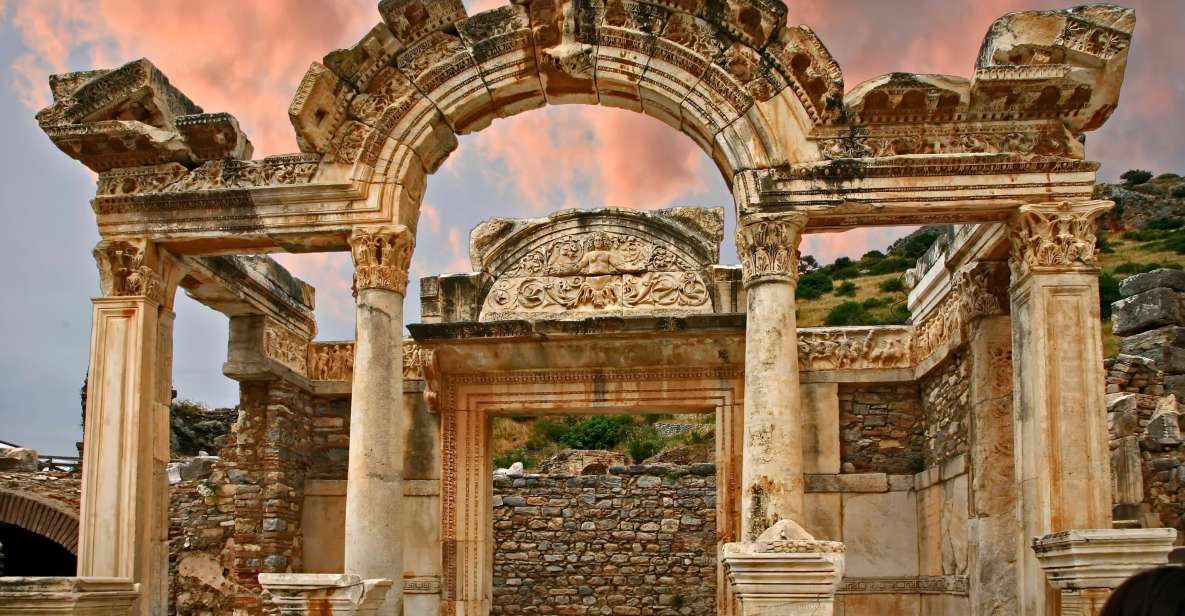
Even if you’ve seen photos of Ephesus before, the scale hits when you’re standing there. The city is famous for major Greco-Roman landmarks, including the Library of Celsus, Hadrian’s Temple, the Great Theater, and the Terrace Houses. One of the smartest things about this tour format is that your guide can decide what’s worth slowing down for and what to treat as quick context, based on your interests.
This is also the portion where the skip-the-ticket-line advantage shows. Ephesus can be a time sink if you’re waiting around. Cutting that waiting time lets you spend it walking, photographing, and asking questions.
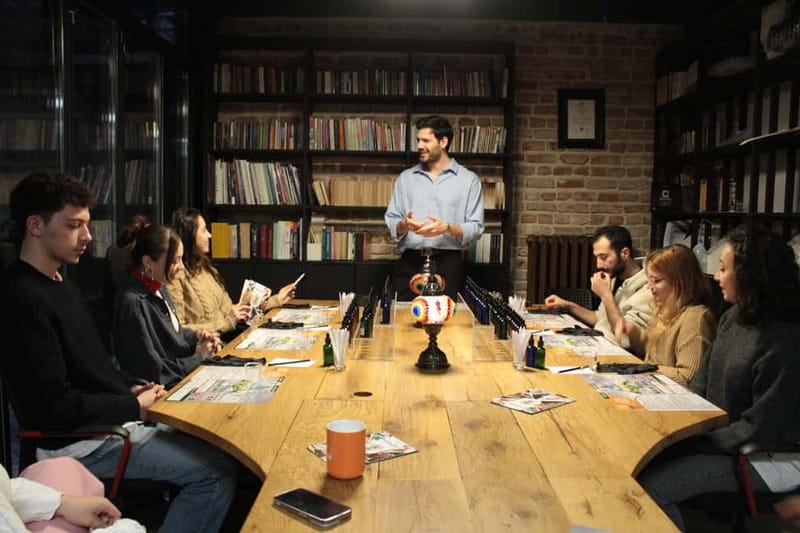
What I like about the way these guides often run Ephesus is the mix of structure and freedom. You get guided interpretation—how the ruins connect to daily life, religion, and the city’s importance in the Roman world—then you’re not trapped in a rigid march. One guest experience specifically noted the guide brought the group tea inside Ephesus and used a sit-down moment to explain context before moving on. Not every guide will do the same thing, but it reflects the bigger idea: good guides help you get oriented fast.
Also, ask your guide to show you things slightly off the main route if you have the time. Ephesus rewards curiosity, and the best guides point out details you’d otherwise miss.
House of the Virgin Mary: meaningful, but sometimes line-heavy
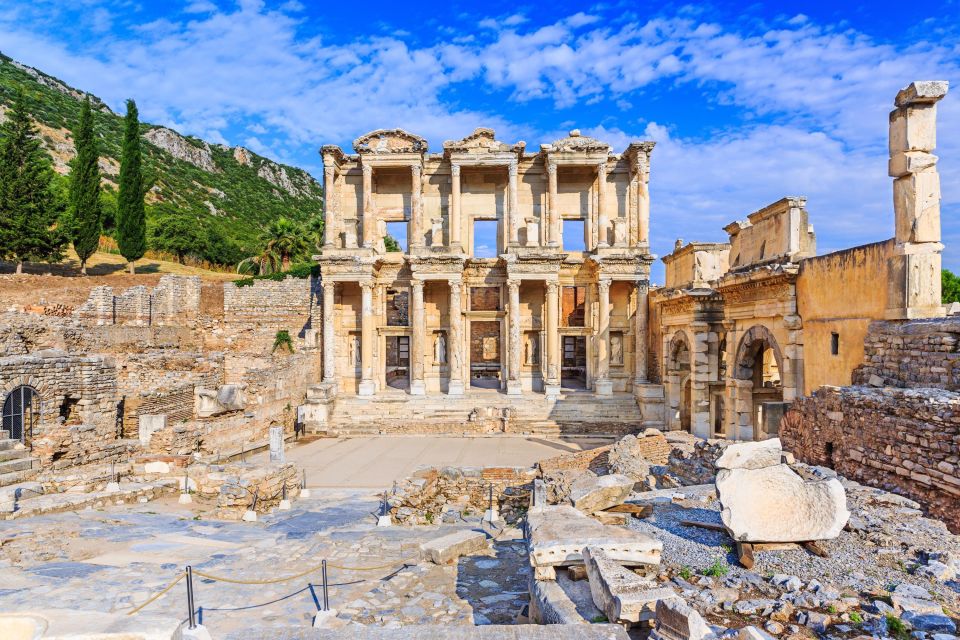
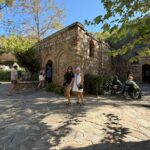
Next up is the House of the Virgin Mary, with about 1 hour for visit and sightseeing. This stop isn’t about ruins the way Ephesus is. It’s more about pilgrimage atmosphere—visitors coming here for Christian tradition and reflection.
Here’s the practical side. The House of the Virgin Mary can involve waiting in a line before you reach the space itself. Some people will feel it’s more queue time than discovery time, especially if your heart is set on archaeology and architecture. If you’re visiting mainly for religious meaning, you’ll likely find the time well spent.
The upside is that it breaks up the day. After walking Ephesus, this is a calmer shift. And if your guide has a history bent, you’ll often get helpful framing about why this location matters in Christian memory and how it sits within the broader region.
Temple of Artemis: understanding the Seven Wonders scale
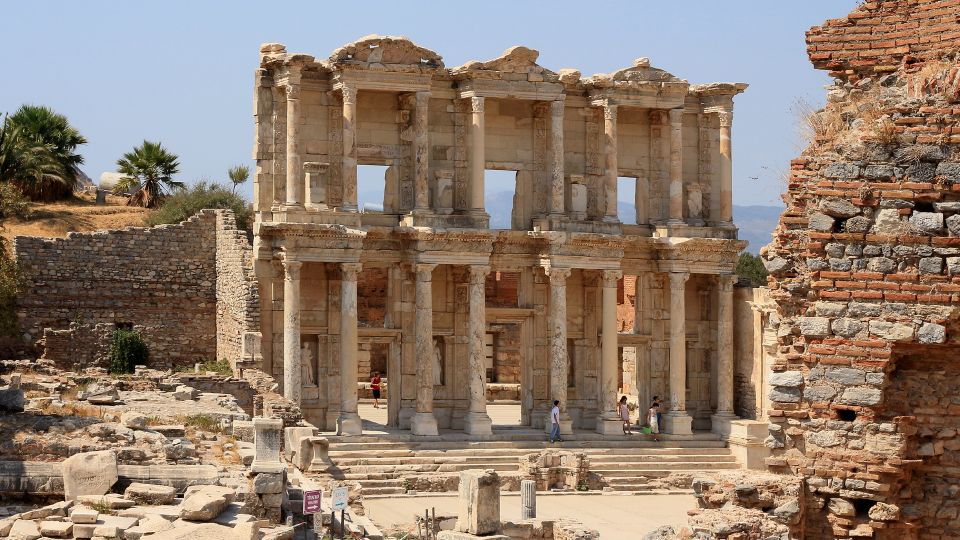
Then comes the Temple of Artemis stop—about 30 minutes, with a photo stop and guided context plus a short window of free time and sightseeing.
You’re not seeing a whole intact temple here. The Artemision (as it’s called in historical references) is famous because it was once one of the Seven Wonders of the Ancient World—huge, luxurious, and dedicated to the goddess Artemis. It was later destroyed by fire, and what you can view now is limited compared to its original grandeur. That’s exactly why the guided explanation matters.
Good guiding turns a “not much to see” site into a scale lesson. You’re aiming to understand what the temple represented and how massive it was in the ancient world, even when the remains aren’t extensive.
In other words: if you want perfect photo moments, you may feel like the stop is quick. If you want a smarter mental model of ancient scale, you’ll probably enjoy it. Your guide’s job here is to connect myth, empire, and art into something you can visualize.
Library of Celsus: short stop, big payoff
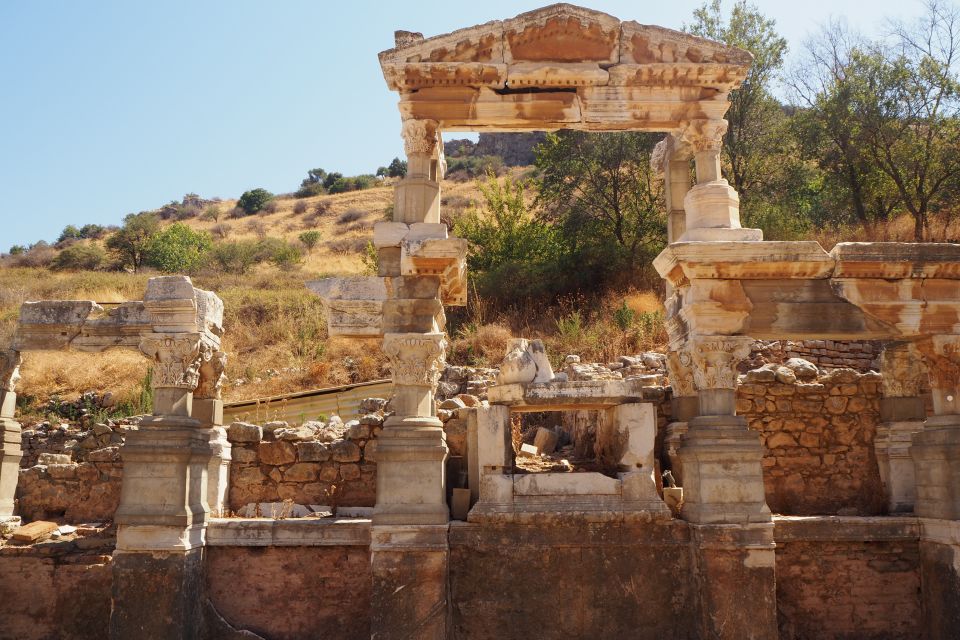
After Artemis, you hit the Library of Celsus with a focused 30-minute guided visit.
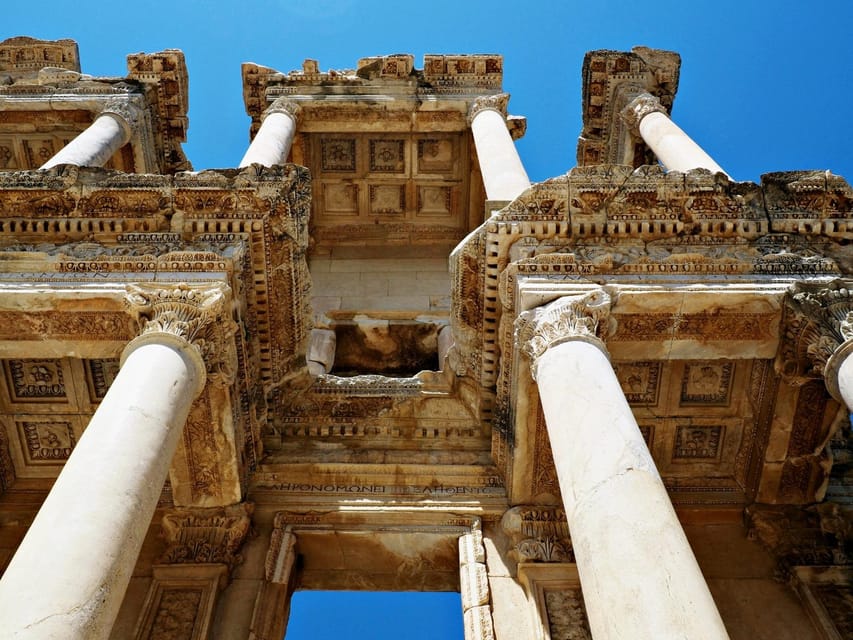
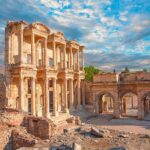
This is one of the reasons Ephesus makes history feel real. The Library of Celsus is a landmark of ancient knowledge and architecture. Even in partial remains, it communicates status—how important learning and civic life were in the Roman city.
Because the time here is short, I’d treat this as your moment to ask questions. If you’re curious about what you’re seeing—why it was built, what the design signaled, how the structure fits with the surrounding city—this is where your guide can tighten everything into clear takeaways.
If you prefer “see it, then move,” you can do that too. The structure gives you plenty to observe quickly, and the guided part keeps you from walking through it without context.



Terrace Houses of Ephesus: mosaics, wall paintings, and heating
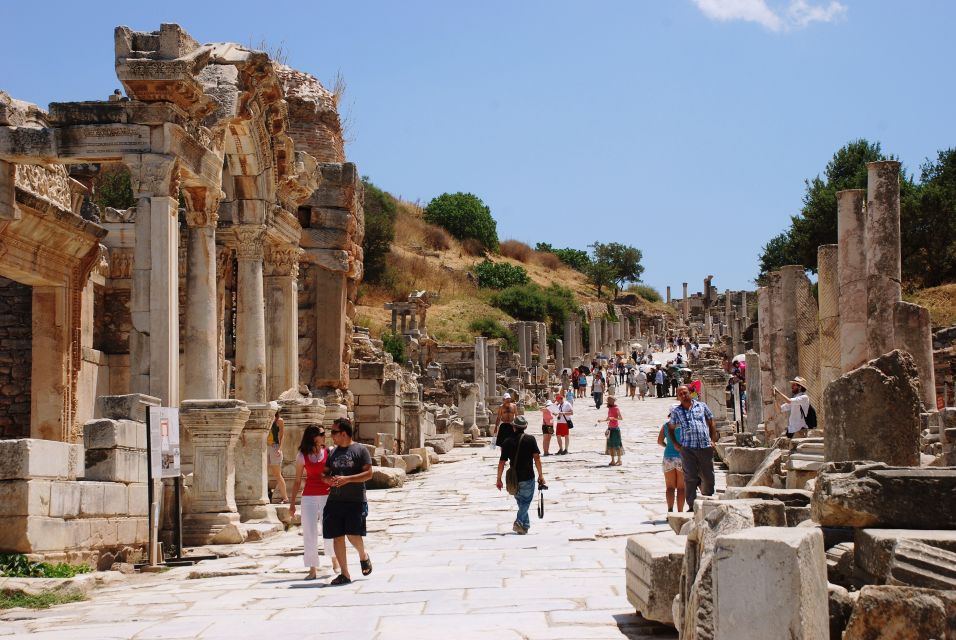
Finally, you get to the Terrace Houses of Ephesus, also with around 30 minutes of guided time.
This is often the stop that separates casual ruins viewing from deeper engagement. The Terrace Houses are known for some standout interior elements: mosaics, frescos (wall paintings), and one of the earliest examples of central heating in the ancient world. Even if you only spend a short window here, these details make the ancient city feel less like stone and more like a lived-in place.
One thing to watch: entrance access and how much you can see can affect your experience. Some visitors recommend paying attention to any extra fees tied to the Terrace Houses area if you’re offered choices. If your goal is art and domestic life—how wealthy Romans lived—this stop is worth prioritizing.
If you’re the kind of traveler who thinks, I want to know what home life was like, you’ll feel rewarded even with limited time.
Shopping and lunch: keep it optional and keep it light
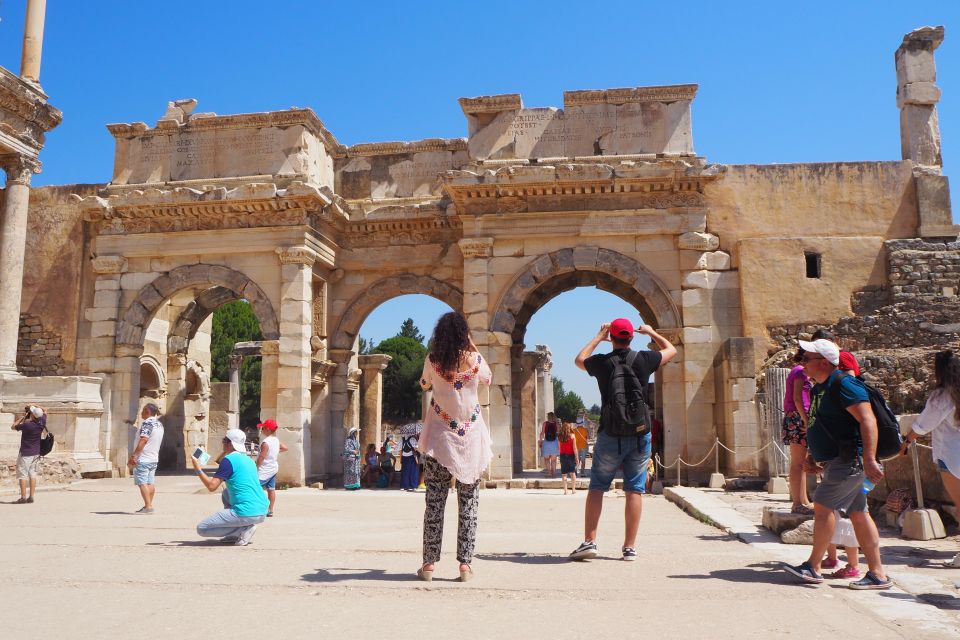
One of the tour’s advantages is that you get decisions, not detours. During the Ephesus portion, there’s time for shopping, but it’s framed as your choice. You can decide if you want traditional Turkish shops or if you’d rather use that time for extra photos or to move at your own pace.
Lunch is explicitly not included, and that matters for planning. Your guide can help you decide what fits your schedule. If you want a local meal, you’ll have that option; if you want to skip lunch to see more, you can.
Also, a good sign from real-world guiding: some people appreciated not being pulled into pressure-style stops, like rug factory or extra souvenir stops. That’s the difference between a guide who runs a day and one who runs a sales route. If shopping is part of your experience, you’ll enjoy it more when it stays under your control.
The guides make the difference: Kaya, Memo, Mehmet, Ozan, and Furkan
This tour is sold as a customized day, but customization only works if the guide can actually adjust. The best part here is the way guides tailor the depth of history to your pace and your preferences.
In the experiences tied to this service, guides like Kaya and Memo stood out for two things:
1) they check in and adjust the amount of information you want per stop
2) they use practical crowd-avoidance tactics so you spend less time stuck
You’ll also hear guide-specific strengths in different groups. Some guides are especially strong at explaining sites in simple, memorable ways—so the ruins don’t blur together. Others take time to help you photograph well. One guide even took a moment for a tea break and then used a short sit-down explanation to set the scene before the walk.
It’s a licensed guide and English language tour, which is helpful if you want solid interpretation without translation friction.
The driver also matters on port days. You’re not just chauffeured—you’re moved efficiently with safety in mind, and that helps you relax while the guide handles timing.
Price and value: what $24 covers, and what changes your total
At about $24 per person, this tour is positioned as strong value for a cruise-day window. Here’s what you’re getting that makes the price make sense:
- transportation in a comfortable air-conditioned vehicle
- a professional driver
- a licensed guide in English
- guided time in multiple high-demand sites
- skip-the-ticket-line benefits
- flexibility through a customized itinerary
Now the parts that can change the math:
- entrance fees are not included
- lunch is not included
- personal expenses are on you
That means your final cost depends on what you actually want to see once you get there—especially if you decide you want more access around the Terrace Houses or you add optional stops like a museum visit in Selçuk. One guest had their itinerary expanded with museum tickets, and that’s exactly the kind of value decision customization enables.
So my advice: treat $24 as the base of a structured day, then think of entrance fees and any add-ons as the variable portion.
Who this tour suits best (and who should think twice)
This tour is a good match if you:
- are on a cruise with limited time and want a plan that minimizes waiting
- want Ephesus first, but also want nearby stops like the Virgin Mary House and Artemis
- like history explanations but don’t want a one-speed lecture
- prefer a guide who can adjust on the fly, depending on crowd levels and your energy
It’s also a solid pick for first-time visitors to Turkey who want the highlights without turning the day into a logistics project.
Two caution notes. First, you should wear comfortable shoes because you’ll be walking ruins and uneven terrain. Second, the tour is marked as wheelchair accessible, yet it’s also marked as not suitable for people with mobility impairments. If mobility is a concern, you’ll want to check directly before booking so you’re not guessing.
Should you book this customized Ephesus day tour?
If you want your Ephesus day to feel controlled—not rushed, not random, and not locked to a preset script—this is an easy yes. The combination of licensed English guiding, skip-the-line, and the ability to tailor how deep you go at each site is exactly what makes a big archaeological day work, especially with port timing.
I’d book it if you’re the type who likes understanding what you’re seeing, and you’d rather trade some open-ended wandering for a guide who can help you avoid crowds and pick the right order.
Skip the idea only if you’re certain you don’t want guiding at all, or if you know you want a longer, unstructured Ephesus day with no nearby stops. This tour is built for efficiency and smart pacing, not for hours of purely self-guided roaming.
FAQ
What is the duration of this tour from Kusadası port?
The tour runs for about 6.5 hours.
Are entrance fees included?
No. Entrance fees for the sights you visit are not included.
Is lunch included?
No. Lunch isn’t included.
Does the tour include a licensed guide and transportation?
Yes. You get a professional licensed guide and transportation in a comfortable air-conditioned vehicle with a professional driver.
Where are pickup and drop-off locations?
Pickup and drop-off are available at Kusadası port or Feribot İskelesi.
What cancellation option is offered?
Free cancellation is available up to 24 hours in advance for a full refund.