REVIEW · KUSADASI
Best of Ephesus Tour
Book on Viator →Operated by Seber Turizm Taşımacılık ve Tic. Ltd. Şti. · Bookable on Viator
Seven churches, one busy day. This private day trip from Kusadasi port strings together major sites—Ephesus, the Temple of Artemis, Meryemana, and St. John—so you get one connected story of the ancient and Christian worlds without wrestling with traffic or ticket lines.
I especially like the mix of scale and context: big outdoor monuments at Ephesus plus an Ephesus Museum stop where you can study what archaeologists actually recovered. I also like the practical comfort—port/hotel pickup and drop-off, a new air-conditioned vehicle with a separate driver, and a professional licensed guide speaking English.
One consideration: the day moves. You will see a lot, but most stops are timed, so if you want hours of slow wandering in just one place, this format may feel fast.
In This Review
- Key highlights at a glance
- The real value: a focused, well-timed day from Kusadasi
- Port pickup and luxury transport: less hassle, more sightseeing
- Temple of Artemis: a quick start with big ancient names
- Ancient Ephesus: the 2-hour walkthrough that hits the essentials
- Ephesus Museum: where you start recognizing the pieces
- Lunch and Turkish cuisine: plan for food you choose
- Meryemana (Virgin Mary’s House): a pilgrimage stop with a clear purpose
- Basilica of St. John: Justinian-era church over a believed burial site
- Price and value: is $140 worth it?
- Who this tour suits best
- A note on guide quality and how to judge it
- Should you book the Best of Ephesus Tour?
- FAQ
- Is pickup and drop-off included?
- How long is the tour?
- Is this tour private?
- What language is the tour offered in?
- Are entrance fees included?
- Is food included?
Key highlights at a glance
- Port-to-sites convenience: pickup and drop-off included, with your guide meeting you at the vehicle
- Skip-line ticket planning: entrances aren’t included, but tickets are arranged in advance to reduce waiting
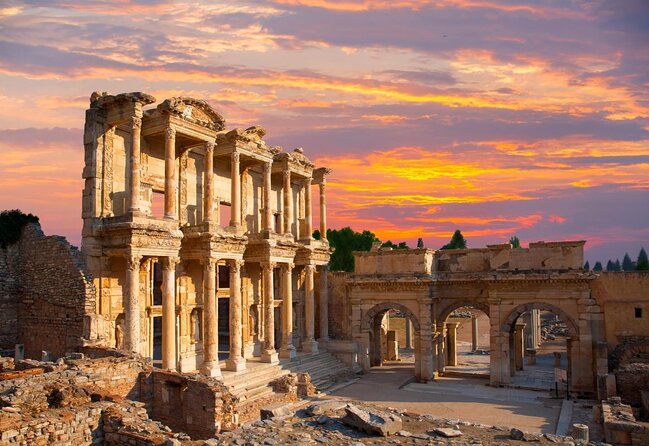
- Ephesus must-sees in a tight window: Library of Celsus, Great Theater, Odeon, Trajan’s Fountain, and more
- Museum time that adds meaning: artifacts from Ephesus and other Greek/Roman cities, including a famous Artemis statue
- Two faith-focused stops: Meryemana (Virgin Mary’s House) and the Basilica of St. John
The real value: a focused, well-timed day from Kusadasi
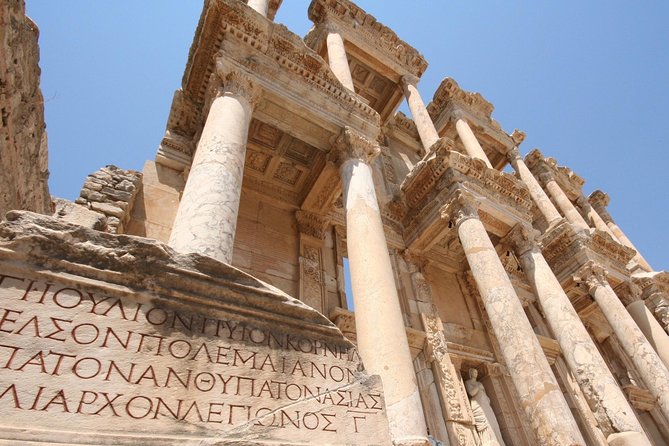
Ephesus is the kind of place that can swallow an entire vacation day. The ruins are spread out, the details are endless, and the best views usually require some walking and staring. This tour’s strength is that it gives you a clear route through the highlights in about 7.5 hours, starting right from the Kusadasi port area.
Instead of hopping between random sights, you move through a story line that makes sense. You begin with a monumental Greek landmark (the Temple of Artemis), then shift to the Greco-Roman city of Ephesus with its theaters, fountains, and civic gates. After that, the day turns more reflective with Meryemana (the Virgin Mary’s House), and ends with a major Byzantine-era church linked to St. John.
That structure matters because it helps your brain organize what you’re seeing. You won’t just take photos of impressive ruins. You’ll understand why those places mattered—culturally, politically, and spiritually—because the stops are placed in a thoughtful order.
Also, the tour is private. That means you’re not stuck behind a stream of strangers moving at different speeds. If your group likes to stop for questions or take a few extra photos at a key spot, you have that freedom.
You can also read our reviews of more tours and experiences in Kusadasi.


Port pickup and luxury transport: less hassle, more sightseeing
Your day starts with pickup from the Kusadasi port or your hotel area, then ends back at the meeting point. Your guide is waiting at the vehicle, which is one of those small details that saves stress—especially in busy harbor zones.
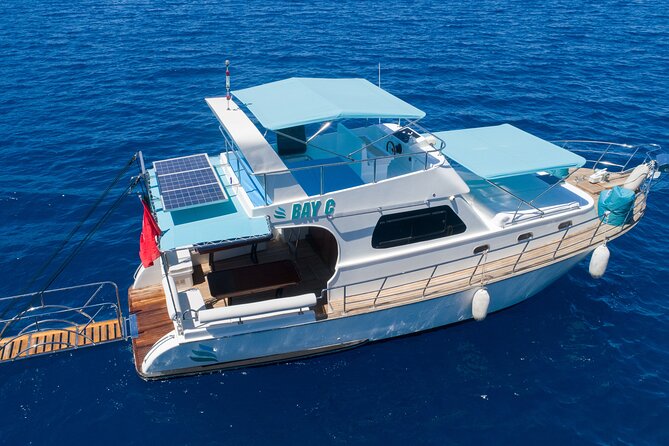
The vehicle is described as a brand new, air-conditioned option with a separate driver. Practically, that usually means smoother pacing and less chance of delays from comfort issues. In summer, heat can flatten your energy fast. Air-conditioning plus a planned route helps you arrive ready to look, not already worn out.
The tour is offered in English, so you can ask real questions instead of relying on a guidebook while you try to keep up. The tour is also run with a licensed local guide for the entire day, which is reassuring for a site like Ephesus where context can make the difference between seeing stones and actually understanding them.
One more thing I’d keep in mind: this is a moderate-physical-fitness style tour. Some parts of the day involve walking on uneven ground and stairs. If you know you struggle with that kind of terrain, plan ahead with comfy shoes and a realistic pace for the group.
Temple of Artemis: a quick start with big ancient names
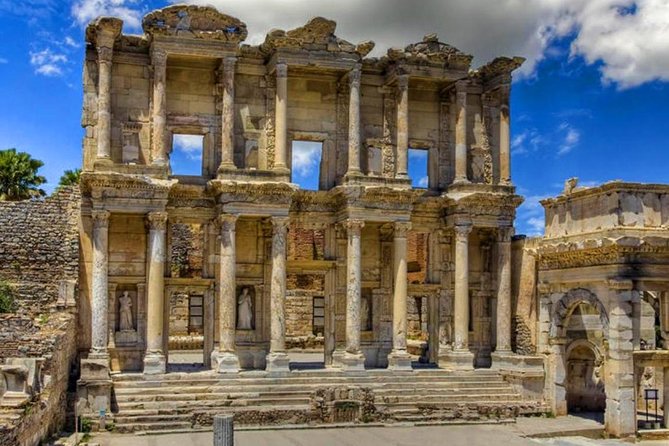
The Temple of Artemis stop is timed at about 15 minutes, and admission is listed as free for this part. That’s a very short window, so you won’t get a long, slow look. But it works as a teaser that sets the tone for the rest of the day.
Artemis was one of the central figures in ancient religious life, and this temple is tied to the idea of the Seven Wonders of the Ancient World. Even if you mainly come away with a sense of how monumental the original complex must have been, that foundation helps when you later see how Ephesus carried its religious and civic identity.
In practical terms, use this first stop to get your bearings. Look for what you can still see on the ground and imagine the scale. Then think ahead: when you reach the Ephesus Museum later, you’ll have a stronger understanding of why the museum’s Artemis-related pieces matter.
Ancient Ephesus: the 2-hour walkthrough that hits the essentials
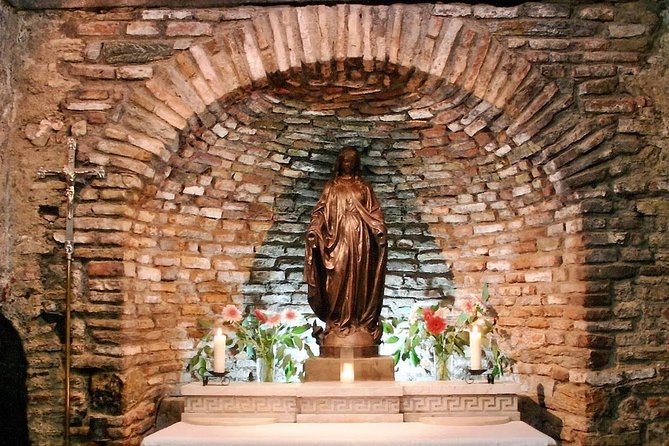
The heart of the day is the Ancient City of Ephesus. This stop is about 2 hours, and entrance to the site is not included (though the tour can arrange tickets in advance so you can skip long lines).
Two hours sounds short until you remember what Ephesus is. It’s not one building. It’s an entire city complex with multiple major structures clustered around a core. The goal here is not to see everything. The goal is to see the high-impact landmarks that most people want, plus enough key context to make the place click.
Here are the specific stops you can expect during this Ephesus segment:
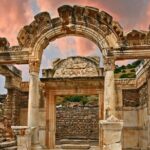
- Temples of Hadrian and Domitian
- Gate of Hercules
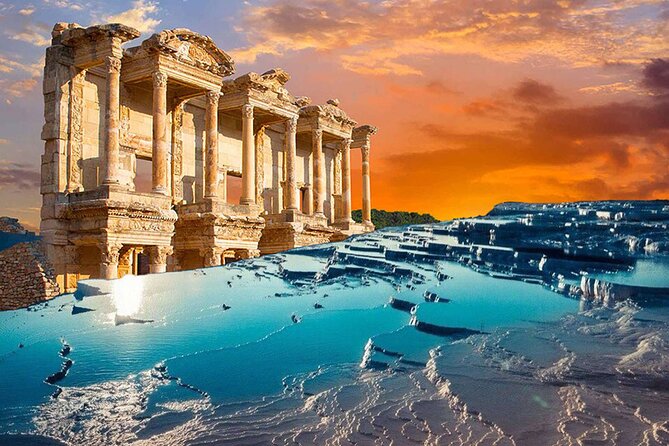
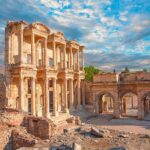
- Library of Celsus
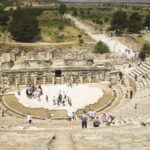
- Great Theater
- Odeon
- Trajan’s Fountain
And the city’s cultural layer matters too. Ephesus is known in Greco-Roman history as a major port city, and it also appears in the books of revelation as one of the seven churches. That connection isn’t just trivia. It helps explain why later visitors—especially those with Christian traditions—return to this region again and again.
What makes this stop work well is that you’re moving through different “types” of structures:
- Civic and political power (gates, temples)
- Learning and status (the Library of Celsus)
- Public life and gatherings (the Great Theater and Odeon)
- City planning and ceremonial space (Trajan’s Fountain)
Drawback? You will likely feel a bit of time pressure if your group wants to linger at only one spot. The Library of Celsus and the Great Theater are popular photo points, and lines for photos can slow the pace. If that’s your style, choose a few must-shots and let the guide handle the rest of the route.
Ephesus Museum: where you start recognizing the pieces
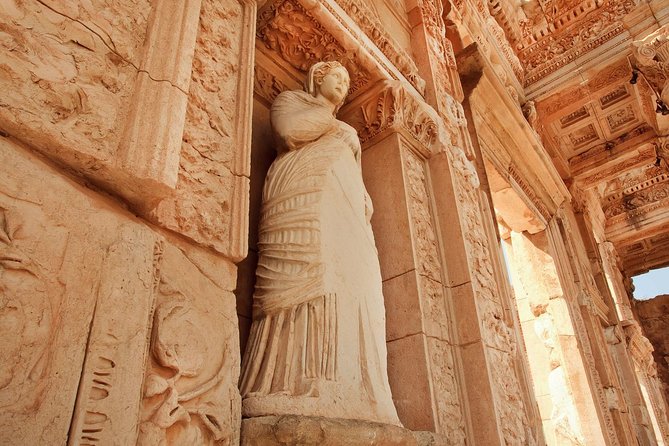
After Ephesus, you head to the Ephesus Museum for around 1 hour. Museum admission is not included, but the tour arranges tickets in advance to help reduce waiting.
If Ephesus is about walking through ruins, the museum stop is about learning to see those ruins differently. You’ll find archaeological artifacts excavated in Ephesus and other ancient Greek and Roman cities in the region. That broader set of finds helps you notice patterns—styles of sculpture, everyday objects, and how different cities contributed to the same cultural world.
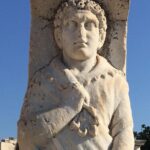
The museum’s highlight is the statue of Artemis, tied to the Temple of Artemis in Ephesus. This is one of those “payoff” moments. When you saw Artemis briefly outside earlier, the museum gives you a more concrete sense of what that worship and symbolism looked like in a tangible form.
If your group likes details—carvings, statues, inscriptions—this museum stop is a strong value add. If your group is more “see it, snap it, move on,” the museum can feel like one more indoor hour. Still, the Artemis connection makes it more than filler.
Practical tip: since you’re only there about an hour, keep your camera ready but also take a minute to actually look. The best museum moments often come from the pieces you hadn’t expected to be the most important.




Lunch and Turkish cuisine: plan for food you choose
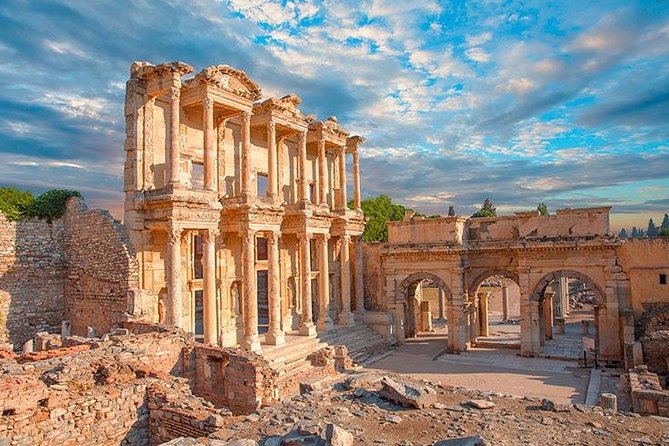
After the museum, you’re taken to a restaurant for Turkish cuisine. Food and drinks are not included, so you’ll pay for what you order.
This is a practical setup for two reasons. First, it saves you from hunting for a meal while everyone’s energy is running low. Second, it keeps you on schedule so the rest of the religious and historical stops still fit.
The best approach is to keep your order simple and quick. If you want a full sit-down meal, you might feel rushed. If you want a light Turkish lunch and a clear path to the next sites, this stop usually works well.
Meryemana (Virgin Mary’s House): a pilgrimage stop with a clear purpose
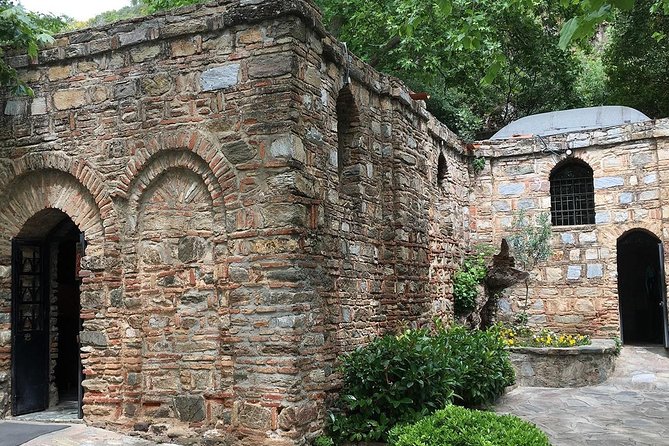
Next is Meryemana, the House of the Virgin Mary. The stop is about 45 minutes, and admission is listed as not included. This site is described as having been discovered based on the dreams of Mother Catherine Emmerich, and it’s an important pilgrimage point.
The core belief connected to the site is that Mary, the mother of Jesus, lived and died in this stone house and was brought there by the Apostle John. The Roman Catholic Church officially declared it a shrine in 1896, and it has grown into a well-known pilgrimage destination.
Even if your own beliefs differ, you can still appreciate what the site represents: a place where faith traditions, history, and personal meaning overlap. The atmosphere tends to be reflective, so it’s a good break from the more rugged, outdoor-feeling ruins.
Consider this: because it’s a pilgrimage stop, people may visit quietly or with religious focus. Dress modestly and be mindful of the setting. If you go in expecting a museum-like experience, you may feel surprised by the emotional and spiritual tone.
Also, timing matters. Forty-five minutes is enough to walk through the area, read what’s available, and take a calm break—but it’s not a long stay.
Basilica of St. John: Justinian-era church over a believed burial site
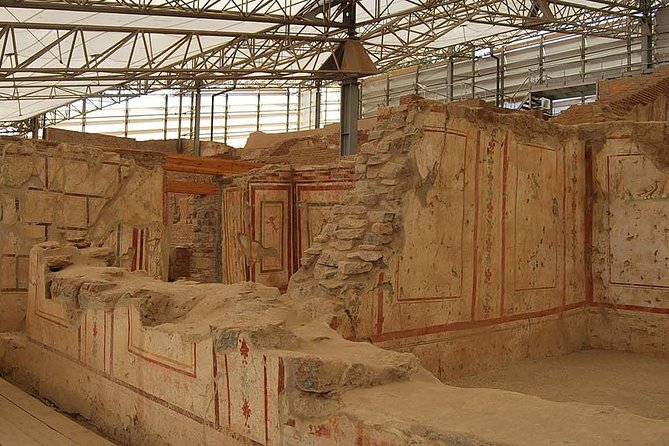
Your final major stop is the Basilica of St. John, about 30 minutes. Admission is not included for this part as well.
This church is described as being constructed by Emperor Justinian in the 6th century. It sits atop the believed burial site of St. John the Apostle, who is associated with the Fourth Gospel and the Book of Revelation.
This is a nice way to end the tour because it pulls together two threads from earlier in the day:
- Ephesus’s connection to revelation and the seven churches
- The Christian tradition of St. John as an important figure
By the time you reach this basilica, your brain has already seen the civic world of Ephesus and the pilgrimage space at Meryemana. The basilica becomes a final, coherent stop rather than a random addition.
Because the time is limited, keep expectations modest. You’ll likely see the essentials and move on. If you crave long indoor time with more detailed reading, you can always return on your own another day.
Price and value: is $140 worth it?
The price is listed at $140 per person for a day around 7 hours 30 minutes.
On paper, you’re not paying for entrance fees, food, or drinks. Those costs are separate. But you are paying for the big-ticket logistics: professional licensed guide for the entire day, private tour format, luxury air-conditioned new vehicle with separate driver, and port/hotel pickup and drop-off.
Here’s how I’d think about the value:
- If you’re visiting from the port area, pickup and drop-off can be worth real money in time and stress.
- Ephesus is popular. Arranging tickets in advance so you can skip long lines matters when you’re on a tight schedule.
- Private guiding helps at sites like Ephesus, where context turns a pile of ruins into a readable city layout.
- The route includes multiple high-interest stops: Temple of Artemis, Ephesus highlights, a museum, plus two Christian heritage sites.
If you’re the type who enjoys traveling with a plan and wants a full day of “the essentials,” this price can make sense. If you prefer spending half a day in museums alone or roaming ruins without time constraints, you may find the day feels structured for you.
Who this tour suits best
This works best if you want a single-day hit of major Ephesus-related sights with clear guidance and minimal logistics.
It’s especially good for:
- First-timers to Ephesus who want the landmark set
- People who value English-speaking local interpretation
- Anyone staying near Kusadasi port who doesn’t want to figure out transport on their own
- Small groups that want a private pace instead of a bus-and-follow crowd
It may be less ideal if:
- You hate timed itineraries
- You’re slower-moving or need lots of extra time at each stop
- You want food included or a long sit-down lunch
A note on guide quality and how to judge it
The tour is run with a professional licensed local guide. That matters because Ephesus can be confusing if you only rely on what you see with your eyes.
The info you have suggests an emphasis on professional driver service too. One past group highlighted a driver named Mr. Bülent Elinc for being polite, caring, friendly, and professional. Another mentioned a guide named Burci and praised helpful, warm guidance. I can’t promise the same people will be with you, but it’s a good sign that service quality is taken seriously by the operator.
When you book, it can help to confirm the meeting point and ask how the day’s tickets are handled. The tour already mentions skip-line ticket help, but knowing the exact flow can reduce your day-of stress.
Should you book the Best of Ephesus Tour?
I think you should book if your goal is a well-organized, private day that hits Ephesus highlights plus the major religious heritage sites tied to the region. At $140, you’re paying mainly for guiding and logistics, not for entrance fees and meals.
Skip it if you want a slower, deeper Ephesus day where you can roam for hours without time pressure, or if you strongly prefer meals included in the price.
If you’re on a cruise stop or you have limited time in the area, this kind of route is hard to beat. It’s not trying to be everything. It’s trying to be the right things, in the right order, with the least friction.
FAQ
Is pickup and drop-off included?
Yes. Port and hotel pickup and drop-off are included, and your tour guide will be waiting at the vehicle.
How long is the tour?
It runs about 7 hours 30 minutes.
Is this tour private?
Yes. It’s a private tour/activity, and only your group participates.
What language is the tour offered in?
The tour is offered in English.
Are entrance fees included?
No. Entrance fees are not included, but tickets are arranged in advance so you can skip long ticket lines.
Is food included?
Food and drinks are not included. You’ll be taken to a restaurant to experience Turkish cuisine, but you’ll pay for what you order.