REVIEW · ANTALYA
Antalya: Perge Ancient City Tour
Book on GetYourGuide →Operated by Antalya Local · Bookable on GetYourGuide
Perge feels like a time machine. This Antalya to Perge half-day tour is interesting because you walk an ancient city with a guide like Ondar/Onder who helps the stones make sense, not just sit there. I love the way his explanations turn major sights like the theater, stadium, and colonnaded streets into a clear picture of everyday Pamphylia life, and I also love that you cover a lot of ground—big highlights and the in-between details—without feeling rushed.
One thing to plan around: there is not a lot of shade once you’re in the ruins. If you get hot easily, bring sunscreen, a hat, and water early, because the walking adds up fast in Antalya’s sun.
In This Review
- Key things I’d put on your must-not-miss list
- Perge from Antalya: Why this ancient city tour feels different
- The pickup game: where you start in Antalya and how the day flows
- Entering Perge: the guide’s job is to help you see the city
- The ancient theater: where stories, politics, and crowds met
- Stadium and the athletic world of Perge
- City Gate and monumental entrances: reading power in stone
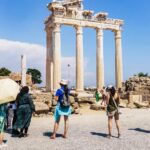
- Colonnaded Street and fountains: the everyday rhythm
- Agora and basilica: civic life in the open air
- Gymnasion and baths: where health, status, and routine mixed
- Church and other monumental buildings: layering cultures in one site
- What you actually get for $59: good value, with one key catch
- Practical tips that will save you time and discomfort
- Who this Perge tour suits best
- Should you book the Antalya to Perge Ancient City Tour?
- FAQ
- How long is the Perge Ancient City tour from Antalya?
- What does the price include?
- Is the Perge entrance ticket included?
- Do I need to pay for anything else?
- Where do I meet for pickup?
- Is this tour limited to a small group?
- Is the tour offered in English?
- Is there shade inside Perge?
- What should I bring?
- Is it wheelchair accessible?
Key things I’d put on your must-not-miss list
- Small-group walk (up to 10) means you can actually ask questions and get answers at each stop, not just before you move on.
- Guiding with local history: Ondar/Onder points out small details and connects them to how people used the spaces.
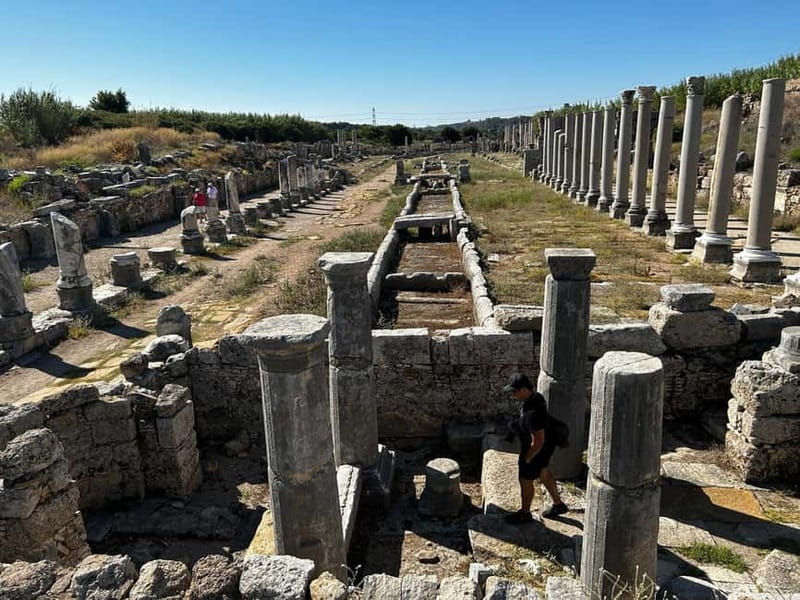
- Big-ticket ruins in one route: ancient theater, stadium, city gate, agora, colonnaded street, fountains, gymnasion, and baths.
- Skip the ticket line, plus you buy the Perge entry ticket at the gate—so you’ll want a card or a bit of cash ready.
- Photo-friendly monuments: you’ll get plenty of opportunities at well-preserved structures for solid wide shots and close-ups.
Perge from Antalya: Why this ancient city tour feels different
If you’ve ever toured an archaeological site and felt like you were reading a puzzle with missing pieces, Perge is a good match for a guided format. Ruins can be impressive and still feel vague. What makes this tour work is that you’re not just moving between famous stones—you’re getting a guided story that ties architecture to real routines: public gatherings, athletic training, bathing, and religious or civic life.
Perge also has a useful size for a half day. You can see the headline structures—the ancient theater, the stadium, and the monumental city gates—while still having time to slow down and notice how the streets, fountains, and civic spaces connect. That makes it easier to build your own mental map, so you leave with understanding, not just photos.
The other big advantage is timing. At 3.5 hours, you’re not committing a whole day, and the tour is practical for people who want history without turning their vacation into a museum marathon. It’s also a sweet length if you’re splitting time between beach plans in Antalya and one real inland day of exploring.
You can also read our reviews of more city tours in Antalya

The pickup game: where you start in Antalya and how the day flows
This tour is built around convenience. You get pickup and drop-off at Antalya city center, and the meeting point is clearly set: Shell gas station. That matters because Perge isn’t in the center of town, so you save time figuring out transport and parking.
Once you meet, you travel to Perge and begin with the kind of approach that helps you understand the layout early. You’ll see key structures in a logical order, and the guide helps you imagine how the city functioned before you’re left to wander alone.
At the end, you head back to Antalya and get dropped off at the meeting point again. It’s an easy loop: go out, learn, walk, return.
Entering Perge: the guide’s job is to help you see the city
The Perge Ancient City experience is not only about what you see. It’s about how you interpret what you’re seeing.
Your guide walks you through the ancient city and explains the bigger picture: Perge was once the capital of the Pamphylia Region, and it was also impacted by Alexander the Great’s campaigns. The point of mentioning that isn’t trivia for trivia’s sake. It gives you a reason why the city grew its monumental streets and civic spaces, and why you’ll recognize the rhythm of Roman-era urban design—big public buildings, planned streets, and formal gateways.
Then comes the practical magic: you’re shown how the ruins fit together. You’ll encounter a model of the city as part of your route, which helps a lot when you’re standing in the middle of scattered columns and wondering what was where.
The ancient theater: where stories, politics, and crowds met
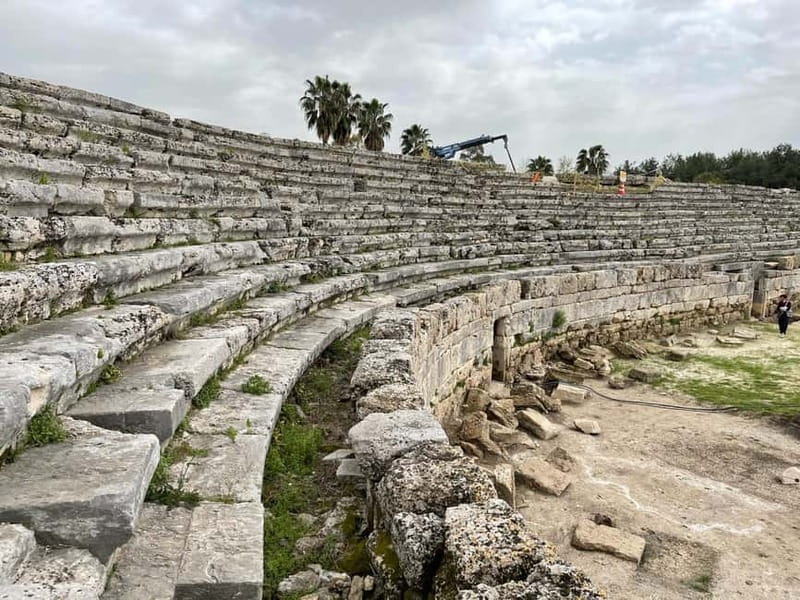
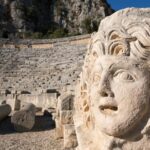
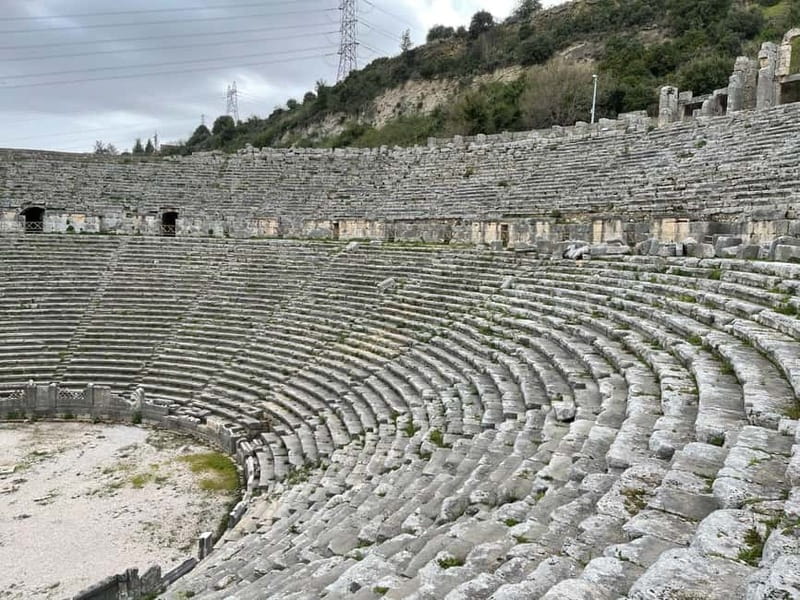
One of the first must-sees is the ancient theater. Even if you’ve seen theaters elsewhere, Perge’s is a great stop because it’s a real reminder of how public life worked. A theater wasn’t just entertainment. It was also a place where communities gathered, events were staged, and public moments played out in front of everyone.
In a guided walk, the theater stop becomes more than architecture. You get context about who would have used it and what the sightlines and staging were meant to do. That helps you picture the scale—why it mattered that the building was set up for crowds, not quiet spectators.
If you like photography, the theater is also useful for getting wider views with the ruins around it. Bring your camera and take a step back before you zoom—architecture photos tend to look better with a little context in frame.
Stadium and the athletic world of Perge
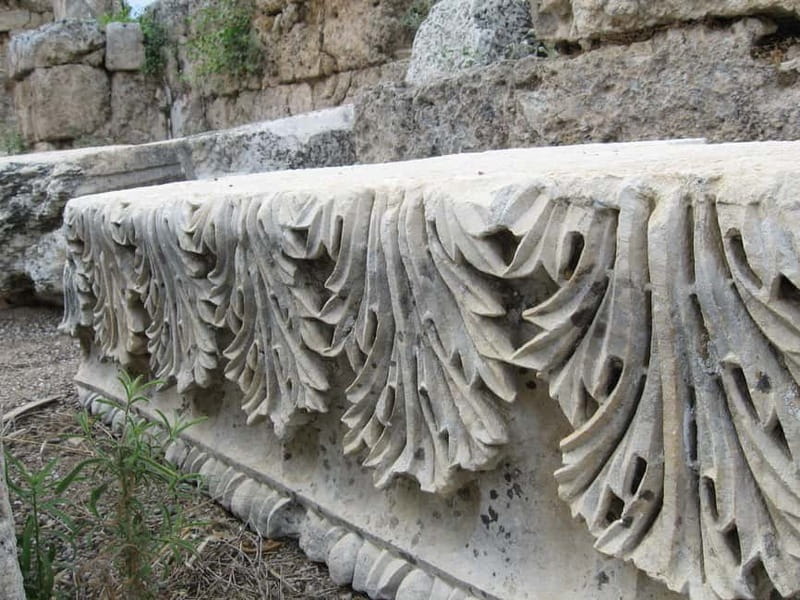
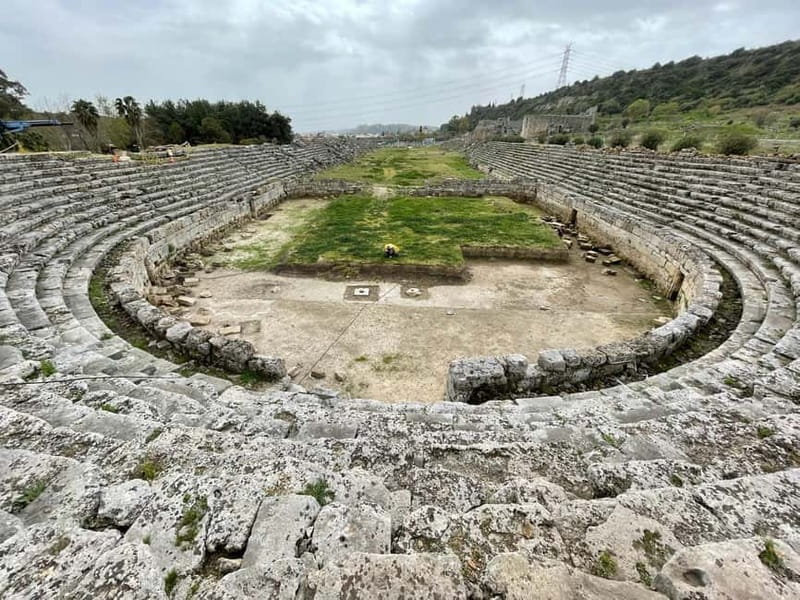
Next up is the stadium, another “big public building” that gives you a different side of ancient life. A stadium points you toward the athletic culture of the city—training, competition, and the social energy that comes with public sports.
This is also where a guide earns their keep. When you understand what the stadium was for, you’ll pay more attention to spatial details while you walk past it. You’ll start to notice how these facilities weren’t isolated. They fit into the city’s daily flow: people moved through gates, met in public areas, and went from athletics to civic spaces to baths.
For your legs, the route also helps because stadiums and theaters are landmarks. They act like orientation markers while you explore the rest of Perge.






City Gate and monumental entrances: reading power in stone
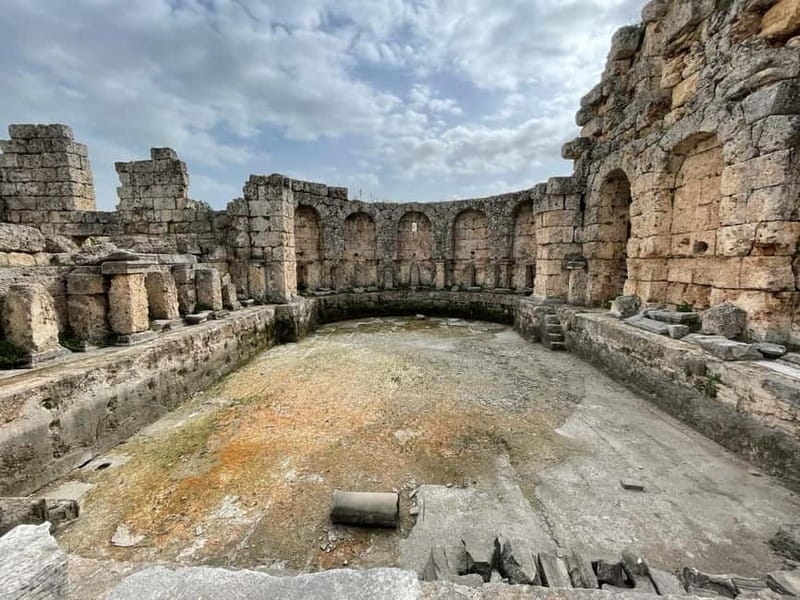
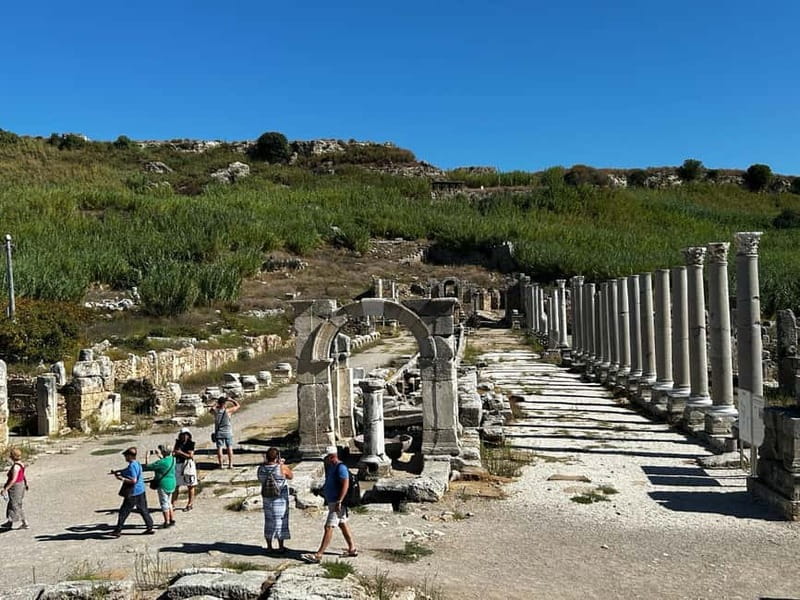
The city gate and monumental entrances are worth treating like more than a photo spot. Gates were statements. They controlled movement and shaped first impressions, and they signaled the city’s status and organization.
When your guide explains what you’re looking at, these gates become easier to “read.” You’ll understand why monumental architecture was built at key transitions—where you entered, how you were guided into public space, and why the city needed formal thresholds rather than random openings.
Even if you’re not a history buff, this stop helps you connect the dots between the grand entrance and the everyday life spaces you’ll see next.
Colonnaded Street and fountains: the everyday rhythm
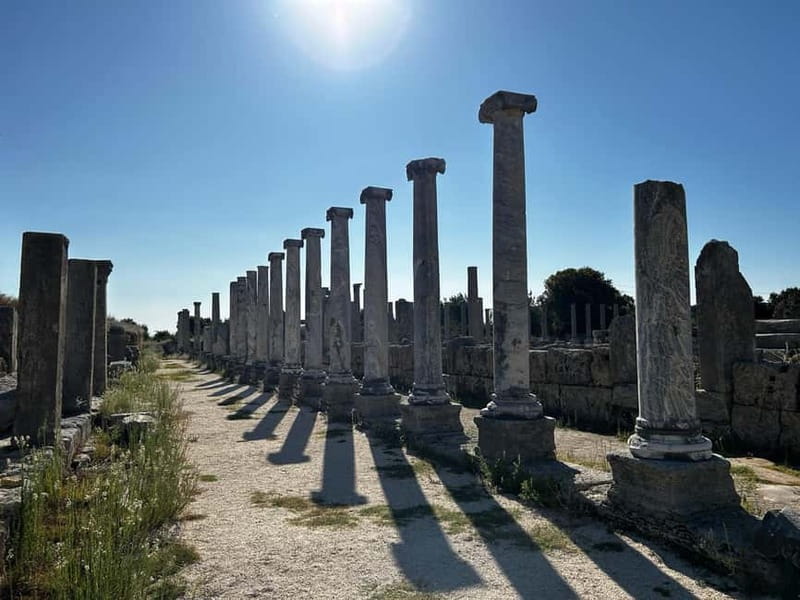
Now you shift from the loud public arenas to the spaces where daily life became visible: the colonnaded streets and fountains.
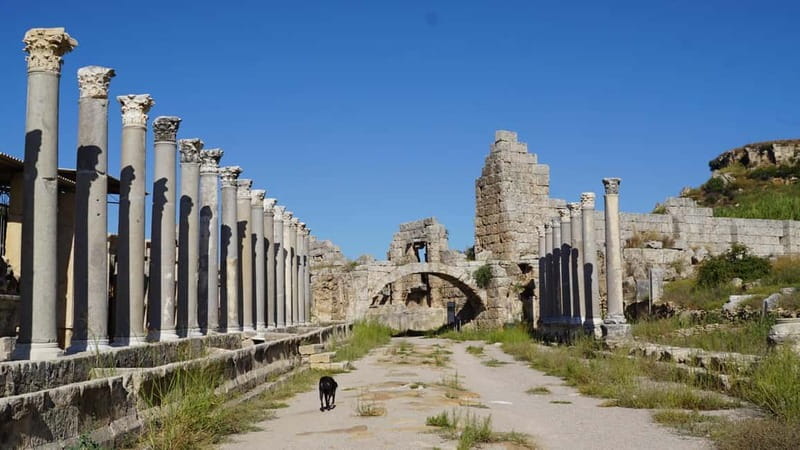
A colonnaded street isn’t just a fancy walkway. It suggests shade, movement, commerce, and social activity. When you walk under or beside a colonnade today, it’s easy to picture how it could function as a daily corridor.
Fountains add another layer. They’re practical and symbolic—water mattered, and public water features made the city livable and organized. With a guide explaining how people used these spaces, you start to understand why fountain areas were natural meeting zones.
If you like photos that feel “real,” spend a moment here. Look for lines created by columns, and try shooting from slightly off center. Straight-on shots can feel flat; angled ones often show depth better.
Agora and basilica: civic life in the open air
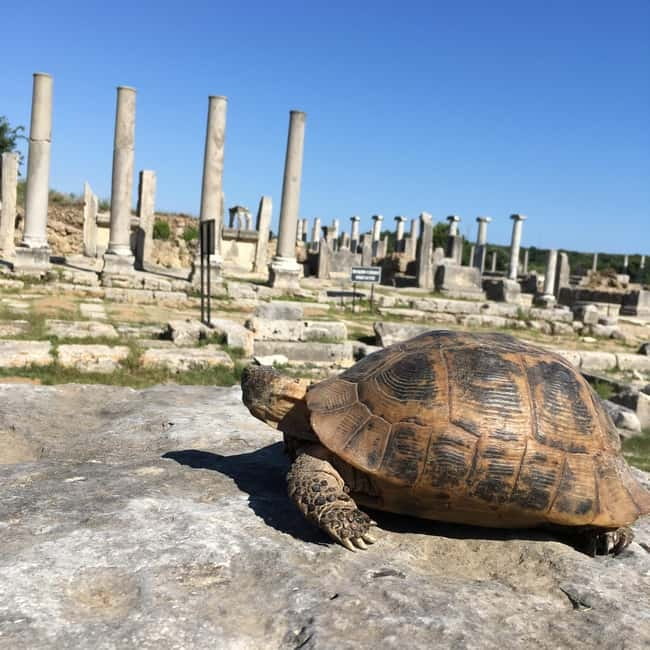
The agora and basilica are stops that help you get your bearings about Perge as a working city. The agora is where civic life happens in public—meeting, discussing, moving about. The basilica points you toward how public and legal or administrative activities were organized.
This is where guided commentary really pays off for me as a travel philosophy: ruins can look similar unless someone shows you the function. When you understand what these buildings were likely used for, the city stops feeling like a collection of fragments.
If you’re the type who likes to learn through observation, linger a little. Watch how your route connects these spaces. That connection is part of the story.
Gymnasion and baths: where health, status, and routine mixed
The gymnasion and baths are major highlights because they represent the body-focused side of life—training, grooming, social time, and relaxation.
The gymnasion is the athletic and educational setting, tied to how adults built identity through training and participation. The baths are the daily-life counterpart: a place for hygiene and socializing, often one of the most important routine spaces in a city.
A guide who knows the area can make these stops feel personal. You begin to understand why architecture like this was built with routine in mind: spaces designed for movement, transition, and repeated use.
This is also an excellent section for people who are less interested in “big monuments” and more interested in how people lived. You’ll come away with a sense of routine, not just grandeur.
Church and other monumental buildings: layering cultures in one site
Your route includes a church (spelled Chuch in the tour summary) along with other monumental structures like gates and basilica areas. Including a church in the same walking sequence reminds you that ancient sites don’t freeze in time. Cities evolve, and later religious and public buildings can layer onto earlier urban spaces.
Your guide’s job here is to help you keep the timeline straight. Even when you’re not given exact dates, the explanations help you understand why one building style might feel different from another and what that signals about cultural change.
This stop also makes Perge feel more like a living landscape than a dead museum, even though everything you see is in ruins.
What you actually get for $59: good value, with one key catch
At $59 per person for 3.5 hours, the value depends on how you like to travel.
Here’s what’s included:
- Pickup and drop-off in Antalya city center
- A licensed English-speaking tour guide
- Small group limited to 10 participants
- You’ll also skip the ticket line (you still need a Perge entry ticket)
The one catch is clear: entrance to Perge Ancient City is not included. You buy your ticket at the gate, so have either a card or a little cash ready. For me, that’s a normal and fair trade: you’re paying for the guide and the local routing, not bundling an entrance fee.
Also note that the tour does not include meals or drinks. With sun exposure and limited shade, you’ll want to plan water and snacks around your own schedule.
If you’re comparing options, this is a strong choice when you want meaning, not just movement. A small group and a guide who can point out details (especially with Ondar/Onder’s energy) can turn the same ruins into a far more rewarding afternoon.
Practical tips that will save you time and discomfort
This tour is simple, but Perge is outdoors and the sun can be serious.
Bring:
- Comfortable shoes (expect walking on uneven ground)
- Water
- Hat and sunscreen
- Camera
Plan for less shade than you might hope. If you’re sensitive to sun, don’t wait until you feel it. Put on sunscreen before you start and keep water where you can reach it quickly.
One more practical thought: this is not ideal for mobility impairments or wheelchair users. The walking in ruins and uneven surfaces can be tough.
Smoking is also not allowed on the tour.
Who this Perge tour suits best
This is a great fit if you want:
- A half-day history stop while staying based in Antalya
- A guided explanation that helps you build a clear picture of the site
- A small group where you can ask questions and get attention
- A focus on daily life elements like baths and civic spaces, not only big monuments
It’s also a solid option if you’ve been to other ruins and want the experience to feel more organized in your head. A guide can help you connect structures so you don’t leave with only scattered images.
If you’re only interested in fast sightseeing and you don’t care about interpretation, you might find a self-guided visit cheaper. But for most people, the guide-driven route is what turns Perge into a story you can remember.
Should you book the Antalya to Perge Ancient City Tour?
Yes—if you value understanding and you want an efficient, well-guided walk.
I’d book it if:
- You’re staying in Antalya and want a clean half-day plan
- You prefer small-group guiding (up to 10) over crowds
- You want your visit to include key monuments plus the spaces that show how people actually lived
I’d think twice if:
- Heat and sun are a problem for you and you can’t manage with sunscreen, a hat, and water
- You need step-free access or wheelchair-friendly routes (the tour isn’t suitable for that)
If your goal is to leave Perge with a mental map—how the theater, stadium, gates, colonnaded street, agora, gymnasion, and baths connect—this tour is a smart way to do it without spending the whole day out.
FAQ
How long is the Perge Ancient City tour from Antalya?
The tour lasts 3.5 hours.
What does the price include?
It includes pickup and drop-off at Antalya city center and a licensed English-speaking tour guide.
Is the Perge entrance ticket included?
No. Entrance to Perge Ancient City is not included. You buy your ticket at the gate (have cash or a credit card).
Do I need to pay for anything else?
The tour does not include meals and drinks or personal expenses.
Where do I meet for pickup?
Meet at the Shell gas station.
Is this tour limited to a small group?
Yes. It’s a small group limited to 10 participants.
Is the tour offered in English?
Yes. The live tour guide speaks English.
Is there shade inside Perge?
There is not a lot of shade, so bring sunscreen and a hat, and plan for sun exposure.
What should I bring?
Bring comfortable shoes, a hat, a camera, sunscreen, and water.
Is it wheelchair accessible?
No. It’s not suitable for people with mobility impairments or wheelchair users.