REVIEW · ANTALYA
Antalya: Pamukkale Hot Springs & Hierapolis Small Group Tour
Book on GetYourGuide →Operated by TOURMANIA · Bookable on GetYourGuide
Cotton-white terraces change how you see Turkey. This Antalya Pamukkale and Hierapolis day trip pairs the travertine wonder of Pamukkale with the Roman-Greek bones of Hierapolis, and it gives you time to walk, photo, and soak your feet. I love how the guide points out what matters instead of just reading plaques, and I love that lunch is included with a vegetarian option. The trade-off: it’s a long day with an early start, and Cleopatra’s Pool access may be unavailable due to renovations.
Pamukkale is the kind of place that looks unreal even after you get there. You’ll also get the major Hierapolis hits—Apollon temple area, Domitian gate, theater, and Necropolis—so it feels like culture with a thermal-spring payoff, not just a quick photo stop.
In This Review
- Key takeaways before you go
- Why Pamukkale feels like a must-do from Antalya
- The early departure and 235 km drive: making it work
- Pamukkale travertines: walking the cotton castle without rushing
- Pamukkale Hot Springs: foot baths and optional swimming
- Hierapolis: the ruins beyond the obvious photos
- Temple of Apollon and the main sights
- Hierapolis theater: where the city’s energy makes sense
- Necropolis: burial ground, but not a dead end
- Hierapolis museum: artifacts and baths
- Cleopatra Antique Pools: what happens when access is closed
- Lunch at Pamukkale: included food that actually delivers
- Price and value: is $50 a good deal?
- Guides can make or break it (and this one aims to impress)
- Who this tour suits best
- Should you book this Antalya to Pamukkale and Hierapolis tour?
- FAQ
- What’s included in the tour price?
- How long is the day trip from Antalya to Pamukkale and Hierapolis?
- Are Pamukkale and Hierapolis entrance fees included?
- Can I swim at Pamukkale during the tour?
- Is Cleopatra’s Antique Pool part of the experience right now?
- What should I bring for the day?
Key takeaways before you go
- Early start + long drive is real: the 235 km route is part of the deal, so plan for a full-day reset.
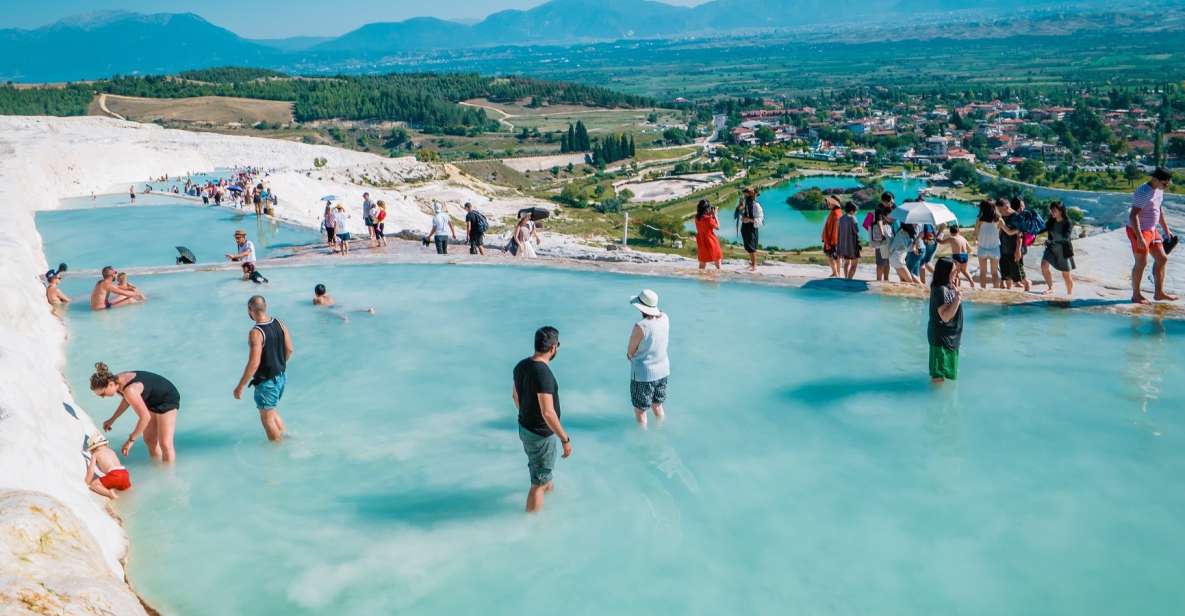
- Pamukkale’s terraces are the main event: white travertines built by mineral water flowing for centuries.
- Hierapolis ruins feel big and walkable: theater, gate, and necropolis stretches that reward steady pacing.
- Lunch is a strong value add: included buffet-style meals show up as a repeated highlight.
- Swimming plans depend on current conditions: Cleopatra’s Pool can be closed, but thermal pools/foot baths are still the core idea.
Why Pamukkale feels like a must-do from Antalya
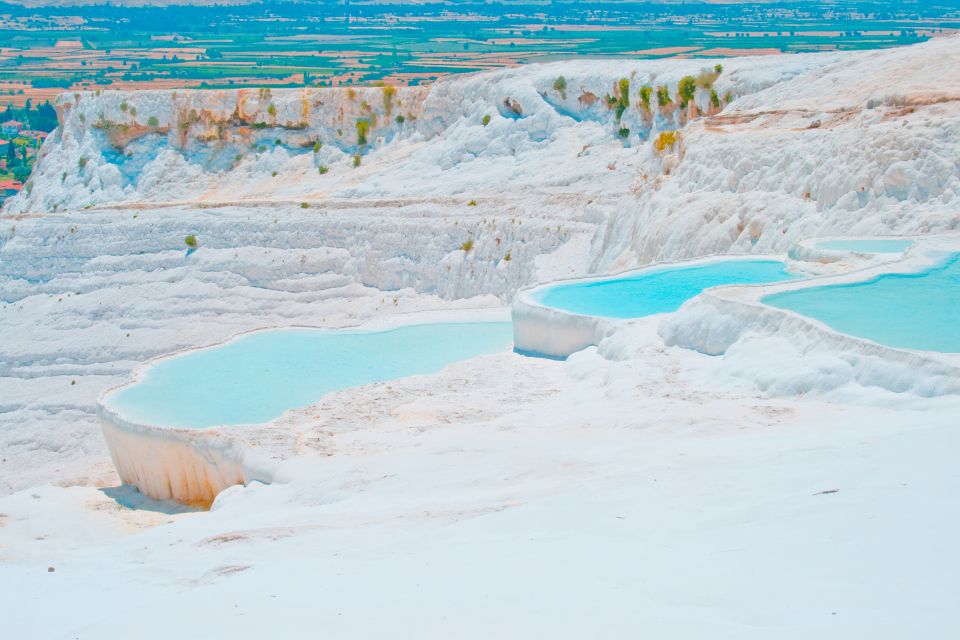
If you’re basing yourself in Antalya, Pamukkale can feel like a detour you might regret skipping. But the farther you drive, the more it makes sense: Pamukkale isn’t just scenic. It’s a natural process you can walk across. Mineral-rich thermal water flows over the site and leaves behind those snow-white calcium terraces—the famous “cotton castle” look.
And the bonus is that you’re not only doing nature. Hierapolis sits right next door. So you get the thermal wonder of Pamukkale and then the ancient city story right beside it, including sacred spaces, public buildings, and burial grounds. It’s a rare combo: spiritual and practical, hot water and cold stone.
One practical note I appreciate: this is a small group format. That usually helps you move with less chaos at stops, which matters when the day’s schedule is tight and you want time to actually enjoy the views (not just bolt past them).
A few more Antalya tours and experiences worth a look


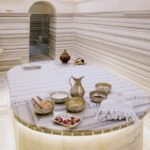
The early departure and 235 km drive: making it work
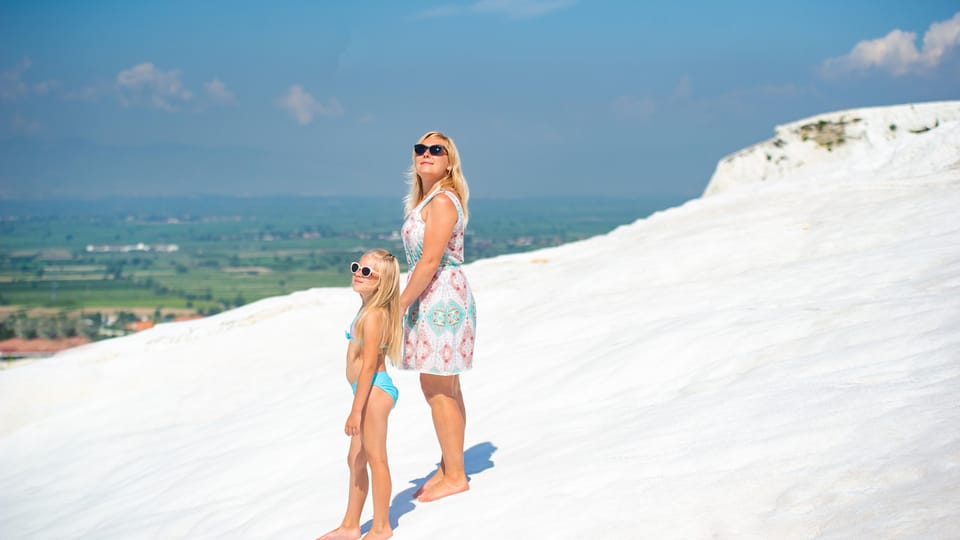
This is a 12-hour tour, and the timing is built around getting to Pamukkale early enough to enjoy the site without feeling like you arrived late to the party. From the experience reports, departures tend to start early, around 6:30 AM, with return to Antalya in the evening (often about 6 PM).
That long drive is the most common consideration. Some people find it exhausting; others find it bearable once the guide starts explaining what you’re about to see. Either way, bring what you need for a road day:
- Comfortable shoes (you’ll walk more than you expect)
- Sun protection (sunglasses and a hat)
- A swim layer ready to go if conditions allow thermal swimming/soaks
- Water and snacks are not listed as included drinks, so plan accordingly
If you’re visiting in cooler months, pack for temperature swings. One key review detail: it can be cold outside even when you’re visiting the pools, though the pool area can feel warmer once you’re there.
Pamukkale travertines: walking the cotton castle without rushing
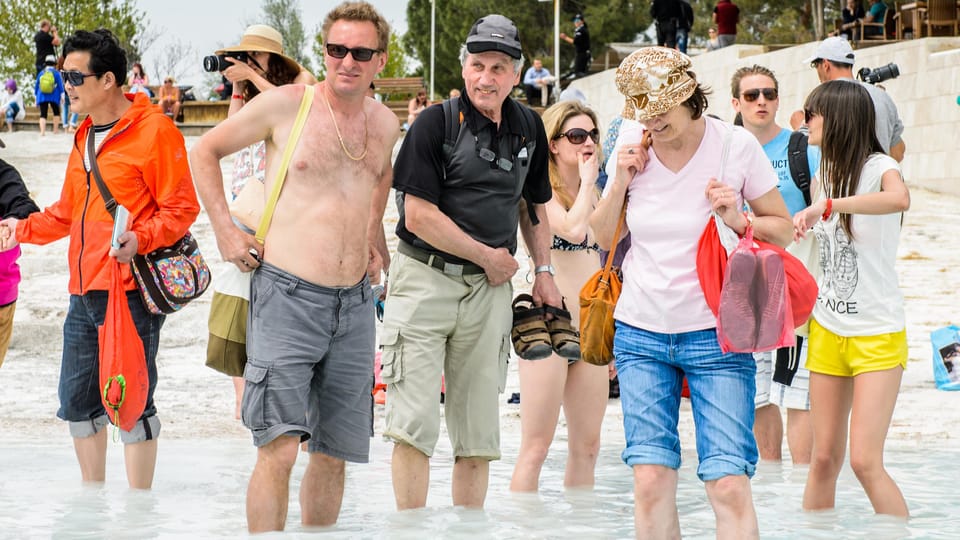
Pamukkale’s terraces are what you came for, so treat them like a slow discovery. The site is UNESCO-listed and draws millions of visitors each year, which means crowds can happen—but your main job is to approach it with the right pace and expectations.
You’re looking at travertine formations created by thermal water. Pamukkale literally means cotton castle, thanks to that white cascading look. Temperatures across the hot springs range widely, from about 30°C up to 100°C, so the water system is powerful even when your experience is more gentle.
What to do when you arrive:
- Take time for a first walk so the patterns make sense.
- Then pick a spot to linger for photos and to look for how the mineral layers change across the terraces.
- If you plan to enter pools, decide where you’ll start so you don’t backtrack.
A good guide makes a difference here. You’ll get context on what you’re standing on and why the mineral deposits form in the way they do, and that turns the terraces from a photo-op into a living natural phenomenon.
Pamukkale Hot Springs: foot baths and optional swimming
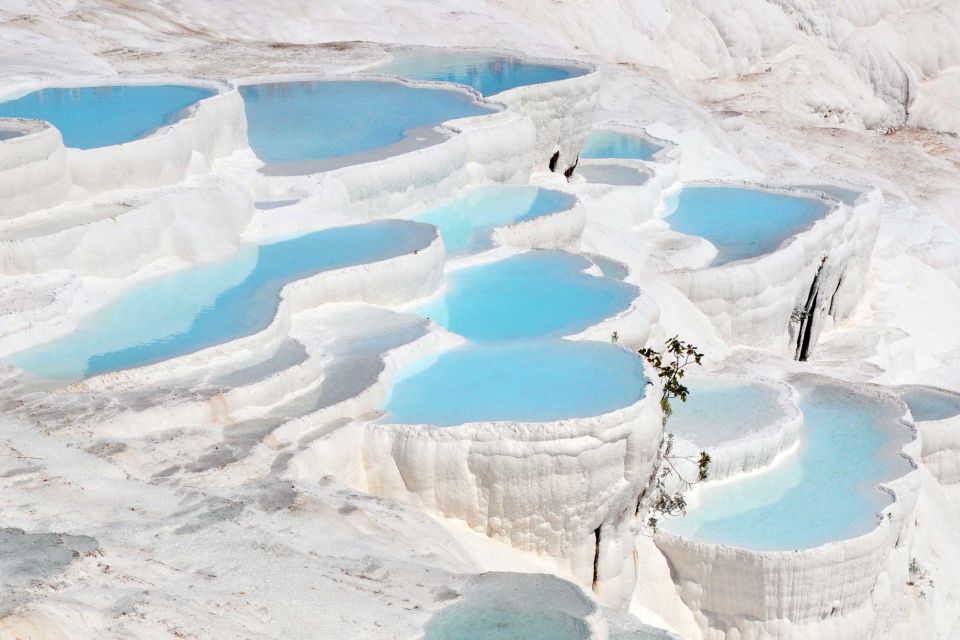
The thermal part isn’t just a side dish—it’s one of the headline experiences. Pamukkale’s main hot spring pools and the surrounding thermal waters are generally around 30°C, which is warm enough to feel relaxing rather than punishing.
You’ll typically get a photo stop and a guided walk at the Pamukkale Hot Springs area. The tour also supports optional soaking. Depending on weather conditions, there are several small thermal pools you can explore. This is where you slow down for real. Instead of racing through ancient ruins, you’re standing still with warm water against your skin while you watch the terraces and people flow around you.
Two practical tips:
- Bring swimwear and a towel. Even if you don’t plan to swim fully, you’ll want to be ready for the moment you decide to try a soak.
- Wear shoes you don’t mind getting wet. Comfortable, secure footwear makes the difference between enjoying the water and spending time worrying about your footing.
Hierapolis: the ruins beyond the obvious photos
After Pamukkale, Hierapolis feels like stepping into a second layer of the day—one that’s historical, big, and surprisingly varied. Hierapolis was built adjacent to the hot springs, beginning in the era of the 2nd century BC king of Pergamon, and the city stretches long and wide enough that you’ll feel it as more than a couple of buildings.
Hierapolis translates to Holy City, and it also has a local history tied to coin-making. The name evolved—Hieropolis is associated with bronze coin minting in the 2nd century BC, and the spelling shifted over time. When Attalus III died, the region became part of the Roman province of Asia, which helps explain why you see Roman-era elements mixed with Greek roots.




Temple of Apollon and the main sights
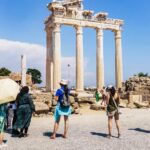
One of the key stops is the Temple of Apollon, Pamukkale area. Even if you’re not a hardcore archaeology person, the guide’s framing helps. You understand why this place functioned as a sacred landscape next to the springs.
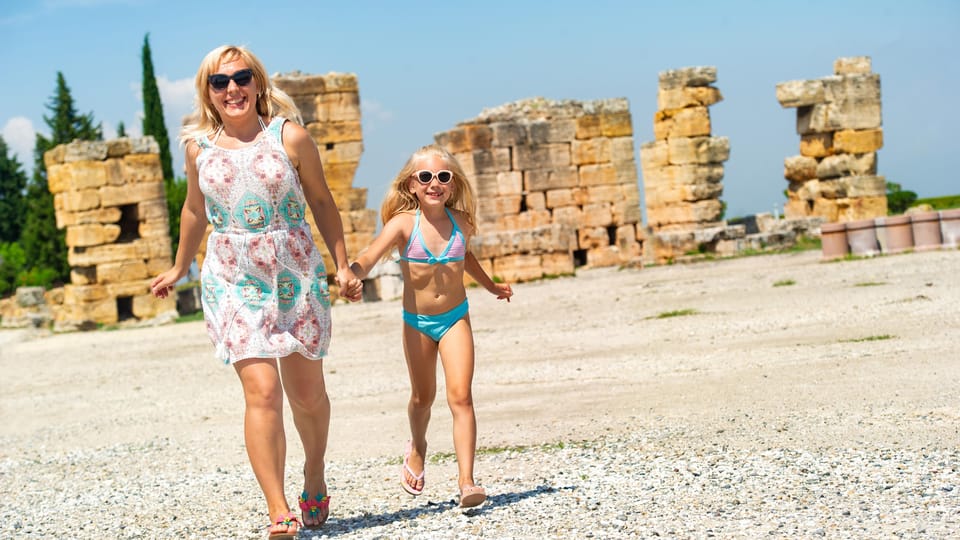
You’ll also visit the Hierapolis Gate of Domitian. This is the kind of structure that makes you realize the scale of the city and how people moved through it.
Hierapolis theater: where the city’s energy makes sense
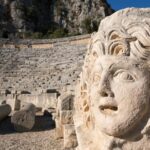
The ancient theater is one of the emotional highlights. It’s the kind of ruin where you can almost “read” how public life worked—gathering, performances, announcements, the daily rhythm of a city built for people.
Necropolis: burial ground, but not a dead end
Don’t skip the Necropolis of Hierapolis just because it sounds grim. Burial architecture and tomb areas show how communities organized beliefs and space. It also gives you variety after the sun and mineral terraces.
If your feet start getting tired, remember this is also when you’ll benefit from having a guide manage timing and keep you moving at a pace that doesn’t turn sightseeing into a march.
Hierapolis museum: artifacts and baths
There’s an on-site museum element that houses artifacts from Hierapolis and from other nearby ancient towns. The museum includes sections related to the Hierapolis Bath—plus open areas in the east believed to have served as gymnasium and library space. It’s a useful stop if you want to understand what public bathing and civic life meant in this region.
Cleopatra Antique Pools: what happens when access is closed
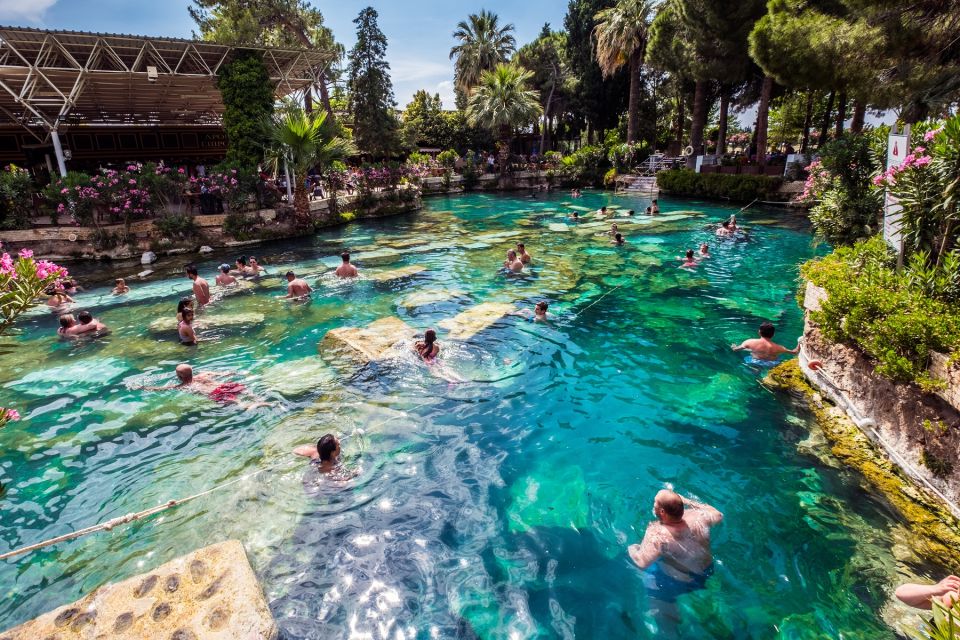
Cleopatra’s Antique Pools sit right next to Pamukkale and are visually striking, even in photos. But there’s an important reality check: access is temporarily closed for renovations, so you should not plan your day around swimming there.
Even without swimming, it helps to understand what the pool is. It wasn’t owned by Cleopatra. The “Cleopatra pool” is an artificial pool built on top of ancient columns that fell during an earthquake. The idea is that you can swim among ruins and feel the connection between ancient engineering and mythmaking.
So how should you handle this?
- If swimming there matters most to you, consider postponing or choosing another trip with current pool access confirmed.
- If you’re mainly chasing the terraces and Hierapolis ruins, the core experience still holds strong. Thermal pools and the Pamukkale soaking options remain the main thermal payoff.
This matters for value. When Cleopatra’s Pool is closed, the trip can feel like it’s missing one listed highlight—so adjust your expectations and focus on what is still functioning.
Lunch at Pamukkale: included food that actually delivers
One of the most consistently praised parts is lunch. This isn’t a “snack that happens near a gift shop” situation. You’ll have lunch in the Pamukkale area, and it’s buffet-style with multiple choices.
Vegetarian options are available, which I appreciate because it’s often the first thing that disappears when tours rely on fixed menus. Reviews also describe the lunch as tasty and clean, with lots of variety.
Why this matters: when you’re spending a day walking in the sun and soaking in warm water, you don’t want a rushed, low-quality meal that forces you to hunt for food later. Included lunch helps you stay in the rhythm of the day.
Drinks aren’t included, so bring your own water strategy. Even if you’re not swimming, the heat and walking can sneak up on you.
Price and value: is $50 a good deal?

At around $50 per person, this tour price can look surprisingly affordable for a full-day excursion with pickup, drop-off, guided time, and lunch. The big “watch this” is what’s not included.
Entrance fees for Pamukkale and Hierapolis are not included (listed as about €30). Also, drinks aren’t included. That means your total cost can rise depending on whether you add any optional swimming fees (if available under current conditions).
Still, value is strong if you want:
- Hotel pickup and drop-off from Antalya (including Konyaaltı pickup option)
- A bilingual guide who helps you understand the sites as you walk
- Lunch that’s actually part of the day, not an afterthought
- Time built into the schedule to explore rather than just pass through
Also, skipping ticket lines is included, which can save a chunk of stress in a high-traffic UNESCO site.
My practical take: if you already plan to visit both Pamukkale and Hierapolis, pairing them with guided transportation and included lunch is usually cheaper and less complicated than planning two separate day trips.
Guides can make or break it (and this one aims to impress)
Across the tour experiences, a repeating theme is guide quality. Names you might run into include Mery, Baran, Fatima, Sunay, and Mellissa (and there are other guides too). The common thread is that guides explain what you’re seeing in plain language and keep the day moving with attention to timing.
That matters because Pamukkale and Hierapolis are both “look at this” places. Without context, you can end up with lots of photos and not much meaning. With context, you leave knowing why Pamukkale is cotton-white, why Hierapolis developed beside the springs, and why the Roman and Greek elements show up the way they do.
Who this tour suits best
This is a good fit if you want a structured day with less planning headache. Specifically:
- You’re short on time in Antalya and want to check off Pamukkale + Hierapolis in one day.
- You like walking historic sites but you also want time to relax in warm water.
- You’d rather pay for a guide than try to stitch together transportation and entry tickets on your own.
- You want a small-group atmosphere rather than a huge bus stampede.
It’s less ideal if you hate early starts or long road days. If you’re the type who wants to sleep in and take things slowly, you might find the schedule tight. In that case, you may prefer a different pace or overnight option—though that’s not what this particular format is designed for.
Should you book this Antalya to Pamukkale and Hierapolis tour?
I’d book it if your priority is a guided, no-stress day that hits the big sights: Pamukkale terraces, Hierapolis, and thermal soaking time. The included lunch is genuinely one of the reasons it’s worth considering, and the guide is usually a highlight.
I would pause before booking if Cleopatra’s Pool is the single reason you want this tour. With Cleopatra’s Pool temporarily closed for renovations, that specific swimming stop may not happen.
If you book, go in with the right mindset: this is a long day. Wear good walking shoes, pack swimwear just in case thermal time is available, and treat the terraces like a place to linger, not a check box.
FAQ
What’s included in the tour price?
The tour includes hotel pickup and drop-off in Antalya (including Konyaaltı), lunch, and a bilingual live tour guide. Entrance fees for Pamukkale and Hierapolis, plus drinks, are not included.
How long is the day trip from Antalya to Pamukkale and Hierapolis?
The tour lasts about 12 hours, and it’s designed as a full-day excursion with a long drive between Antalya and the Pamukkale area.
Are Pamukkale and Hierapolis entrance fees included?
No. You’ll need to pay the entrance fee for Pamukkale and Hierapolis on site (listed as about €30).
Can I swim at Pamukkale during the tour?
Swimming is described as optional in the thermal pools, with Pamukkale’s hot spring waters around 30°C. Exact access can depend on conditions, and Cleopatra’s Pool is temporarily closed for renovations.
Is Cleopatra’s Antique Pool part of the experience right now?
Cleopatra’s Antique Pools are temporarily closed for renovations, and access to the pool area is not available at this time.
What should I bring for the day?
Bring comfortable shoes, sunglasses, a sun hat, swimwear, a towel, and a camera (plus a t-shirt if you want). A swim-ready kit is a good idea since thermal time is part of the experience.