REVIEW · ISTANBUL
2 Days Ephesus and Pamukkale from Istanbul
Book on Viator →Operated by Tours Flame · Bookable on Viator
Two ancient worlds in 48 hours. This trip is interesting because it strings together Ephesus and Pamukkale with smooth logistics: hotel pickup, round-trip flights, and a guided route that keeps you from wasting time figuring things out on your own. I like that the tour includes lunch both days, so you’re not hunting for food between monuments. I also like the pace of a guided Ephesus walk—gate to theater—with key sights handled in the right order, plus entrance fees included.
One thing to consider: you’ll be walking and you must be comfortable with a shoe-free section over travertines at Pamukkale.
In This Review
- Key takeaways (what matters in real life)
- Price and Logistics: what the $856.48 really buys
- Starting in Istanbul: pickup, flight, and the morning tempo
- Selçuk to Ephesus: Magnesia Gate sets the scene
- Guided Ephesus walk: Celsus Library, Odeon, and the downhill route
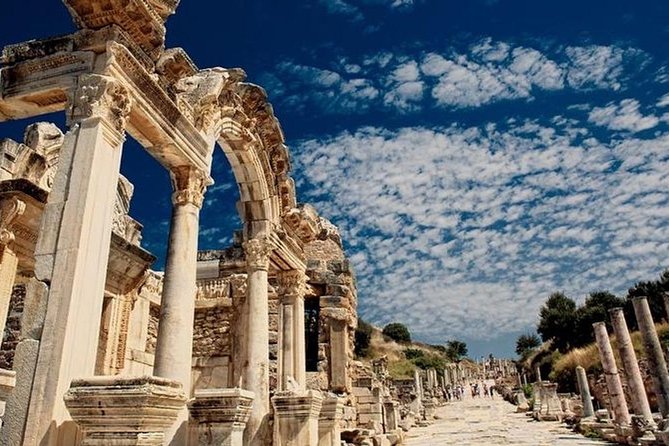
- Temple of Hadrian and Trajan’s Fountain: small stops, big meaning
- The Great Theater and St Paul’s connection
- Lunch at the Virgin Mary House area: fuel before the big sweep
- Temple of Artemis and the stop in Şirince
- Day 2: Pamukkale starts with a long drive, so plan for it
- Hierapolis Ancient City: structures you can actually connect
- Amphitheater and Temple of Apollo: big spaces, clear purpose
- Pamukkale travertines without shoes: the rule that shapes your experience
- Free time in the afternoon: a little freedom after the big sightseeing
- The guide and team effect: why Mr Ahmad gets named
- Who should book this Ephesus and Pamukkale combo
- Should you book this tour? My practical take
- FAQ
- Where do they pick you up in Istanbul?
- Do I need to buy entrance tickets for the main sites?
- Are meals included during the tour?
- What kind of transportation is used?
- Is there an overnight stay?
- Is the tour offered in English?
- Do I have to walk without shoes at Pamukkale?
Key takeaways (what matters in real life)
- Hotel pickup in Istanbul helps you start without transport stress
- Flights + driver transfers cover the long distance in a time-saving way
- Entrance fees included means fewer surprises at ticket booths
- Lunch on both days keeps the schedule sane during big sightseeing hours
- Small groups (max 15) make the guide’s attention feel more personal
- Pamukkale travertines require walking without shoes for about 0.5 miles
Price and Logistics: what the $856.48 really buys
This isn’t the kind of tour where you only pay for sightseeing time. At $856.48 per person, you’re paying for the full “gets-you-there” package: hotel pickup in Istanbul, round-trip air travel, transfers with a driver, a professional guide, lunch for both days, and entrance fees for the sites on the route.
Value-wise, that matters because Ephesus and Pamukkale are far apart and both are popular—trying to do them separately on your own usually turns into a juggling act with transport, ticket lines, and timing. Here, the tour tries to remove those friction points. You trade freedom for structure, but the structure is built around efficient travel windows.
Also: this runs with a maximum of 15 travelers, which helps. Large buses can flatten the experience into a blur. A smaller group generally means easier movement through crowded areas, and your guide can answer questions without shouting over everyone.
A few more Istanbul tours and experiences worth a look


Starting in Istanbul: pickup, flight, and the morning tempo
Your day begins with hotel pickup in Istanbul city center. The goal is simple: get you out the door early, so you can fly to İzmir, then reach the Ephesus area before the heat and crowds peak.
From Istanbul, you take a one-hour flight to İzmir. After landing, you’re met and transported toward Selçuk. Once you’re in the area, the tour transitions into guide-led sightseeing. This sequencing is key. You want your first big ancient-city moments when your energy is still intact.
A practical note: this schedule is front-loaded. If you’re the type who needs time to wake up slowly, plan for that. Bring a water bottle, and if you’re sensitive to morning fatigue, pack a simple breakfast routine the night before.
Selçuk to Ephesus: Magnesia Gate sets the scene
Ephesus is huge, but your guided route keeps it readable. The tour’s first big visual moment is the Magnesia Gate, which marks a monumental entrance into the ancient city.
This is one of those sights where you don’t need a PhD to appreciate what you’re seeing. The stone scale and the doorway design remind you this wasn’t a small village ruin. It was a major urban center.
From there, your guide helps you link the pieces: where the roads led, what certain buildings functioned for, and how daily life likely moved through these spaces. Even if you’ve seen photos before, the scale in person changes how you understand the city.
Guided Ephesus walk: Celsus Library, Odeon, and the downhill route
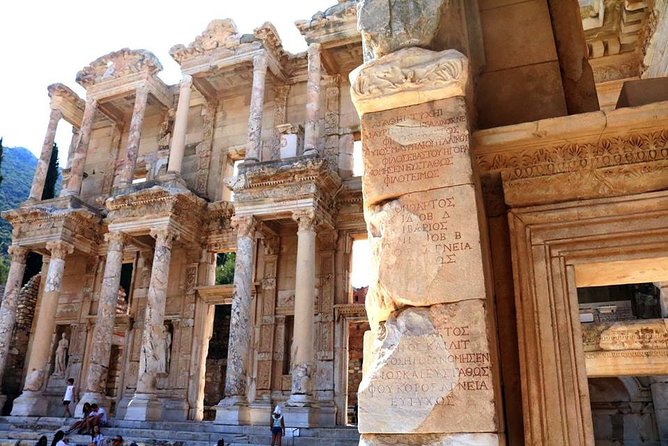
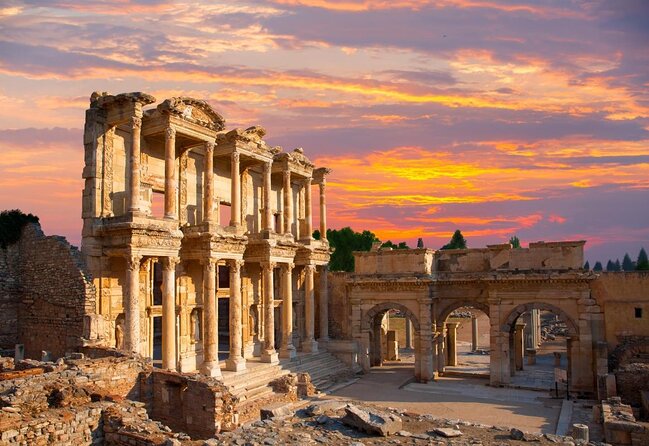
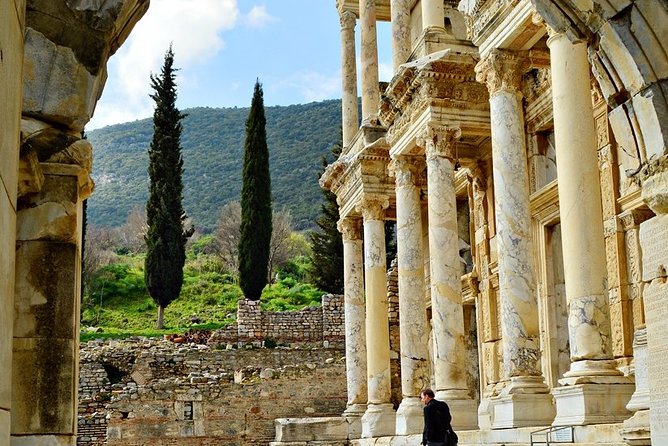
Your route includes the famous downhill walk into the main ruins, with stops that build momentum. One highlight is the Library of Celsus, a standout in Ephesus iconography. It’s the kind of building that makes you pause, because the facade is so carefully preserved compared to many other fragments.
You’ll also pass the Odeon along the route. Think of this as the city’s performance and gathering space—another reminder that Ephesus wasn’t only commerce and politics. It was entertainment and community too.
Downhill walking can be tiring, but it’s efficient. You’re moving through the core without backtracking. The payoff is a “story” that clicks: gate → civic spaces → major structures → the big theater.
Temple of Hadrian and Trajan’s Fountain: small stops, big meaning
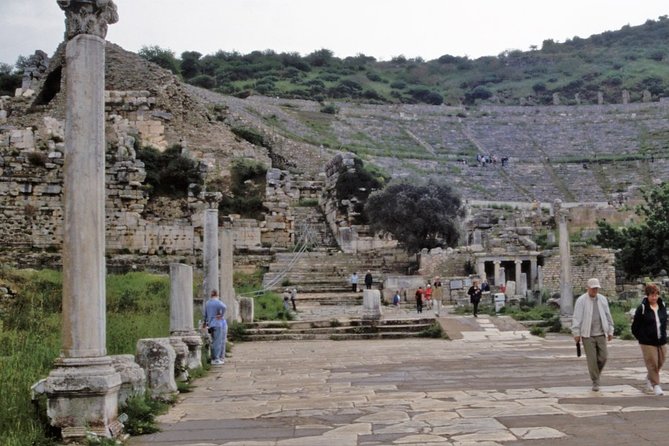
Two stops in this tour help you understand how empire-style authority showed up in everyday architecture:
- The Temple of Hadrian, which grounds you in the Roman era presence at Ephesus.
- Trajan’s Fountain, which shows how public works weren’t just practical—they were also meant to impress.
Even when these are shorter stops, they’re worth your attention because your guide connects them to how people lived. It’s not just a list of monuments. You start seeing the logic of the city layout.
If you like history, this is the sweet spot. You get a guided explanation without getting stuck in museum-mode for every block.




The Great Theater and St Paul’s connection
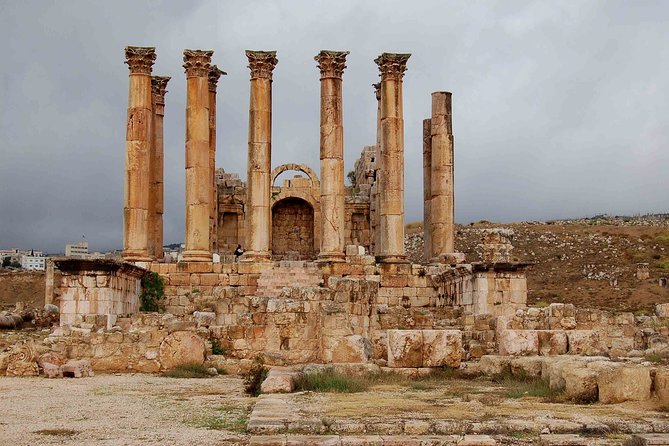
Ephesus’s Great Theater is a star attraction for a reason. You get to see one of the best-preserved theater spaces in the area, with seating that’s often described as reaching around 24,000 people.
Your guide also points out the tradition linking this space to St Paul and the Ephesians. Even if you’re not focused on religious history, it helps you understand why these sites matter to so many different communities today. It also gives the theater a human scale: imagine gatherings, speeches, and festivals in a space that still feels functional.
One practical tip: theaters in ruins can be hot and echoing. Take breaks when you can, and keep your pace steady.
Lunch at the Virgin Mary House area: fuel before the big sweep
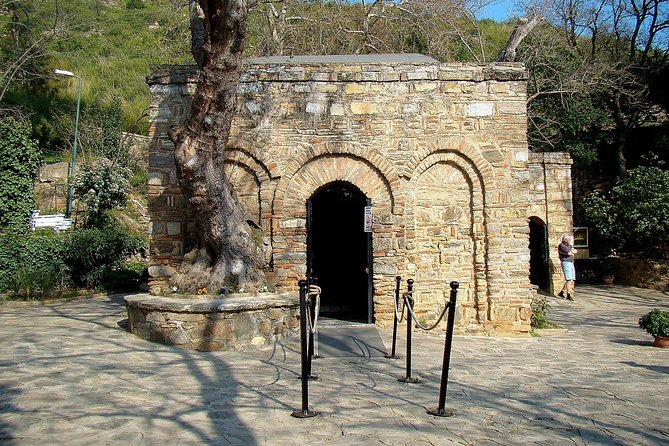
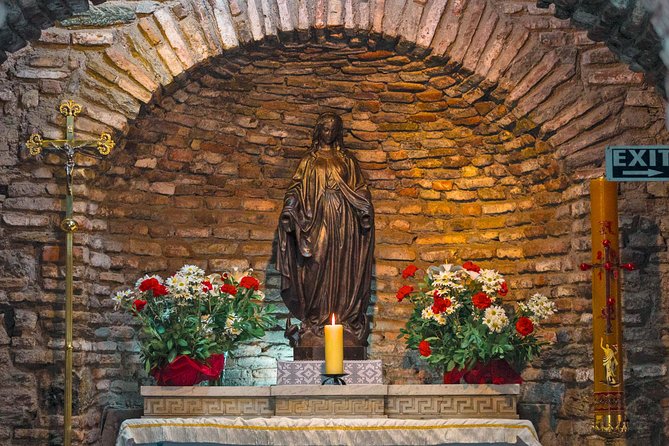
After Ephesus, you drive to the House of the Virgin Mary. Then you eat lunch at a local Turkish restaurant.
This lunch stop is not just about food. It’s a schedule reset. Ephesus is mentally intense because there’s a lot to see, even with a guide. A solid meal helps you enjoy Pamukkale later without feeling “sightseeing hangover.”
From the experience record, guests have described the lunch as good, and the team on the ground as warm and friendly. That matters because the day can feel long if the rest stops are awkward.
Temple of Artemis and the stop in Şirince
After lunch, the tour continues with the Temple of Artemis, one of the Seven Wonders of the Ancient World. Even though much of it is in fragments, the scale and setting make it clear why this was so famous.
Then you head to Şirince, a village known for its Greek heritage and old-world atmosphere. You get time to visit and explore, and then the tour ends with a drop-off in Kuşadası/Selçuk.
This village moment is a nice contrast to Roman stone. It gives you something lighter: streets, views, and a slower pace. If you enjoy small-town wandering, this is the kind of stop that turns the tour from pure sightseeing into a more rounded day.
Day 2: Pamukkale starts with a long drive, so plan for it
On the second day, you’re picked up from your Kuşadası/Selçuk hotel. Then you’re on the road for about three hours to Pamukkale, with a guide adding context along the way.
This drive matters because it buys you the full Pamukkale experience without rushed planning. You arrive with enough time to enjoy the sites rather than sprint from bus to entrance.
You also have lunch at a local restaurant before the main touring at Hierapolis and Pamukkale. As with Day 1, the meal is timed to keep you comfortable during the walking and heat.
Hierapolis Ancient City: structures you can actually connect
At Hierapolis, you enter from the top and explore key ruins, including the gymnasium. Your guide points out significant structures as you move through the site.
Hierarchy of importance helps here. You don’t need to memorize architecture names. If you pay attention to what your guide emphasizes, you start building a mental map of how Hierapolis worked and how the Romans used the space.
Hierapolis also sets you up for Pamukkale’s signature feature. By the time you reach the travertines, you’re thinking about the site as a whole rather than treating it like a single viewpoint.
Amphitheater and Temple of Apollo: big spaces, clear purpose
Next comes the Pamukkale Theater area, including the amphitheater that’s described as holding about 15,000 people, plus the Temple of Apollo.
This is where the tour delivers on “once you’re there, you’ll understand why it’s famous.” The scale tells the story quickly. People gathered here. Events happened. The city wasn’t only a place to admire ruins; it was built to function.
If you’re sensitive to sun, shade can be limited in open-air ruins. Bring sunscreen and take breaks. Your feet will thank you later.
Pamukkale travertines without shoes: the rule that shapes your experience
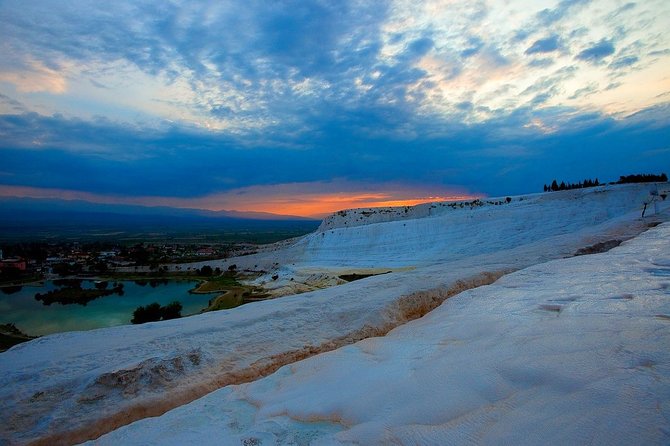
Then comes the main event: Pamukkale Thermal Pools and the white travertine terraces. Here you remove your shoes and walk across the terraces.
The important practical requirement: you must be able to walk about 0.5 miles over the travertines without shoes. That’s not a detail to ignore. It affects comfort and how much time you’ll want to spend exploring.
On the terraces, you can dip your feet in natural hot springs. There are also man-made hot spring baths where you can swim. Either way, it’s a rare moment where the site isn’t just something you look at. It becomes something you feel.
And because the day is schedule-driven, this is where bringing the right stuff matters. Think sunglasses, sunscreen, and a comfortable swimsuit—the tour specifically advises these.
Free time in the afternoon: a little freedom after the big sightseeing
After the main Pamukkale walking and bathing, you get free time in the afternoon. This is your chance to linger, take photos without feeling rushed, or simply sit and recover.
Later in the day, your guide helps bring you to the airport for your flight back to Istanbul. After landing, you’re picked up and transferred to your Istanbul hotel.
One nice point: you’re not left to figure out your own last-mile logistics when the day is long. The tour keeps the “end-of-day stress” low.
The guide and team effect: why Mr Ahmad gets named
A big reason this tour earns strong ratings is the human factor. One review specifically thanks Mr Ahmad for an outstanding tour and highlights how the team handled coordination and logistics well.
Other feedback includes that lunch quality felt good, and the people involved in the Ephesus portion were friendly. That’s not fluff. When you’re moving between multiple sites and traveling by air, the guide and driver experience can make the difference between a day that feels smooth and one that feels chaotic.
This is especially true for a route like this, where you want information at the right time. The guide’s job isn’t just to recite facts. It’s to help you connect what you’re seeing to why it matters.
Who should book this Ephesus and Pamukkale combo
This is a strong match if you want:
- Two top-name sites packed into a short window
- A guided format with entrance fees included
- A trip with fewer “how do we get there” headaches
- Comfort with walking (including the shoe-free travertines)
If you’re the type who loves slowing down in each ruin for hours with zero time pressure, you might find this pace a bit tight. But if you want the highlights done right—and you prefer your plans handled—this works.
It also suits couples, small friend groups, and solo travelers who don’t want to wrestle with public transit and ticket timing across two regions.
Should you book this tour? My practical take
I’d book this if you want a structured, efficient 2-day run that gets you from Istanbul to Ephesus and Pamukkale with meals and entrance fees handled. The value shows up most in the included flights, transfers, guide time, and lunches—those are the parts that usually cost extra or create stress when you plan yourself.
Skip it if the idea of shoe-free walking on the travertines sounds like a dealbreaker, or if you’re uncomfortable with early starts and a full schedule. Also, if you want deep independent wandering at every stop, you may feel the guided timing.
If you fall in the first group, this is a nice way to see two UNESCO-style heavy hitters without turning your trip into an admin task. And with a 5-star rating and a 98% recommendation rate, it’s not just the sites doing the work—the organization and on-the-ground team seem to earn their keep.
FAQ
Where do they pick you up in Istanbul?
They pick you up from any hotel in Istanbul city center.
Do I need to buy entrance tickets for the main sites?
Entrance tickets are included for the stops listed on the tour (for example Ephesus and Pamukkale-related sites).
Are meals included during the tour?
Yes. There are lunches on both days included in the tour.
What kind of transportation is used?
You fly between Istanbul and İzmir, then you travel by vehicle with a driver during the touring days.
Is there an overnight stay?
Yes. You have a hotel in Kuşadası/Selçuk with breakfast.
Is the tour offered in English?
Yes, the tour is offered in English.
Do I have to walk without shoes at Pamukkale?
You must be able to walk about 0.5 miles over the travertines without shoes.